Short answer: there is no single price for a shockwave therapy machine, only a band. Published market guides put an entry-level portable unit at roughly $2,000 to $6,000, a mid-range professional platform at roughly $7,000 to $18,000, and a high-end hospital-grade focused system at roughly $25,000 to $50,000 or more. Inside any band, what you actually pay is decided by four things that repeat on every quotation: the drive technology and the energy geometry it produces, the applicators and accessories that ship in the box, the consumables you will keep buying for the life of the machine, and the after-sales terms that are written down. Those figures are published market references, not a manufacturer quotation, and the only number that settles the decision is your own total cost of ownership.
This guide answers the eight questions that clinic owners, rehabilitation centres and distributors ask most often when they price a platform: what actually makes up the price of a shockwave therapy machine; what published market ranges look like for each tier; which costs keep running after delivery; how to work out your own break-even point; whether to buy new, refurbished, lease or pay per session; which questions expose a suspiciously cheap machine; what must be written on the quotation before you pay; and the questions most buyers need answered in a hurry. Everything here is a framework you apply to your own price list, your own case mix and your own utilisation. No supplier can promise a return, results vary by individual clinic, and any clinical decision about a patient belongs with the treating professional.
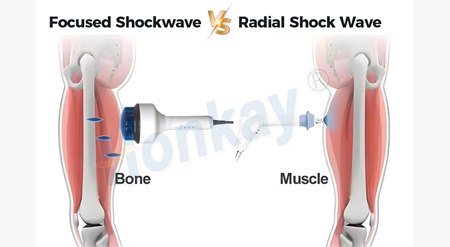
Strip away the marketing and every quotation is built from the same layers. The first is the drive technology: an electromagnetic generator and a pneumatic pressure-wave generator produce different energy geometry, and the geometry itself is the single largest lever on price. A radial system releases its energy at the applicator tip and spreads it into the tissue; a focused system converges energy into a focal zone at a chosen depth. That difference, rather than the size of the case or the colour of the housing, is what moves a unit from one tier to the next.
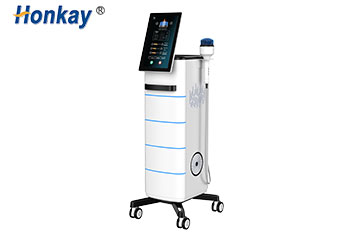
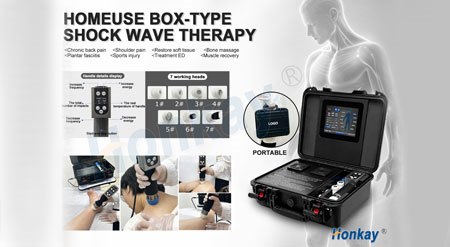
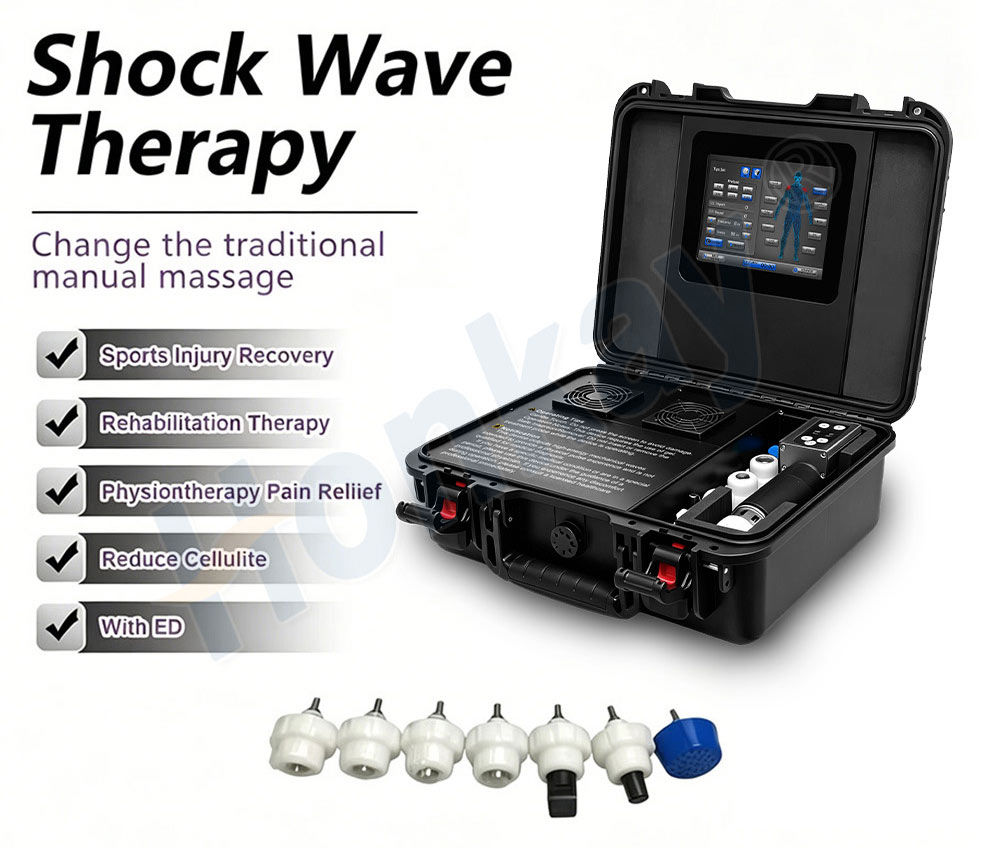
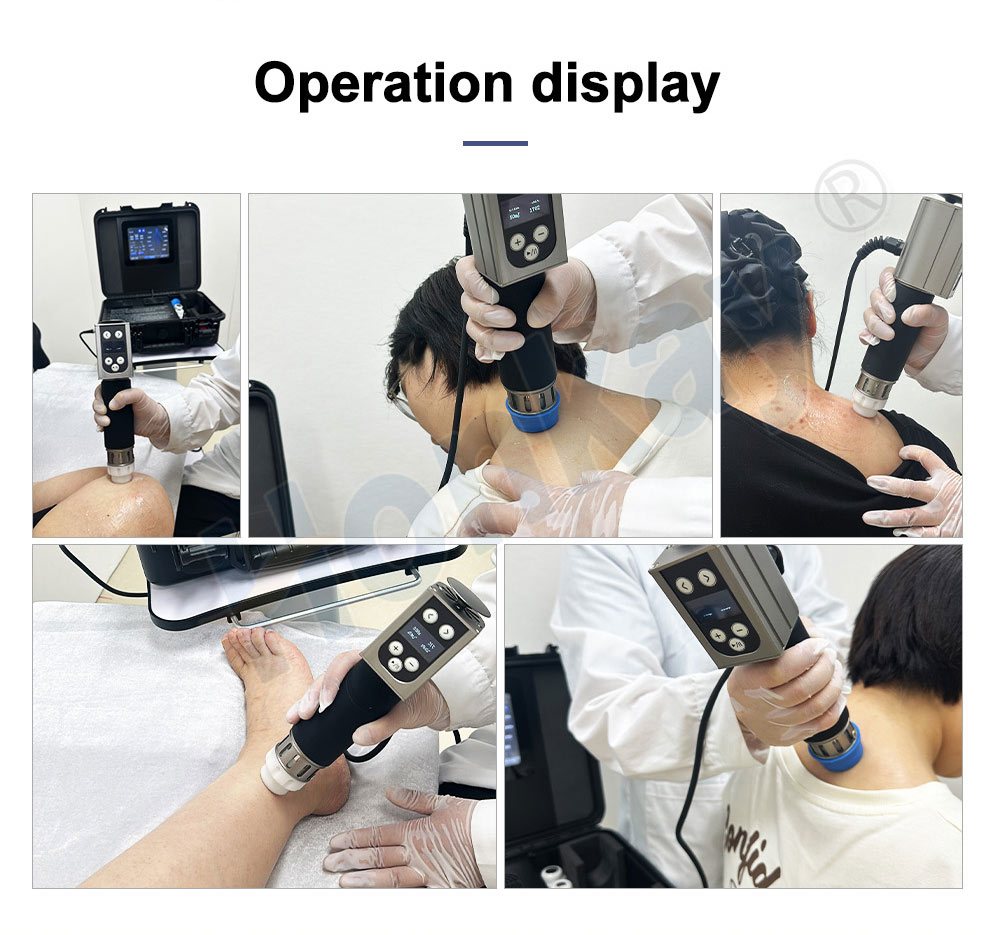
The second layer is the applicators and the handpiece. A platform supplied with a single handle and a platform supplied with seven interchangeable heads are not comparable at the same headline price, because the heads decide which anatomical sites you can reach and which one you will re-order first. The third layer is the operator interface: screen size, preset library, and whether dose is shown in a calibrated unit or as a percentage. The fourth is the housing and packaging, and here a detail helps buyers: on the focused platform the standing and desktop housings share the same specification, so the housing choice is a room-fitting decision rather than a performance one.
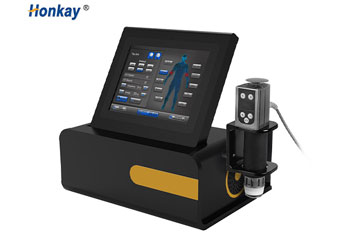
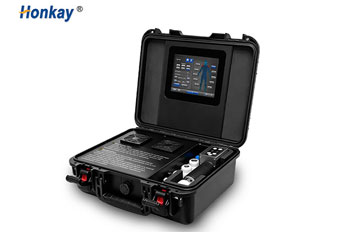
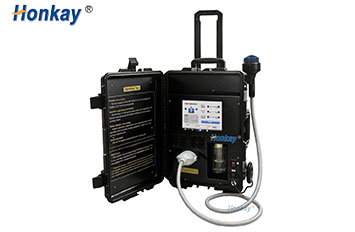
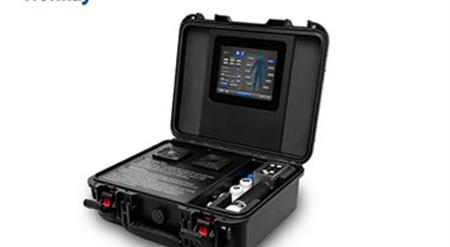
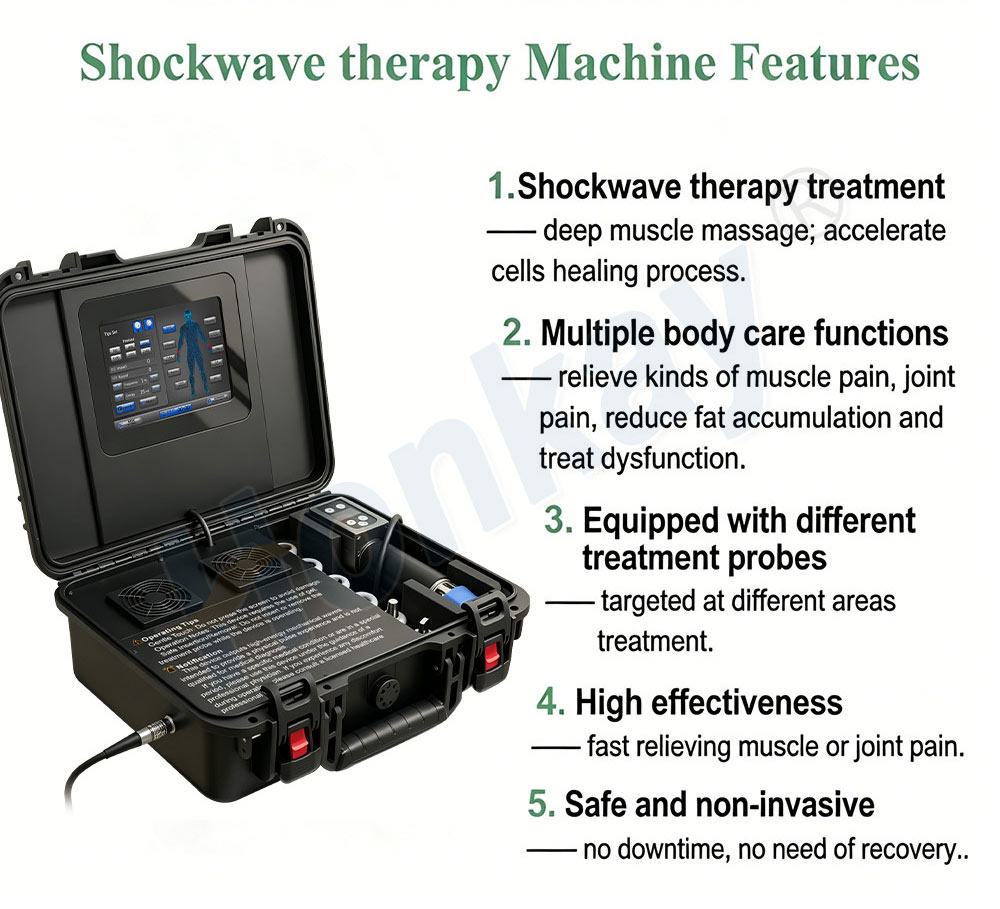
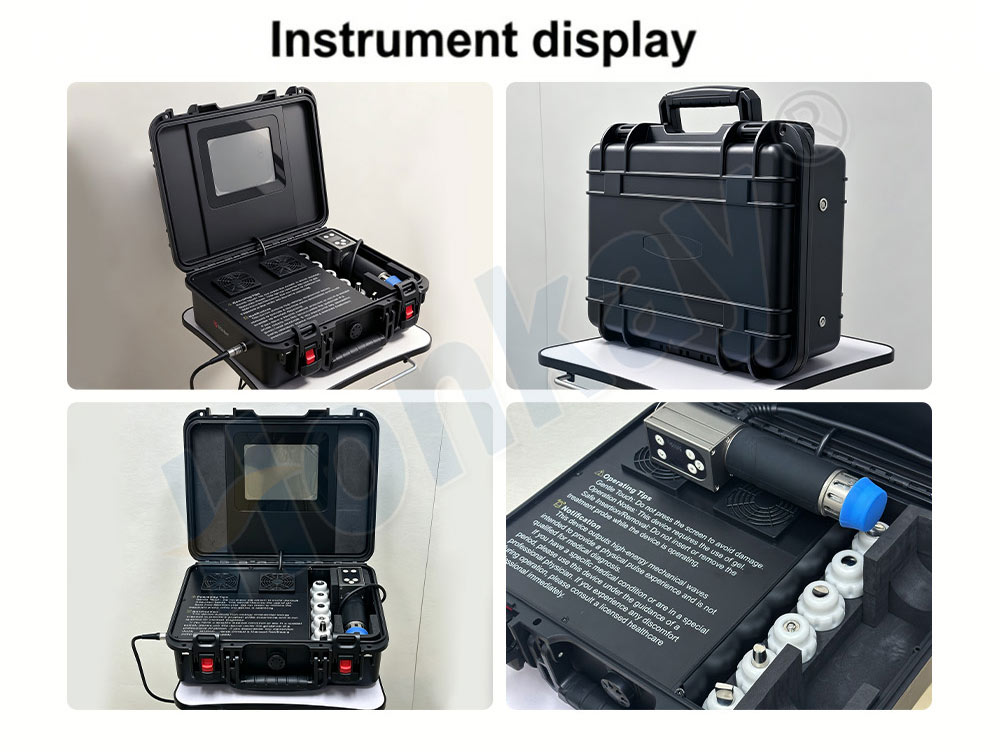
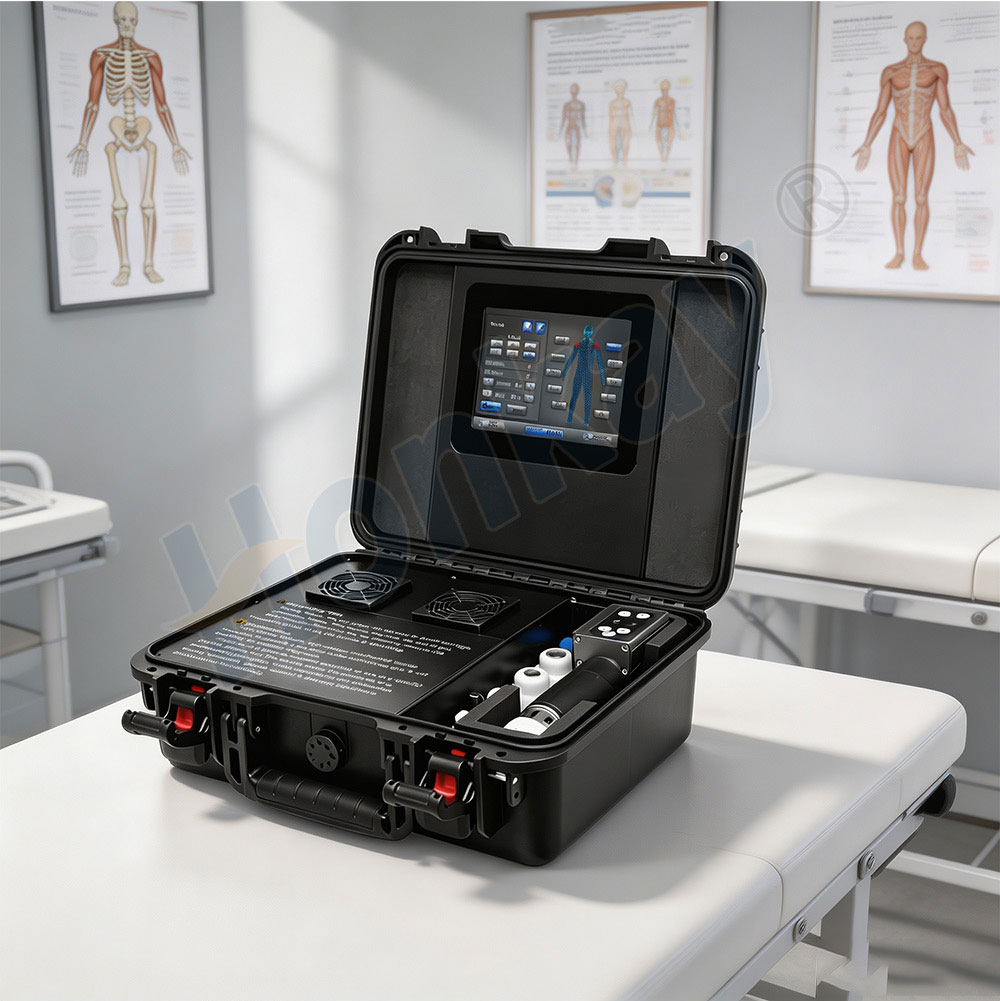
To see how concrete those layers become, look at the two platforms described in this article. The suitcase-format electromagnetic platform runs on 220V / 50Hz or 110V / 60Hz with 200VA total power, delivers a shock frequency of 1 Hz to 22 Hz and an energy intensity of 30 mJ to 185 mJ, uses seven interchangeable heads and an 8-inch touchscreen with body-part selection, and packs into an aviation-case style case measuring 53 x 42 x 25 cm. The focused platform runs at 700W rated power, is operated from a 10.4-inch liquid-crystal touchscreen with twelve body-part presets including ED, sets frequency on a 0-10 Hz slider and intensity on a 0-100% slider, and adjusts focus depth through an intelligent zoom covering 0 to 8 cm. Every one of those specifications is a line item somewhere on a quotation, and every one of them can be silently dropped.
Then come the commercial layers, which is where a cheap-looking offer usually hides its money. The consumable kit included in the box, the price of spare parts, the warranty duration and start date, installation and training, and freight and duty all move the real cost in one direction or the other. The table below sets out each element, what it covers and which way it pushes your total.
| Cost element | What it covers | Which direction it moves |
|---|---|---|
| Drive technology and energy geometry | Electromagnetic or pneumatic generator; radial pressure wave compared with a converged focused wave | The largest single lever: a focused platform sits in a higher tier than a radial one |
| Applicator and handpiece count | Number of interchangeable heads, head materials and diameters, and whether a spare handle is included | More heads and a spare handle raise the headline price but cut the cost of a mid-treatment failure |
| Operator interface and preset library | Screen size, preset body-part programmes, and the unit in which dose is displayed | A larger screen and preloaded protocols raise the price and shorten staff training time |
| Housing and packaging | Standing housing, desktop housing with the same specification, aviation-case style pull case, internal foam | Robust packaging raises unit price and lowers transit damage and freight risk |
| Consumable kit included | Bullets, air tubes, water-service parts and coupling gel supplied with the machine | Decides whether your first consumable bill arrives in month two or in year two |
| Spare-part pricing | Unit price and stated life of bullets, air tubes, water-service parts and handpieces | A cheaper machine with expensive parts moves total cost of ownership up, not down |
| Warranty and after-sales terms | Duration, start date, what is covered, response time and spare-part availability | Clearer and longer cover raises the price and lowers your risk |
| Training and installation | On-site or remote training, installation support and handover documentation | Training priced into the deal reduces operator error and repeat service calls |
| Freight, duty and market-access paperwork | Shipping weight, packing dimensions and the documents your destination market requires | A buyer-side cost; market-access requirements must be confirmed by you for the destination market |
Published market cost guides group shockwave platforms into three broad tiers. The figures below are the industry-wide published ranges that appear in public buying guides; they are not a manufacturer quotation and they do not represent any single supplier's price list. Read them as the band you are shopping in, then add or subtract for the accessories and the terms that are specific to your order.
| Tier | Reported range | Drive technology | Typical buyer |
|---|---|---|---|
| Entry / portable | $2,000 - $6,000 | Electromagnetic or pneumatic, radial pressure-wave | New single-room clinics, mobile therapists and first-time buyers |
| Mid-range professional | $7,000 - $18,000 | Pneumatic radial | Established physiotherapy and sports clinics, small rehabilitation centres |
| High-end / hospital grade | $25,000 - $50,000+ | Focused, electromagnetic converged wave | Hospitals, orthopaedic and sports-medicine departments, premium pain-management clinics |
Two warnings when you use that table. First, the tier describes the class of machine, not the quality of the seller; there are carefully built entry-level platforms and poorly built high-end ones. Second, the range for a focused system is wide because the handpiece and the number of applicators dominate its cost. If a quotation sits far below the published band for the technology it claims, the gap is usually paid for somewhere else, whether that is a shorter warranty, fewer heads in the box or wearing parts priced high in year two. Ask which of those changed, and ask for the answer in writing.
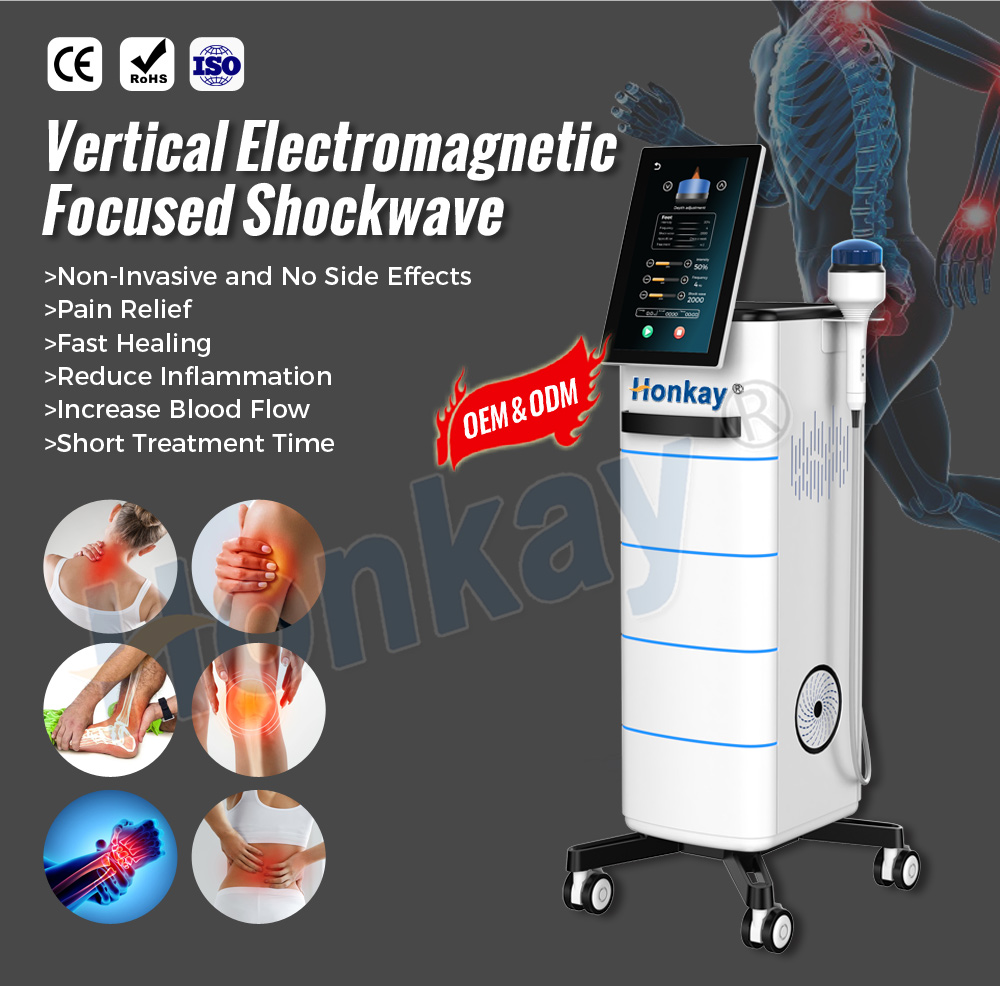
The purchase price is the smallest part of most ownership decisions, because the machine starts spending on your behalf the moment it is unboxed. The two platforms in this article have genuinely different cost shapes, and the difference does not automatically favour either one. The suitcase-format electromagnetic platform uses a small number of wearing parts with published impact lives, so its running cost is real but forecastable. The focused platform is described as a no-consumables design: there is no projectile to replace and the routine service is water.
The table below pairs each running cost with both platforms and with the arithmetic that turns it into a per-treatment number. Where a manual does not state a figure, the table says so rather than inventing one.
| Item | Suitcase electromagnetic platform | Focused platform | How to turn it into a number |
|---|---|---|---|
| Main wearing part | Bullet rated at approximately 1,000,000 impacts; air tube at approximately 5,000,000 impacts | No consumable projectile; the water circuit is serviced instead | Divide the part price by its stated impact life to get cost per impact, then multiply by impacts per session |
| Routine service interval | Replace the bullet and air tube at the end of their stated life | Change the water every 15 days in frequent use | Translate the interval into sessions: how many treatment days does 15 days represent in your schedule |
| Idle handling | Standard storage; the manual sets no drain procedure | If the unit will sit idle for more than 30 days, drain the water tank and the handpiece | Add it to your closing checklist and to a seasonal shutdown procedure |
| Handpiece refurbishment or replacement | Public guides price a handpiece event at roughly $1,500 to $3,000, typically once every three to five years | The same order of magnitude applies to a single-handle unit | Spread the estimate across the expected service interval to set a monthly reserve |
| Repair kit | Public guides price a bullet-and-tube kit at roughly $150 to $600 with a life of about one to two million impacts | Not applicable to the no-consumables design | Compare the kit price against a full handpiece to see which is cheaper per impact |
| Throughput limits that cap revenue | Stop for 5 minutes every 20,000 impacts; stop for 30 minutes if the body reaches 80 degrees Celsius; no more than 3 sessions per week on the same area | Fixed-point impact on the same area must not exceed 300 impacts; allow 30 cm of clearance for heat dissipation | Use the limits to size a realistic daily patient list rather than a theoretical one |
| Coupling medium | Coupling gel is required and is a per-session consumable | Energy is coupled through a water bladder in the handpiece; confirm the medium with the supplier | Multiply the cost per session by the number of billable sessions per month |
Break-even is arithmetic, not a promise. The method is always the same: add what you paid for the machine to what you pay per treatment to run it, then divide by the revenue you collect per session. Published market guides illustrate the method with a mid-range example in which a $15,000 machine priced at $100 to $150 per session recovers the equipment spend after roughly 120 sessions. That is a worked illustration of the method taken from published guides, not a forecast for your clinic. Your own result depends on the price you charge, the sessions you fill each week, your running costs and your local demand, and results vary by individual practice.
Two refinements make the estimate honest. First, recover the equipment spend only after you have subtracted the per-treatment running cost, because a session that consumes a consumable earns less than its invoice suggests. Second, price your own idle capacity: the focused platform asks for a water change every 15 days in frequent use, and a rule that runs on the calendar rather than on the booking sheet costs money in a quiet month too. The table below is the framework, with the published example in one column and a column for your own figures.
| Input | Illustration from the published example | How the figure is built | What it tells you | Substitute your own number |
|---|---|---|---|---|
| Equipment price | $15,000 | A mid-range figure taken from the published tier range | The sum you have to recover | Your own landed purchase price |
| Price per session | $100 to $150 | Published private-treatment range used in the same example | Your gross revenue per appointment | Your local market price |
| Gross-revenue break-even | About 120 sessions | The equipment price divided by the session price range | Sessions needed to recover the equipment spend before running costs | Recompute at your own session price |
| Running cost per session | Not stated in the published illustration | Part price divided by its stated impact life, multiplied by impacts per session | The margin you actually keep from each appointment | Your supplier's spare-part prices |
| Idle and service cost | A water change every 15 days in frequent use on the focused platform | A calendar-driven routine that runs whether or not you bill | The capacity you carry but cannot invoice | Your realistic utilisation rate |
When your own figures are in that table, test them against the throughput limits of the machine, because a break-even number is only reachable if the diary can physically hold the sessions. On the suitcase platform the manual requires a 5-minute stop every 20,000 impacts, a 30-minute stop if the body reaches 80 degrees Celsius, and no more than 3 sessions per week on the same area. On the focused platform, fixed-point impact on one area must not exceed 300 impacts and the unit needs 30 cm of clearance for heat dissipation. Those rules cap the number of patients one machine can serve in a day, and that cap belongs in the same calculation as the price.
Once you know the numbers, the buying route is a separate decision. A new unit is the only route that gives you the full written warranty, which on our platforms is a 24-month warranty counted from the date of shipment from the factory, together with a known service history, factory test reports and quality-system documents that can be supplied on request. You pay the band price and you carry the depreciation.
The refurbished market is the cheapest route on paper, with public guides putting typical second-hand pricing 20% to 40% below retail. The trade-off is that the wearing parts may already be part-way through their life and the warranty is usually shorter or absent. If you take this route, price a replacement bullet, air tube or repair kit into the deal before you agree, and ask for the impact counter reading. On a focused platform, ask when the water was last changed and whether the tank and the handpiece were drained during any idle period longer than 30 days.
Leasing and pay-per-session arrangements move the risk rather than removing it. Leasing lowers the cash needed up front and keeps the machine as an operating cost, which suits a clinic that wants to test demand before committing capital, but the total paid over the term is normally higher than a cash purchase and the machine returns to the lessor at the end. Pay-per-session deals, where a provider supplies the hardware and takes a share of each treatment, remove the capital outlay entirely but tie your pricing to someone else's model and leave you with no asset. None of the four routes is universally right; each one changes who carries the utilisation risk, and that is the question to settle before you sign.
A price that sits far below its tier is not automatically a bad machine, but it is a reason to ask six specific questions. A supplier who can answer all six in writing is a supplier you can build a clinic around; one who cannot is asking you to carry the risk.
First, is the energy stated in calibrated millijoules, or only as a percentage? Percentages cannot be compared between machines. The suitcase platform states 30 mJ to 185 mJ directly, which lets you set and transfer a protocol, while a percentage slider with no mJ figure gives you no way to verify what leaves the handpiece.
Second, what is the stated life of the wearing parts, and what does a replacement cost? Our suitcase platform publishes lives of approximately 1,000,000 impacts for the bullet and approximately 5,000,000 impacts for the air tube. A machine that keeps its spare-part prices secret is not cheap for long.
Third, which heads are in the box? Seven interchangeable heads are supplied with the suitcase platform, the diameter set is listed as 9 mm, 15 mm, 20 mm, 35 mm and 35 mm, and the sixth and seventh heads are assigned to the ED function. Confirm in writing that the heads you intend to bill for are included rather than sold as an extra.
Fourth, what are the continuous-run and thermal limits, in numbers? Our suitcase manual states a 5-minute stop every 20,000 impacts and a 30-minute stop at 80 degrees Celsius. A supplier who answers with the words continuous use and no stop time has not answered the question.
Fifth, who services the machine in three years, and where do the parts come from? Ask for the consumable cycle, the spare-part list and the service route in writing, and ask how a handpiece refurbishment or replacement is handled, since public guides price that event at roughly $1,500 to $3,000 and put its frequency at once every three to five years.
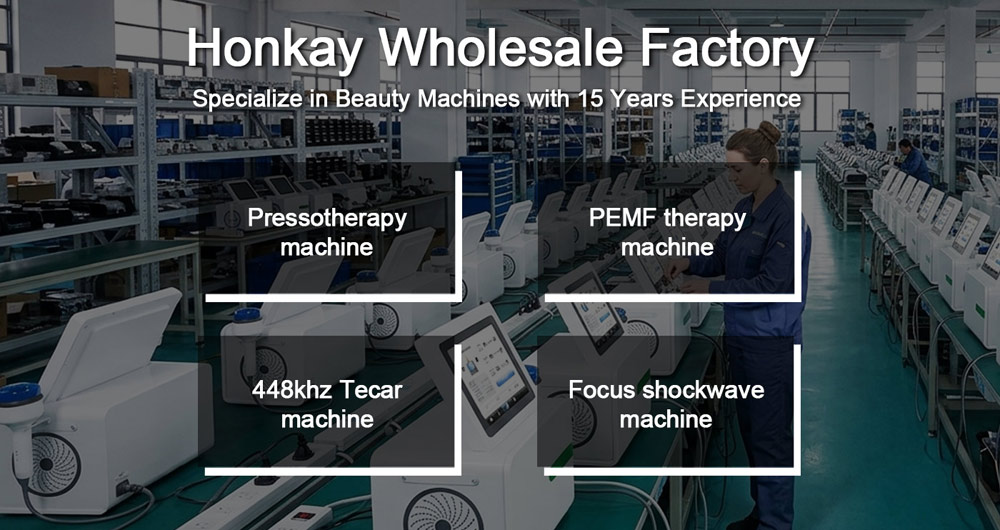
Sixth, what exactly is the warranty, and when does it start? A duration without a start date is not a warranty term. Ours is a 24-month warranty counted from the date of shipment from the factory, and it should read the same way on your order before you pay. Notice that none of the six questions is about price; they are about the things that decide whether a cheap machine stays cheap. A supplier who can show you a production line, a spare-part inventory and a service route is a supplier whose answers you can check, and the factory view below is at least a starting point for that check.

Write the commercial terms into the quotation before you transfer money, because after payment your leverage is a warranty claim rather than a negotiation. The checklist below is drawn from the parameters our own manuals publish and from the items that most often go missing from a written offer. Where the destination market imposes its own import or use requirements, those must be confirmed by you as the buyer for that market; the factory can support that process with factory test reports and quality-system documents on request, but it cannot decide the requirement for your country.
| What to demand | Why it matters | Red flag if absent |
|---|---|---|
| Energy stated in calibrated millijoules | A percentage cannot be compared between machines, while an mJ figure lets you verify output and transfer a protocol | Only a 0-100% slider quoted, with no mJ figure anywhere in the offer |
| Head-by-head size and use chart | It decides which site a head can reach and which head you will need to re-order first | Seven heads listed with no diameters and no site assignments |
| Continuous-run and thermal limits in numbers | These limits set the real daily patient capacity of one machine | Continuous use claimed with no stop interval and no shutdown temperature stated |
| Full list of included heads and accessories | It stops an ED head or a spare handle being invoiced later as an extra | A standard-configuration phrase with no itemised packing list |
| Consumable life and spare-part prices | They turn running cost into a cost per treatment instead of a surprise in year two | A life claimed in impacts but no unit price given for the replacement |
| Warranty duration, start date and scope | It removes any argument about what is covered and from which day the term runs | A warranty described without a start date, or a term shorter than the 24-month warranty we state |
| Packing dimensions and shipping weight | Freight cost, courier limits and any damage claim all depend on them | Neither figure stated anywhere in the offer |
| Electrical rating, including the VA or W value | The rating affects circuit loading and generator sizing, which matters for mobile work | A rating given only as standard voltage, with no power figure |
| Market-access requirements for your destination | Import and use requirements must be confirmed by the buyer for the destination market, supported by factory test reports and quality-system documents on request | A claim that the machine works anywhere, with no paperwork to support your market |
| Training and installation terms | A documented handover is what lets a second therapist use the machine correctly | Training mentioned only verbally, with nothing in the written offer |
If you take one habit from this article, make it this: ask for the numbers that let you calculate rather than the adjectives that make you feel comfortable. A quotation that states energy in millijoules, lists every head and every included accessory, publishes the life and the price of the consumables, gives the continuous-run limits and names a warranty start date is a quotation you can build a business case on.
Published market guides put an entry-level portable electromagnetic or pneumatic unit at roughly $2,000 to $6,000, a mid-range professional radial platform at roughly $7,000 to $18,000, and a high-end focused system at roughly $25,000 to $50,000 or more. Those are industry-wide published ranges rather than a manufacturer quotation. Your landed cost also depends on the heads and accessories in the box, the warranty terms and the freight and duty into your market.
Because the headline price describes the box, not the ownership. Two units at the same price can differ in head count, consumable life, spare-part prices, warranty length and throughput limits. The suitcase platform, for example, publishes wearing-part lives of approximately 1,000,000 impacts for the bullet and approximately 5,000,000 impacts for the air tube, while the focused platform is described as a no-consumables design that is serviced through water instead. Those differences show up in year two and year three, not on the price list.
That depends on your case mix, your session price and your utilisation, and no supplier can promise a return. What a supplier can do is help you model it. Published guides illustrate the arithmetic with a $15,000 machine at $100 to $150 per session recovering the equipment spend after roughly 120 sessions, but that is a worked example of the method, not a forecast. Rebuild the same calculation with your own price, your own booking rate and your own running costs before you decide.
Divide the equipment price by your net revenue per session, after subtracting the consumable cost of each treatment. The published illustration reaches about 120 sessions at $100 to $150 per session on a $15,000 machine, but your figure moves with every input. Test the answer against the machine's throughput limits as well, because a 5-minute stop every 20,000 impacts and no more than 3 sessions per week on the same area on the suitcase platform both cap the number of patients one unit can serve.
They have a different cost shape rather than a uniformly lower one. The focused platform is described as a no-consumables design, so it removes the projectile and air-tube line entirely and replaces it with a water-service routine: a water change every 15 days in frequent use, and draining the tank and handpiece if the unit sits idle for more than 30 days. The suitcase platform keeps a small, predictable parts cost from the bullet and air tube. Which is cheaper for you depends on your volume and your case mix.
It can be, if you price the risk in. Public guides put typical second-hand pricing 20% to 40% below retail, but the wearing parts may be part-way through their life and the warranty is usually shorter or absent. Ask for the impact counter reading, price a replacement bullet, air tube or repair kit into the deal, and on a focused unit ask when the water was last changed. Compare the total against a new unit that carries a 24-month warranty counted from the date of shipment from the factory.
Check that energy is stated in millijoules, that a head-by-head size and use chart is attached, that the continuous-run and thermal limits are written down, that every included head and accessory is itemised, that consumable life and spare-part prices are listed, that packing dimensions and shipping weight are given, that the electrical rating includes the VA or W value, that market-access requirements for your destination are confirmed, and that the warranty reads as a 24-month warranty counted from the date of shipment from the factory. Any gap in that list is a question you will be asking after delivery instead of before payment.
If you are pricing a shockwave therapy machine for a clinic, a rehabilitation centre or a distribution portfolio, we can send you the specification sheets, the consumable and spare-part list and the commercial terms above in writing, in the format your finance team needs. Tell us your market and your case mix and we will help you build the comparison.


 English
 中文
中文