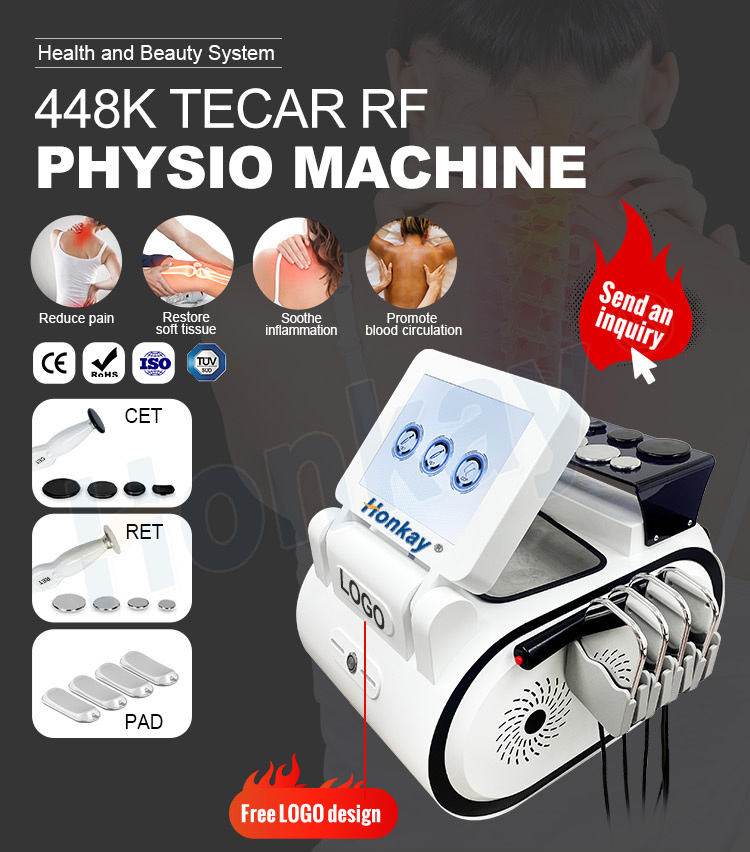
TECAR stands for transfer of energy, capacitive and resistive, and it is the name of a treatment family built on a 448 kHz radiofrequency platform. A therapist applies controlled energy into tissue through hand-held applicators, and clinics use the platform across physiotherapy, sports rehabilitation and body-care programmes. The same machine runs two active modes: CET, or capacitive energy transfer, which works into tissue with a high water and electrolyte content such as muscle, soft tissue and the skin layers; and RET, or resistive energy transfer, which works into tissue with higher impedance such as tendon, joint and bone surfaces. A third applicator group, the PAD set, is used for firmer, deeper tissue and for large body-surface areas.
This guide is written for the people who decide whether a TECAR programme belongs in their clinic. It explains what the technology does in the tissue, why the 448 kHz figure matters, how CET, RET and the PAD set differ, what a session looks like step by step, which cases clinics commonly book, who must not be treated, who can operate the platform, and exactly what to have in writing on a quotation before you order. Every figure below comes from our own platform documentation, and where a number is not stated by the manufacturer we say so rather than fill the gap.
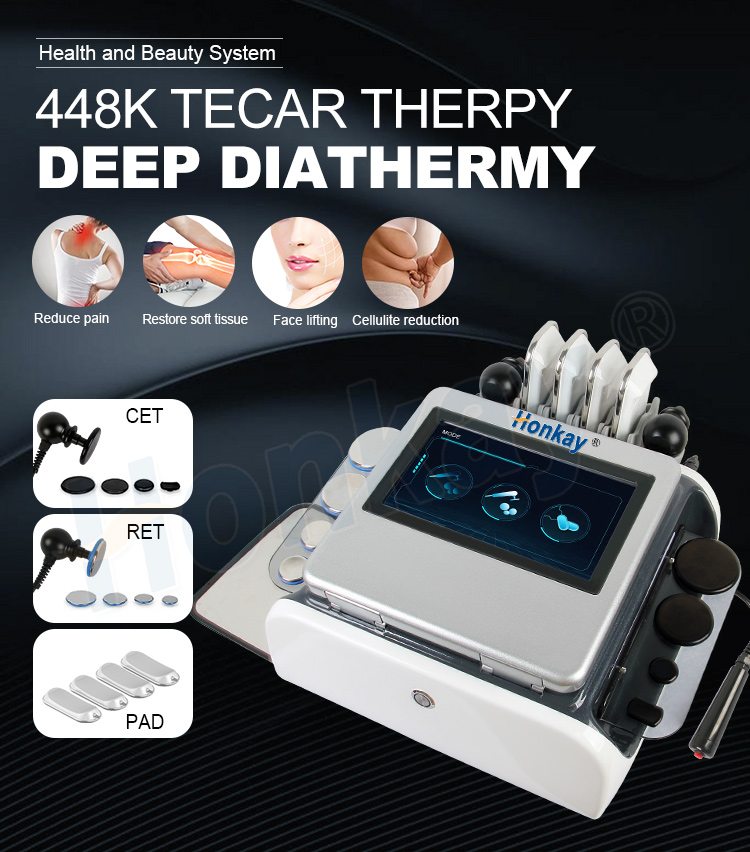
TECAR is an abbreviation of transfer of energy, capacitive and resistive. The name describes the way energy is transferred from an applicator into the body, using two coupling principles, rather than describing one fixed treatment. On the platform we build, the therapist holds a digital applicator against the skin, selects a mode, and sets frequency and energy directly on the handle. The console carries the treatment timer and the working screen, and the applicator delivers the energy into the tissue beneath it.
The practical consequence for a clinic is that a single platform covers a wide band of tissue depths, because the mode and the applicator diameter change what the energy acts on. Broad, water-rich tissue and the superficial layers respond to the capacitive mode; tendon, joint and bone surfaces respond to the resistive mode; and firmer tissue plus large areas are handled with the PAD set. The specification of the platform we supply is set out below, and it is the reference point for the rest of this article.
| Parameter | Specification |
|---|---|
| Output frequency | 448 kHz |
| Resistive mode (RET) power | 400 W |
| Capacitive mode (CET) power | 400 W |
| Machine power | 600 W |
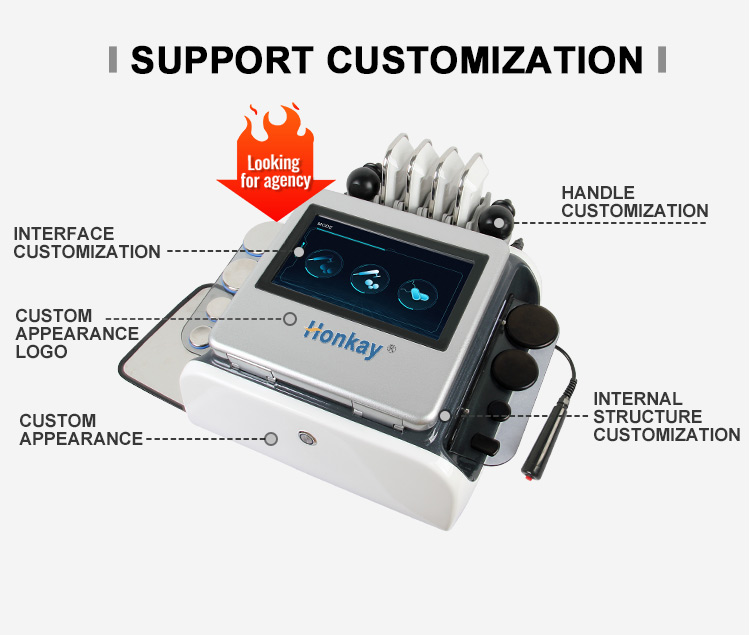
| Resistive (RET) tips | 4 tips, 70 mm, 55 mm, 40 mm and 30 mm diameter |
| Capacitive (CET) tips | 4 tips, 70 mm, 60 mm, 35 mm and 30 mm diameter |
| PAD handles | 4 handles, each 14 × 8.5 cm |
| Handle control | Digital handles, with frequency and energy adjustable on the handle itself |
| Package size | 50 × 45 × 42 cm |
| Package weight | 29 kg |
Two rows in that table are worth pausing on. The first is the frequency: the platform runs at a single fixed output of 448 kHz, and the mode you choose does not change it. The second is the applicator count: four resistive tips, four capacitive tips and four PAD handles are supplied as one set, which is what allows one platform to serve rooms with very different case mixes.
Frequency is the number of times per second the current reverses direction, and in this treatment family it is the figure that decides how the energy behaves as it crosses tissue. A 448 kHz carrier sits in the radiofrequency band, and energy delivered at that frequency is converted into a controlled temperature rise inside the tissue as ions and dipoles move in step with the alternating field. The operator does not treat at a fixed temperature; the applicator keeps moving, and the energy is adjusted from the feedback the client gives.
What the frequency changes is the balance between how the current leaves the applicator and how it spreads once inside. A single, published carrier frequency also makes a platform comparable on paper, because two suppliers can be lined up on the same figure. That is why the number matters to a buyer. Some suppliers describe one frequency for the capacitive mode and a different one for the resistive mode; the platform we supply does not. Both modes run on the same 448 kHz output, and the difference between them lies in how the energy is coupled into the tissue, which is the subject of the next section.
Because the frequency is fixed, the practical variables a therapist works with are the mode, the applicator diameter and the energy setting on the handle. Everything else in a session, from patient positioning to the movement pattern and the length of each pass, is clinical technique rather than a machine setting.
The two modes differ in the tissue they prefer and in the way the circuit closes. In capacitive mode, the active applicator is separated from the skin by a dielectric layer, and the current preferentially seeks tissue with a high water and electrolyte content, because that tissue conducts more easily. The result is a broad, even build-up of energy in muscle, soft tissue and the superficial layers, which suits large muscle groups together with the skin and subcutaneous area.
In resistive mode, the applicator is a conductive metal electrode and the circuit returns through tissue with higher impedance. Because the current has to pass through denser, drier tissue with less free fluid, the energy concentrates where the resistance is greatest: tendon, joint structures, dense connective tissue and bone surfaces. The same logic explains the PAD set in the table below, because it is used where the target is firmer or deeper, or where the area to be covered is simply too large for a hand-held pass.
| Aspect | Capacitive (CET) | Resistive (RET) | PAD |
|---|---|---|---|
| What it is | A capacitive applicator, insulated from the skin by a dielectric layer | A resistive metal electrode that returns current through the tissue | A large-surface applicator set supplied with a flexible return plate |
| Preferred tissue | Tissue with high water and electrolyte content: muscle, soft tissue and the skin layers | Tissue with higher impedance: tendon, joint, bone and dense connective tissue | Firmer, deeper or fibrotic tissue, and large body-surface areas |
| Typical targets | Broad muscle groups, back and limbs, and the superficial layers | Tendon insertions, joint regions, bone surfaces and dense connective tissue | Deep and firmer areas within about 5 cm, and wide areas that would be slow to cover with a hand-held pass |
| Applicators supplied | 4 tips at 70 mm, 60 mm, 35 mm and 30 mm | 4 tips at 70 mm, 55 mm, 40 mm and 30 mm | 4 handles at 14 × 8.5 cm |
| Output frequency | 448 kHz | 448 kHz | 448 kHz |
The row worth remembering is the last one. CET and RET are two modes of the same 448 kHz platform, not two different machines and not two different frequencies. If a supplier quotes one frequency for capacitive work and another for resistive work on the same system, ask them to explain the contradiction before you order.
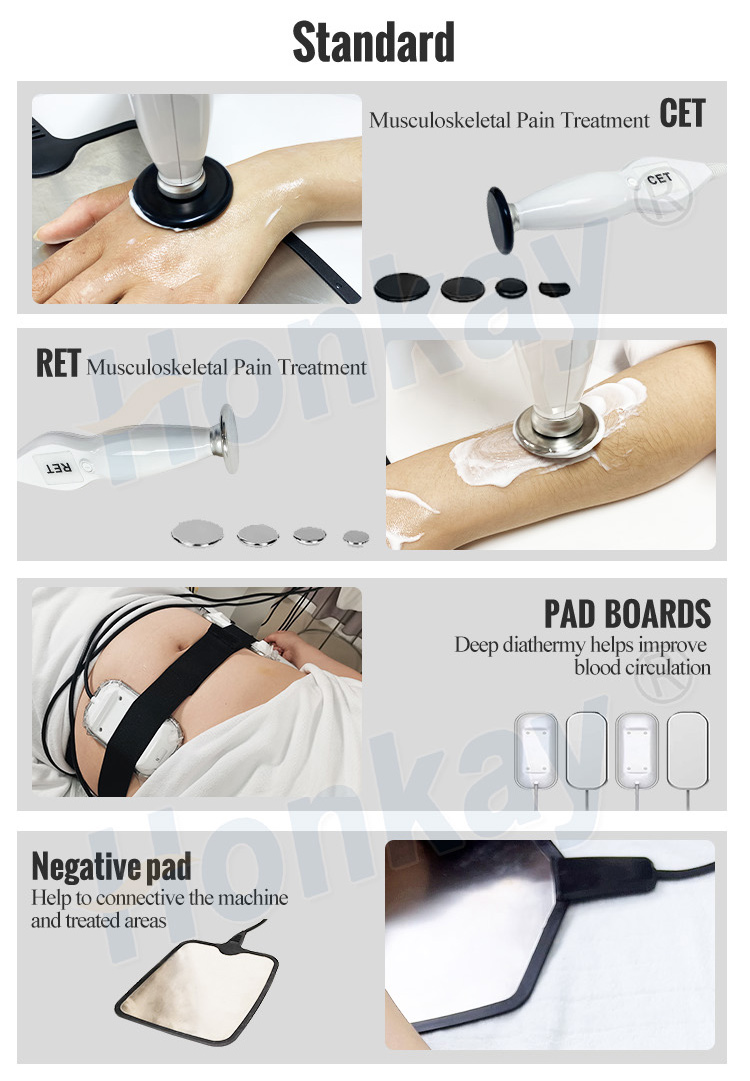
The PAD set is the third applicator group, and it exists for the two jobs a hand-held pass is worst at. The first is depth and density: where the target tissue is firmer, deeper or more fibrotic and sits within about 5 cm of the surface, a large flat applicator delivers energy across the whole area rather than concentrating it at the point where the hand happens to be. The second is coverage: on a large body-surface area such as the back, the abdomen or the thigh, a set of pad handles positioned at once covers far more tissue per minute than a moving hand-held pass.
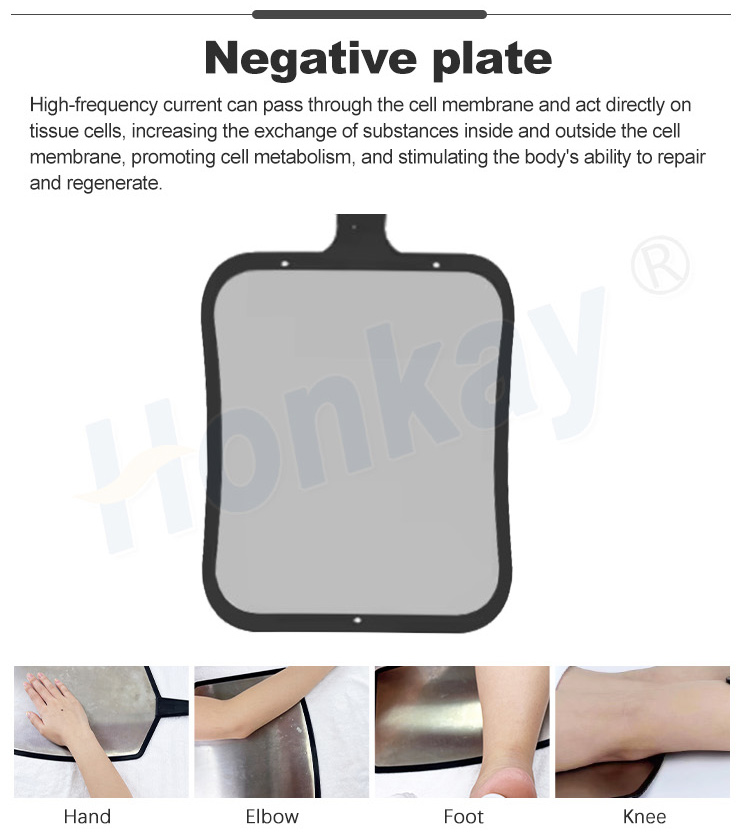
In use, the PAD handles are four units measuring 14 × 8.5 cm each, and they are positioned on or around the area to be treated, with a flexible return plate completing the circuit. The therapist sets the energy and the applicators work across the full contact area. Because the pads cover a wide field rather than a moving point, they are usually chosen when the plan is to warm a large region evenly, and they are removed at the end of the pass in the same way as the hand-held applicators.
One practical note for the treatment room: because the PAD handles are positioned and left in place rather than scanned by hand, the operator's hands stay free while the pads are working. That is why clinics that treat both a specific area and a wider region often ask for the complete PAD set to be part of the original order rather than something added later.
A TECAR session is short and surprisingly quiet. There is no anaesthetic, no needle and no recovery chair at the end; the client feels a mild warmth that builds as energy is applied, and the operator adjusts the energy from that feedback. What follows is the sequence we recommend to clinics, together with the checkpoints that keep a session reproducible between therapists.
| Step | What happens | What to check |
|---|---|---|
| Screening and consent | The therapist reviews the client's history, current medication, implants and the condition of the skin over the treatment area | Any contraindication is referred for professional medical judgement before treatment is booked |
| Prepare the area | The skin is clean and dry, and the client is positioned so the target region is relaxed and accessible | Metal objects and electronic devices are removed from the treatment field |
| Choose mode and applicator | Capacitive, resistive or PAD is selected to match the tissue, and the applicator diameter is matched to the size of the target | The mode matches the tissue type rather than the client's preference |
| Set energy and start | Frequency and energy are set on the digital handle, the timer is started and the applicator is moved over the area | Energy is raised gradually, and the client confirms the sensation is comfortable warmth |
| Run the pass | The applicator is kept moving in a controlled pattern for the planned time, with the client's feedback monitored throughout | Any sudden heat, discomfort or skin reaction stops the session |
| Close and record | The area is cleaned, the settings and duration are recorded, and the next session is scheduled | The record shows mode, applicator, energy and site, so the next therapist can repeat it |
Session length is set by the area. On the platform we supply, a facial treatment is typically 20 to 40 minutes and a body area is typically 30 to 60 minutes. A programme is then built from those sessions: firming programmes are commonly planned over 4 to 8 sessions, while body-shaping programmes are set over more sessions according to the goal agreed with the client. A regular maintenance interval is usually advised once the initial programme is complete. These are planning figures rather than promises, and the response to any programme varies by individual.
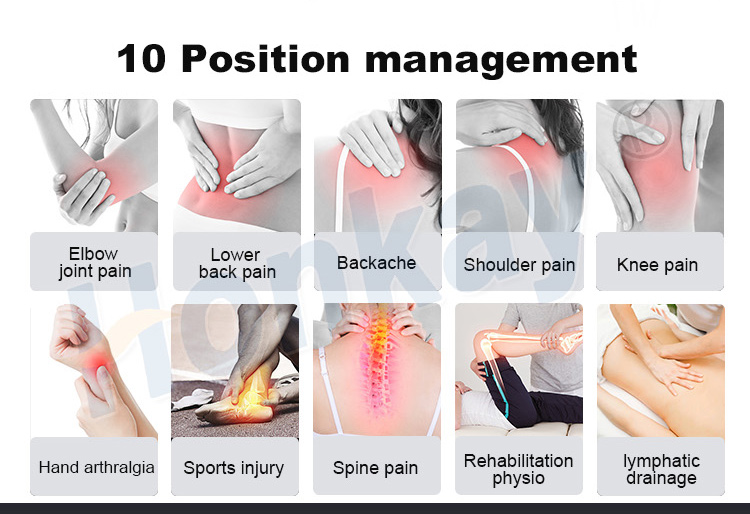
The clinics that buy TECAR tend to fall into five groups: aesthetic clinics, medical-aesthetics centres, health and wellness institutions, physiotherapy centres and sports-rehabilitation institutions. What they share is a client list in which soft-tissue comfort, recovery and tissue quality keep recurring, and in which a non-invasive modality that fits a short appointment slot is commercially useful. The table below maps the tissue you are aiming at to the mode that is usually chosen, and explains why.
| Area or tissue | Suggested mode | Why |
|---|---|---|
| Broad muscle groups and large soft-tissue areas | Capacitive (CET) | Water-rich tissue conducts easily, so capacitive coupling spreads energy evenly across the region |
| Skin and superficial layers | Capacitive (CET) | A capacitive applicator couples well into tissue with a high water and electrolyte content |
| Tendon and tendon insertions | Resistive (RET) | The current meets higher impedance at denser, drier tissue |
| Joint regions and dense connective tissue | Resistive (RET) | Energy concentrates where resistance is greatest instead of spreading through soft tissue |
| Bone surfaces and periosteal areas | Resistive (RET) | Higher-impedance tissue is the preferred path for the resistive electrode |
| Firmer or fibrotic tissue within about 5 cm | PAD | A large flat applicator covers the firmer area evenly instead of concentrating at one point |
| Large body-surface areas | PAD | Four handles at 14 × 8.5 cm cover far more surface per minute than a moving hand-held pass |
Two things about that table are worth stating plainly. First, the mode follows the tissue rather than the diagnosis, so the same area can be worked in different modes on different days depending on what the therapist is targeting. Second, nothing in the table is a promise of outcome. TECAR is commonly used for these tissue types, and results vary by individual, so a clinic should present it as one part of a plan that may also include manual therapy, exercise and load management.
Read the list of institutions again and one commercial fact stands out. The same platform serves a physiotherapy room and a body-care room, because it is the mode and the applicator that change rather than the machine. That is why clinics adding a TECAR programme often start with one platform and one complete applicator set, rather than buying a physiotherapy-only unit and a separate body-care unit.
This is the section to read before you write a treatment protocol, and the list is short, firm and not negotiable inside a clinic. The contraindications below are the ones stated for the platform, and every one of them leads to the same conclusion: the decision is made by a qualified physician, or by the client's own treating clinician, and not by the operator on the day. If any item applies, the case is referred, not treated.
Implanted cardiac pacemakers or other implanted electronic devices. The treatment field must not be brought near an active implanted electronic device, so any client with one is referred for professional medical judgement before a TECAR session is even considered.
Pregnancy. TECAR is not used during pregnancy, and the decision on any treatment in this period rests with the client's physician rather than with the clinic.
Severe cardiovascular disease. Clients with severe cardiovascular disease are referred to their physician, who decides whether any treatment of this kind is appropriate at all.
Metal implants in the treatment area. The treatment area is moved clear of any metal implant, and the case is referred for professional medical judgement before that region is treated.
Acute inflammation or skin damage in the treatment area. Treatment does not start over acutely inflamed, broken or irritated skin; the area is reviewed by a clinician first, and the session is rescheduled once the skin has settled.
Beyond that list, the general rule for the treatment room is that TECAR is not a diagnostic tool and does not replace medical assessment. A clinic that screens carefully, refers every contraindication and records what it did is a clinic that will keep the platform out of trouble, whatever the case mix.
The platform is operated by a trained therapist or clinician, not by reception staff and not by the client. That is not a formality; it is what the treatment depends on. The choices that decide whether a session is safe and repeatable, which mode, which applicator diameter, how fast to raise the energy, how to read the client's feedback and when to stop, are clinical decisions made live during the session.
The good news for a clinic is that the controls are deliberately simple to hand over. Frequency and energy are set on the digital handle itself, so the therapist adjusts the treatment without leaving the client, and the console carries the timer and the working screen. A documented handover is what allows a second therapist to repeat the first therapist's settings, so before delivery ask what installation and staff training are included, and ask for the starting settings your team should use for each area you plan to sell.
Run your own training around a short list of habits: confirm that the mode matches the tissue, keep the applicator moving rather than parked on one spot, stop on any feedback that is not comfortable warmth, and refer every contraindication without exception. A therapist who follows those habits is using the platform the way it is designed to be used.
The difference between a good and a poor TECAR purchase is usually paperwork rather than hardware. Two platforms that look identical in a photograph can differ in the frequency they publish, the applicators they include, whether the energy can be adjusted on the handle, and what happens after delivery when you need support. The checklist below is the one we recommend you send to every supplier you are comparing, including us. A supplier who answers it in writing, point by point, is a supplier who can support the machine for all the years you will own it.
| Item to check | What a good answer looks like |
|---|---|
| Rated output frequency | A single fixed figure, 448 kHz, stated for the platform rather than a different figure for each mode |
| Power figures | Resistive power, capacitive power and machine power all stated separately and in watts |
| Applicator set | The exact number of resistive tips, capacitive tips and PAD handles, with every diameter and dimension listed |
| Handle control | Written confirmation that frequency and energy are adjustable on the handle itself |
| Packing data | Carton size and gross weight, so that freight can be quoted before the order is placed |
| Session parameters | Typical session length by area, and a clear explanation of how a programme is planned and maintained |
| Training and handover | A written statement of the installation and staff training that are included with the order |
| Warranty | A 24-month warranty counted from the date of shipment from the factory, in writing |
| Compliance documents | Factory test reports and quality-system documents, supplied on request, with market-access requirements confirmed by the buyer for the destination market |
If you want a price context while you compare, professional equipment of this type is publicly sold across a broad industry range of roughly €5,000 to €30,000, depending on configuration, applicator count and support terms. That figure is an industry-public range given for orientation only; it is not a quotation from us, and your own price will depend on the configuration and the terms you agree.
Finally, ask the two questions that rarely appear on a price list. What exactly is in the box on delivery, meaning how many resistive tips, how many capacitive tips and how many PAD handles, and what does the shipment weigh and measure, because 50 × 45 × 42 cm and 29 kg decide your freight cost before the machine is ever plugged in. Get both answers in writing, and the delivery you receive will match the platform you planned for.
TECAR is a treatment family built on a radiofrequency platform, and the platform we supply runs at a fixed 448 kHz output. The name describes how the energy is transferred, capacitively and resistively, rather than naming a single technique, and the two modes are selected according to the tissue being treated.
No. On the platform we supply, both the capacitive and the resistive mode run on the same 448 kHz output. What changes between the modes is how the energy is coupled into the tissue and which tissue it prefers, not the frequency. Treat any specification that quotes a different frequency for each mode as a question to raise with that supplier.
A facial treatment typically runs 20 to 40 minutes and a body area 30 to 60 minutes. Firming programmes are commonly planned over 4 to 8 sessions, and body-shaping programmes are set over more sessions according to the goal agreed with the client, with a maintenance interval usually advised afterwards. Results vary by individual, so a clinic should present these as planning figures rather than promises.
Clients often report a mild, comfortable warmth that builds as the energy is applied. The operator keeps the applicator moving and adjusts the energy from the client's feedback throughout, so the sensation stays inside a comfortable range. Any sudden heat or discomfort is a signal to stop and reassess rather than to continue.
Yes. Because it is the mode and the applicator that change rather than the machine, one 448 kHz platform with its full applicator set, four resistive tips, four capacitive tips and four PAD handles, serves both a physiotherapy case mix and a body-care programme. That is why many clinics order the complete applicator set with the first platform rather than buying a second unit later.
Ask for factory test reports and quality-system documents, and for the operator information your team will actually use. Compliance documents can be supplied on request. Market-access requirements differ from country to country and must be confirmed by the buyer for the destination market. Delivery, installation and staff training terms should all appear in writing, together with a 24-month warranty counted from the date of shipment from the factory.
Check that the output frequency is published as a single figure, that resistive power, capacitive power and machine power are all stated separately, that the number and size of every applicator is listed, that energy and frequency can be adjusted on the handle, and that the packing size and gross weight are given. Confirm the training and handover that are included, and confirm both the warranty term and the date it starts from. Any gap in that list becomes a question after delivery instead of before payment.
If you are planning a TECAR programme for a clinic, or adding the platform to a distribution portfolio, we can walk you through the modes, the applicator set and the checklist above, and confirm the specification in writing.


 English
 中文
中文