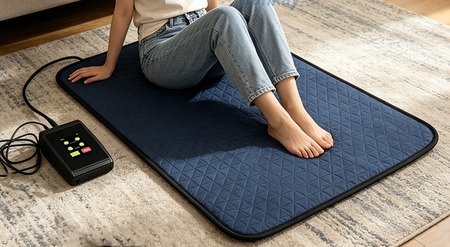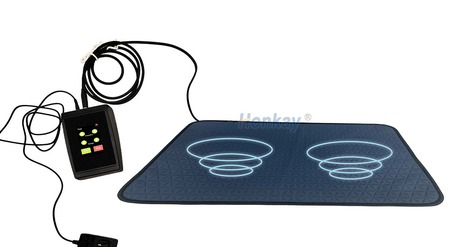
A floor mat asks something of the client before the session even starts: they have to get down to it and back up again. For a fit thirty-year-old that is nothing. For a seventy-five-year-old with a replaced hip it is the part of the visit that carries the real risk, and it has nothing to do with the device.
This page is about that practical side of using a mat with older clients: height, transfer, what goes under the mat, how long a first session should run, and who should be in the room.
Clinics tend to plan a session around duration and setting. With an older client the sequence is the other way round: decide first whether they can get to the mat safely, then decide what happens on it.
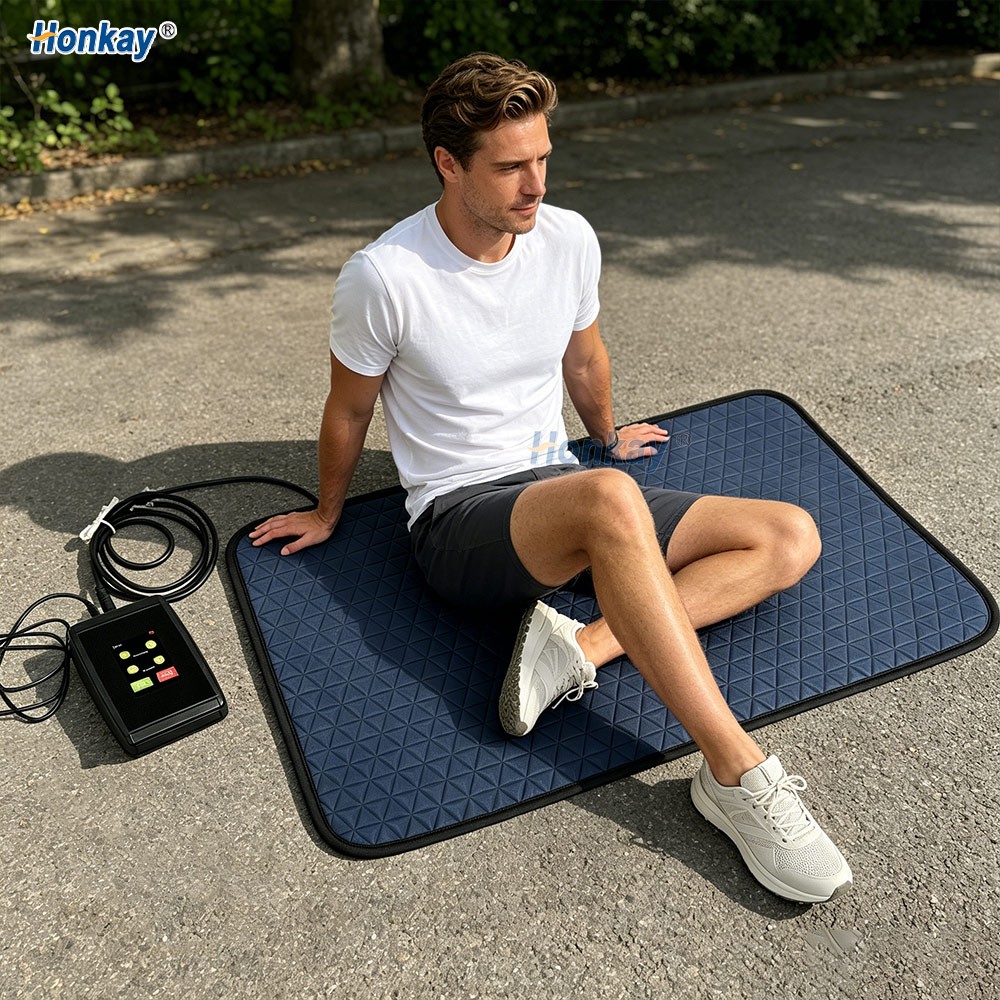
A mat on the floor is the most stable arrangement and the hardest to reach. A mat on a firm bed removes the transfer problem and changes what the client feels. A mat on a treatment table solves both and introduces a new question: can they get onto the table at all.
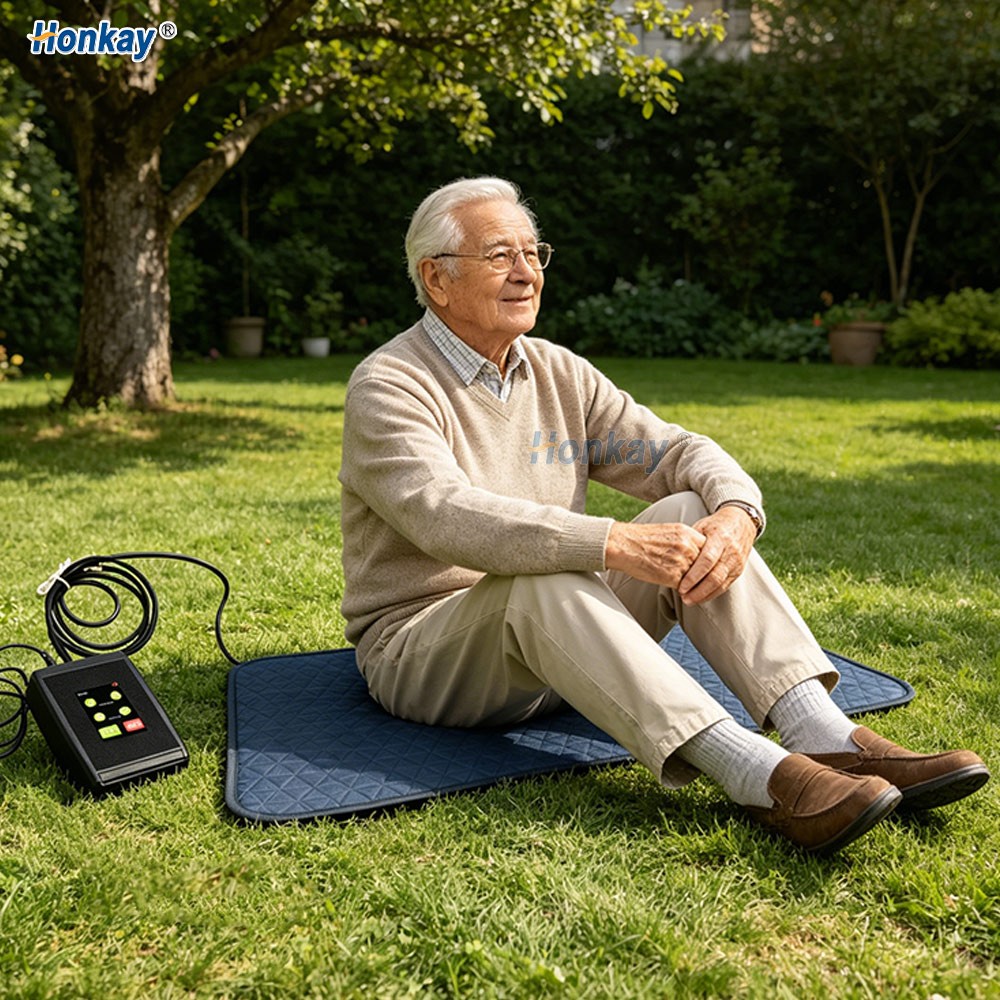
Most incidents involving a floor mat are not falls during the session. They happen at the edges: kneeling down, and standing up. Breaking the movement into three deliberate steps removes most of the improvisation.
| Step | What to prepare | Who does what |
|---|---|---|
| Down | A chair or frame within reach, mat held still | Therapist stands at the side, hands ready but not lifting |
| On the mat | Cushion for the head, a clear area around the mat | Therapist stays in the room throughout |
| Up | Same chair, mat kept from sliding | Therapist offers an arm, not a pull |
The one thing to avoid is the mat sliding while someone is pushing against it. A mat on a tiled or polished floor needs a non-slip layer underneath, and it is worth checking that before the client arrives rather than while they are on the floor.
Under the mat: something that stops it moving and something that makes the floor tolerable to lie on. Beside the mat: the controller within reach of the therapist, never within the client's stride, and the cable routed so nobody steps over it on the way to the chair.
A small cushion for the head changes how long a client can stay comfortable, and it is the cheapest addition to the setup. A folded blanket under the knees serves the same purpose for clients who feel the floor through the mat.
The manual is specific about first use: five to fifteen minutes, at the lowest intensity, and a head or face area should not exceed 2 Hz. For an older client the useful practice is to stay at the bottom of that range and treat the first visit as a familiarity session rather than a full treatment slot.
What matters is that the client leaves able to describe the experience in their own words. If they cannot say whether they felt anything, the next session has no baseline to build on.
With a floor mat, the answer for older clients is simple: someone stays. Not because the device is dangerous, but because getting up unaided from the floor is where the risk sits, and a client who is left alone for four minutes may decide to try it.
If a family member attends, agree beforehand who is responsible for the transfer. Two people helping badly is worse than one person helping consistently.
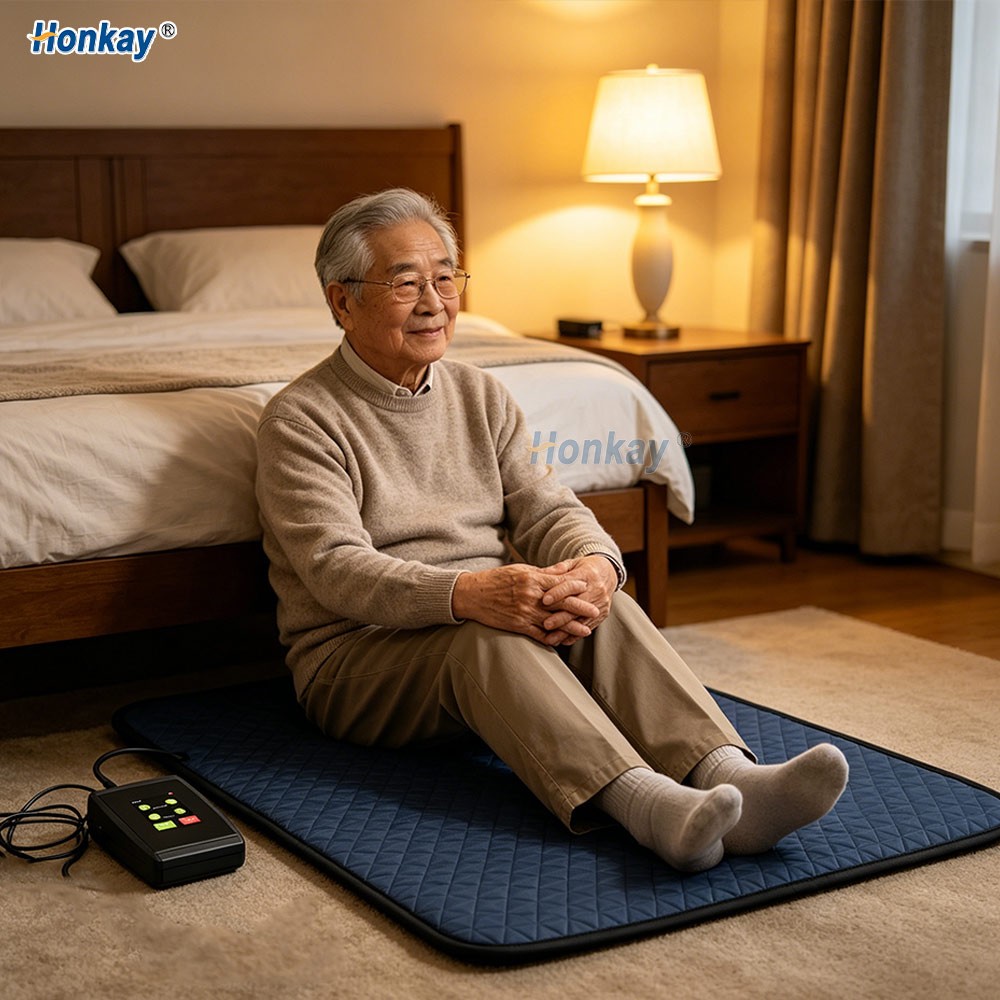
A mat does not have to be used lying down. A shorter mat on a firm chair covers the seat and the back of the thighs, and a client who cannot reach the floor can still have a session. On a bed, the mat lies flat on a firm mattress and the client is already at the right height, which removes the transfer problem entirely.
Each arrangement changes which part of the body is closest to the coils, so the settings and the duration should be decided for that arrangement rather than carried over from the floor protocol.
| Arrangement | Best for | Watch for |
|---|---|---|
| Mat on the floor | Clients who can kneel and rise without help | Slipping on tile, and the transfer itself |
| Mat on a firm bed | Clients who cannot reach the floor safely | Soft mattresses, and the cable route to the socket |
| Mat on a chair | Short sessions for the seated client | Shorter mats only, and the mat sliding on the seat |
Three lines are enough for a clinic file: the arrangement used (floor, bed, chair), the duration and level, and one sentence from the client in their own words. The third line is the one that makes the next visit easier, because it records what the client noticed rather than what the therapist intended.
If a client reports discomfort during the session, the note should say what happened and what was changed. That record is what a clinician needs if the question is ever raised later.
Some clients should not be getting to the floor at all: recent surgery, a current balance problem, or a clinician's instruction to avoid floor transfers. In those cases the mat moves to a bed or a chair, or the session does not happen yet. That is a clinical decision, not a device decision, and it belongs with the clinician who knows the case.
The manual also lists situations that need professional advice before use, including pregnancy, severe or acute conditions, and use in children. Screening those before the first appointment is faster than discovering them at the mat.
Six items cover it: a non-slip layer under the mat, a chair within reach of the mat edge, a cushion for the head, the controller on the therapist's side, the cable clear of the walking line, and the timer visible without leaning over the client.
Run the checklist once with the first older client and it becomes a habit. Run it after every change of room, because a mat that was stable on carpet is not necessarily stable on tile.
Yes, on a firm mattress with the mat laid flat. It removes the transfer problem, and the settings and duration should be chosen for that arrangement rather than copied from a floor protocol.
Five to fifteen minutes at the lowest intensity, which is what the manual specifies for first use. Staying at the lower end is sensible for a client who has never used a mat before.
For a floor session with an older client, yes. The risk is at the transfer, not during the session, and a client left alone may try to get up unaided.
Use a chair arrangement with a shorter mat over the seat, or a reclined position on a treatment table. The session does not have to look like the standard one to be useful.
A small cushion under the head is normal practice and makes a longer session tolerable. Keep it thin and consistent between visits so the client's description stays comparable.
The arrangement, the duration and level, and one sentence in the client's own words. That third line is what makes the next session easier to plan.
The clinician responsible for the case. Recent surgery, a balance problem or an instruction to avoid floor transfers all point to a different arrangement, and that is a clinical judgement rather than a device setting.
Honkay has been building physiotherapy and wellness equipment since 2005, including the mat range described here, and supplies clinics, studios and distributors across South America, South Asia, South-East Asia, Europe, Oceania and North America. The mats carry a 24-month warranty from the factory shipment date. If you are setting up floor sessions for older clients and want the arrangement checked against the mat sizes available, send the room dimensions and the typical client profile and the team will review it with you.
This device is intended for adjunctive use alongside professional care, not as a replacement for diagnosis or treatment. Suitability should be confirmed with a qualified clinician; individual experience varies.


 English
 中文