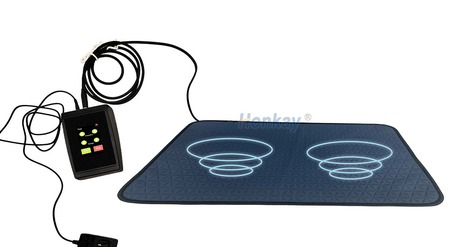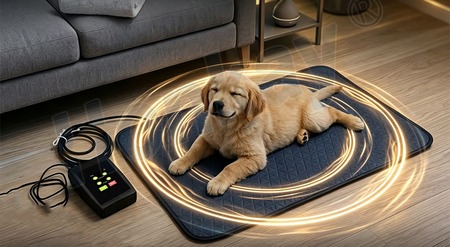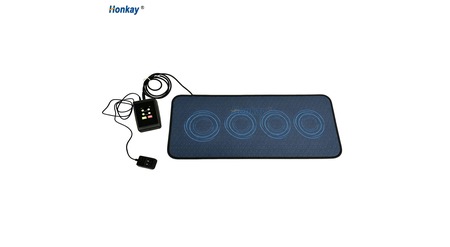
A mat that works well at home can still fail in a clinic, and the reason is rarely the device. It is the ten minutes between two clients: the mat has to be cleared, wiped, repositioned and ready before the next person walks in, and everything that has to be done by hand in that window is a cost.
This page is about that gap. It covers what to build into the routine, what the manual does and does not say about cleaning, and how the room layout decides whether turnover is two minutes or ten.
Clinics usually plan around the session. The schedule actually runs on the slot, which is the session plus whatever has to happen around it. If the mat takes six minutes to reset, a twenty-minute session consumes twenty-six minutes of the room, and the room is the thing you are really selling.
The useful measurement is not how long a session lasts. It is how many people can pass through the room in an hour without anyone rushing the cleaning or leaving a cable across the floor.
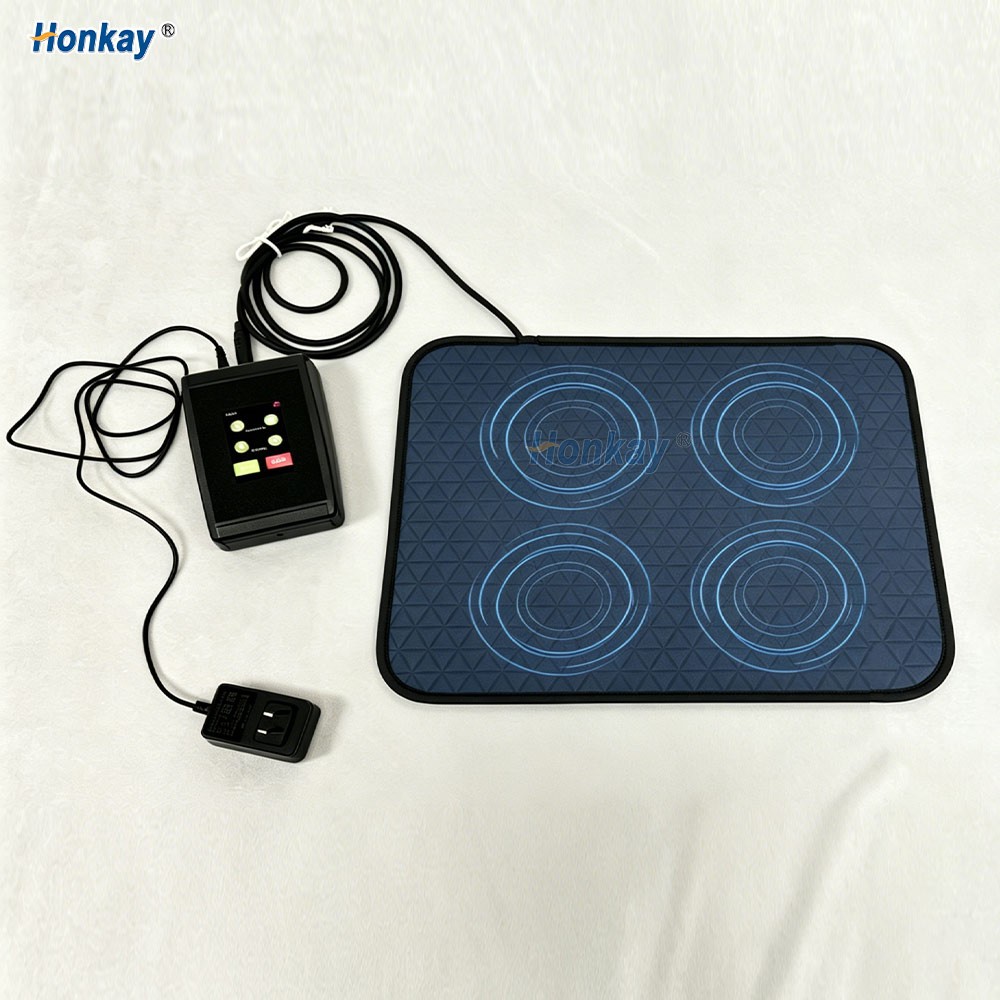
Four things, in this order: the client leaves the mat, the surface is wiped, the mat and controller are reset, and the room is ready for the next person. Only the second step is about hygiene. The other three are about time and about not starting the next session with a fault that was introduced by the last one.
| Step | What it protects | Who does it |
|---|---|---|
| Clear the mat | The client's belongings and the cable run | Therapist |
| Wipe the surface | The next client, and the mat's own surface | Therapist |
| Reset the controller | The next client's settings and timer | Therapist |
| Reset the room | The next client's first impression | Anyone available |
The manual that ships with this range covers operation, storage conditions and safety, but it does not prescribe a cleaning agent. That is not an oversight to be filled by guesswork: it means the choice belongs to the supplier and the clinic together, and it should be confirmed in writing before the first bottle is bought.
Two rules hold regardless of the product. A surface should be wiped with a damp cloth rather than soaked, and liquid should never be allowed to run toward the controller or the cable entry. Whatever agent is approved, test it on a small area of the mat first and check that the surface is unchanged after it dries.
Write the approved agent on a card and keep it in the room. In a clinic with several therapists, the card is the difference between one cleaning routine and four.
Many clinics solve turnover with a cover: a clean towel or a disposable sheet laid over the mat for each client, removed at the end. It protects the surface and it shortens the wipe, because the mat itself stays clean for longer.
Two cautions. A thick cover changes what the client feels, so keep it thin and consistent, otherwise two clients describe the same session differently. And a cover that bunches under the body is a trip hazard when someone gets up; a light tuck at the corners prevents it.
The controller runs defined programs with fixed durations, so a session has a natural length. The slot is that length plus the turnover. If the clinic books back-to-back slots equal to the program length, the turnover has to happen during the session or not at all, and neither is good.
The practical fix is to book a slot that contains the program plus a reset window, and to decide in advance what happens when a client arrives early. A waiting chair inside the room is easier than a client standing beside a mat that is still being wiped.
| Surface option | Effect on turnover | Watch for |
|---|---|---|
| Bare mat, wiped | Shortest wipe, no laundry | Agent approval and a full dry time before the next client |
| Reusable towel | Quick change, mat stays cleaner | Laundry volume and bunching under the body |
| Disposable sheet | Fastest reset between clients | Thin sheets slide; a tuck at the corners keeps them in place |
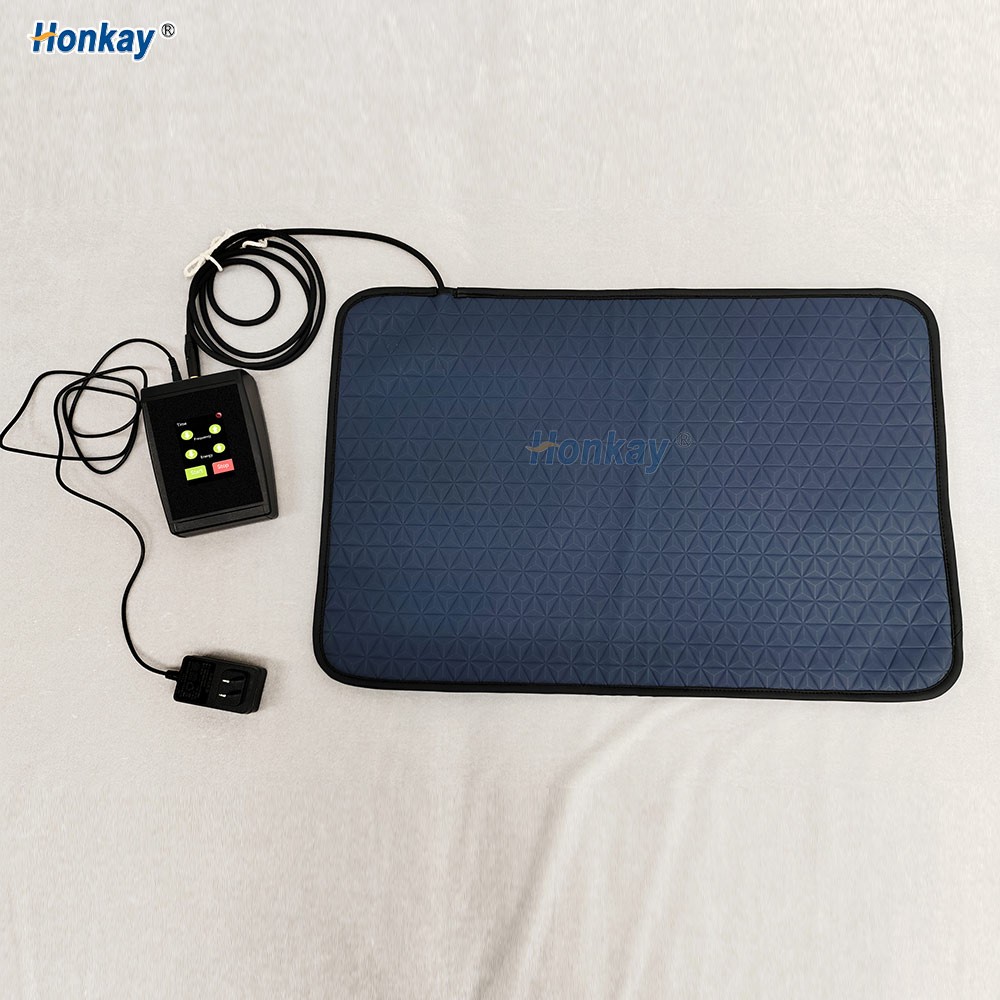
A mat laid on the floor with the controller beside it needs a walkway that does not cross the cable. A mat on a treatment table needs a stable surface and a controller that is reachable without the therapist leaning over the client. Neither arrangement is wrong, but both have to be decided before the room is used, not after the first near-miss.
The cheapest improvement in most rooms is a fixed position for the controller: a small shelf, a stool or a wall hook. It removes the two most common causes of a strained cable, which are a box on the floor and a box that gets moved twice a day.
Clients notice three things in the first minute: whether the surface is clean, whether the room smells of the previous person, and whether the therapist seems to know what the controller does. The first two are turnover. The third is training, and it is the one that decides whether the session is repeated.
The question that comes up most often is whether the mat is shared. Answer it plainly: the surface is cleaned between clients, a cover is used, and the settings are reset. A clinic that says this without hesitation is describing a routine, not improvising an answer.
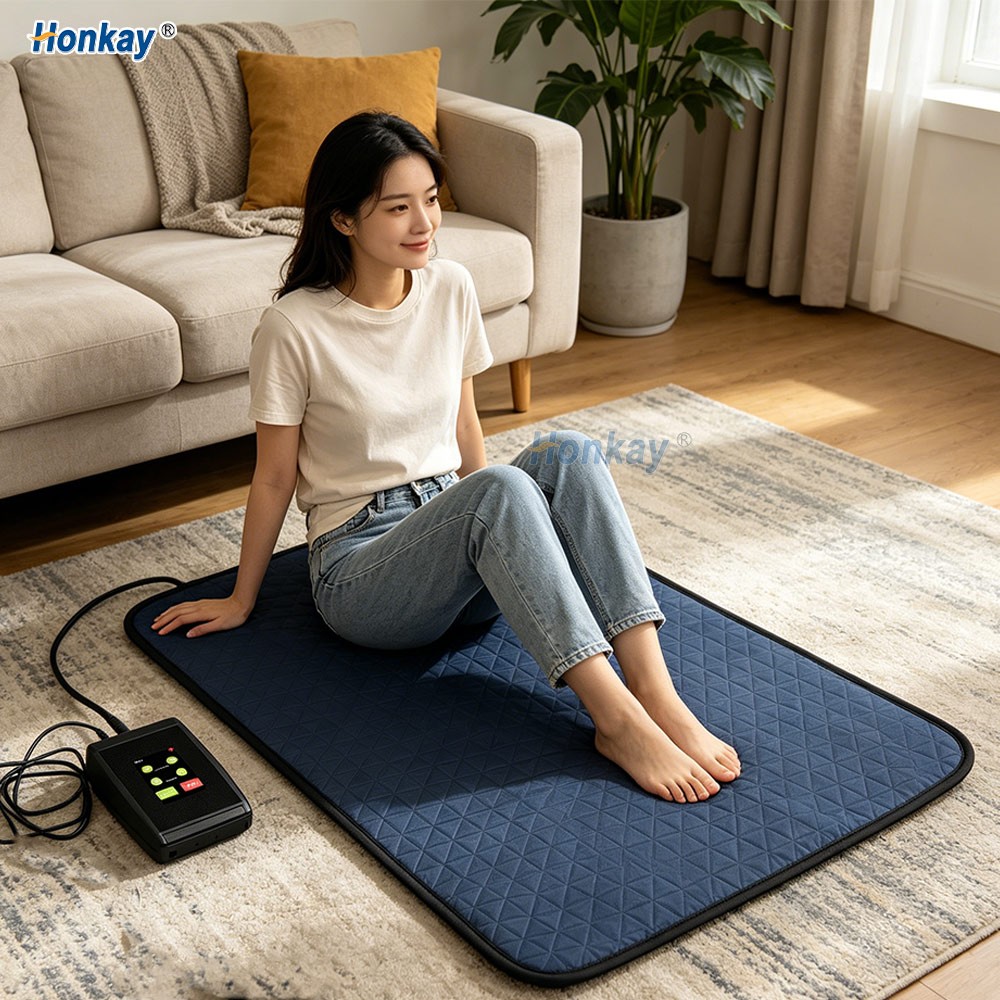
A second mat is often cheaper than a longer room slot. With two stations, the therapist can start one session, reset the other, and keep the room turning without asking anyone to hurry. The cost is floor space and a second controller, which is usually less than the revenue lost to turnover.
Two stations also create a new problem: they must be far enough apart that cables do not cross and that two clients are not listening to each other's conversation. In a small room, that distance is the constraint, not the equipment.
Six lines, kept beside the controller, cover almost everything that goes wrong between clients: cover removed and replaced; surface wiped with the approved agent; controller reset to the starting program; cable checked for a bend at the connector; floor clear of bags; timer visible from the therapist's position.
A checklist that lives in a drawer is a document. A checklist that lives beside the device is a routine. The difference is entirely about where it is kept.
The manual does not prescribe one, so confirm the approved agent with the supplier in writing before buying a bottle. Test any candidate on a small area and check the surface is unchanged once it dries.
It depends on the room and on whether a cover is used. What matters is that the reset window is booked into the slot rather than absorbed from the session, so no client is rushed out to make the next one start on time.
Yes, with a cover and a wipe between them, and with the controller reset so the second client does not inherit the first client's settings or remaining timer.
A thin cover reduces how often the mat itself needs cleaning and shortens turnover, but it should not replace the wipe. Keep the cover thin: a thick one changes what the client feels and makes sessions harder to compare.
Somewhere fixed and reachable without leaning across the client. A shelf or a stool is enough; the point is that the box stops being moved and the cable stops being strained at the connector.
Reset the program and the timer at minimum, and follow the manual for power. A unit left running between clients is a unit that someone will eventually assume is off.
Usually one is enough until turnover starts limiting bookings. When the reset window is what pushes clients to the next hour, a second station is cheaper than a longer room slot.
Honkay has been building physiotherapy and wellness equipment since 2005, including the mat range described here, and supplies clinics, studios and distributors across South America, South Asia, South-East Asia, Europe, Oceania and North America. The mats carry a 24-month warranty from the factory shipment date. If you are fitting a mat into an existing room, send the floor plan and the number of sessions per day and the team will check the layout against the turnover routine above.
This device is intended for adjunctive use alongside professional care, not as a replacement for diagnosis or treatment. Suitability should be confirmed with a qualified clinician; individual experience varies.


 English
 中文