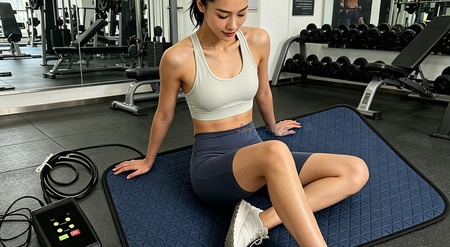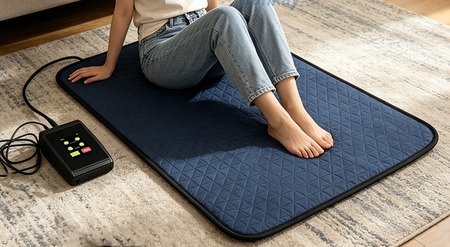
Most PEMF mats are chosen from a specification sheet and then installed in a room nobody measured. A mat is one of the few pieces of wellness equipment that can be checked against its destination before money changes hands: it is flat, it comes in four published sizes, and the surface it will lie on is already in the house.
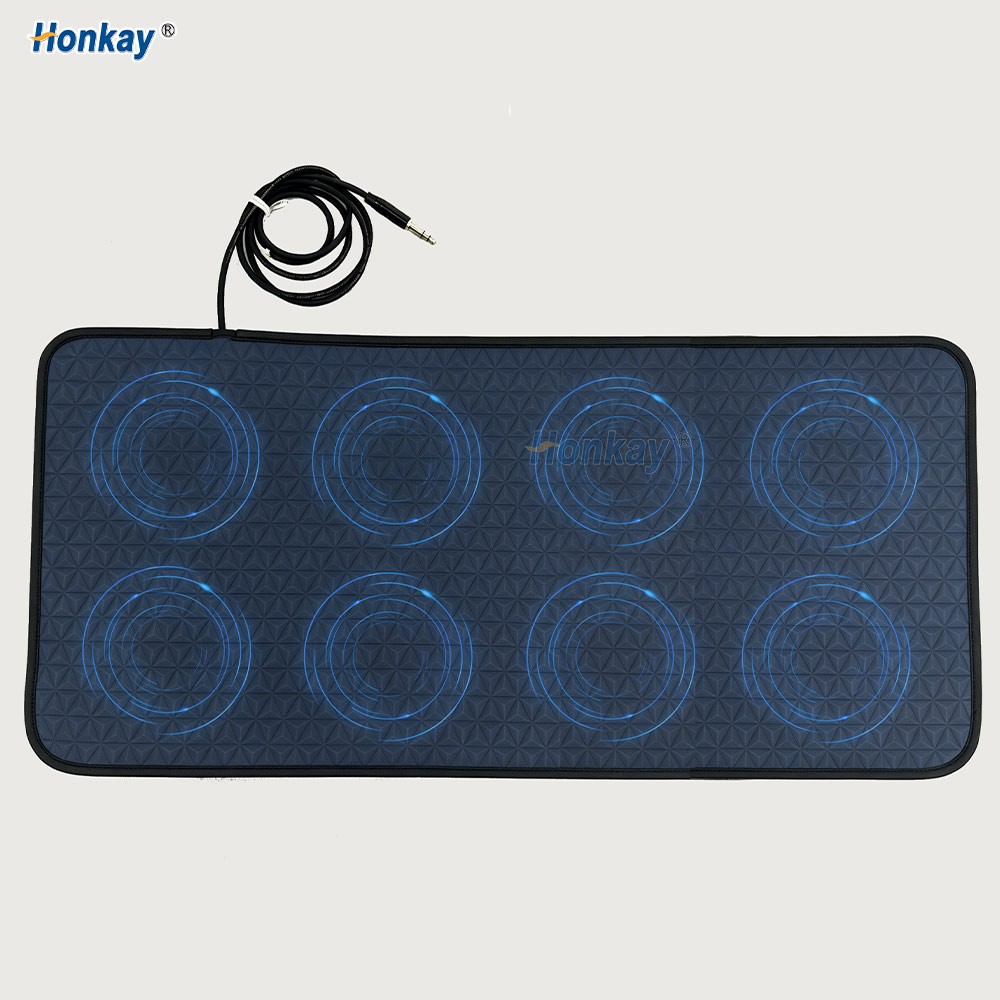
The four sizes are 40 × 60 cm, 60 × 100 cm, 40 × 120 cm and 60 × 200 cm, with two, four, four and eight coil positions. Those numbers decide three things that have nothing to do with the electronics: where the mat can lie, which part of the body is on it, and where it goes when the session ends.
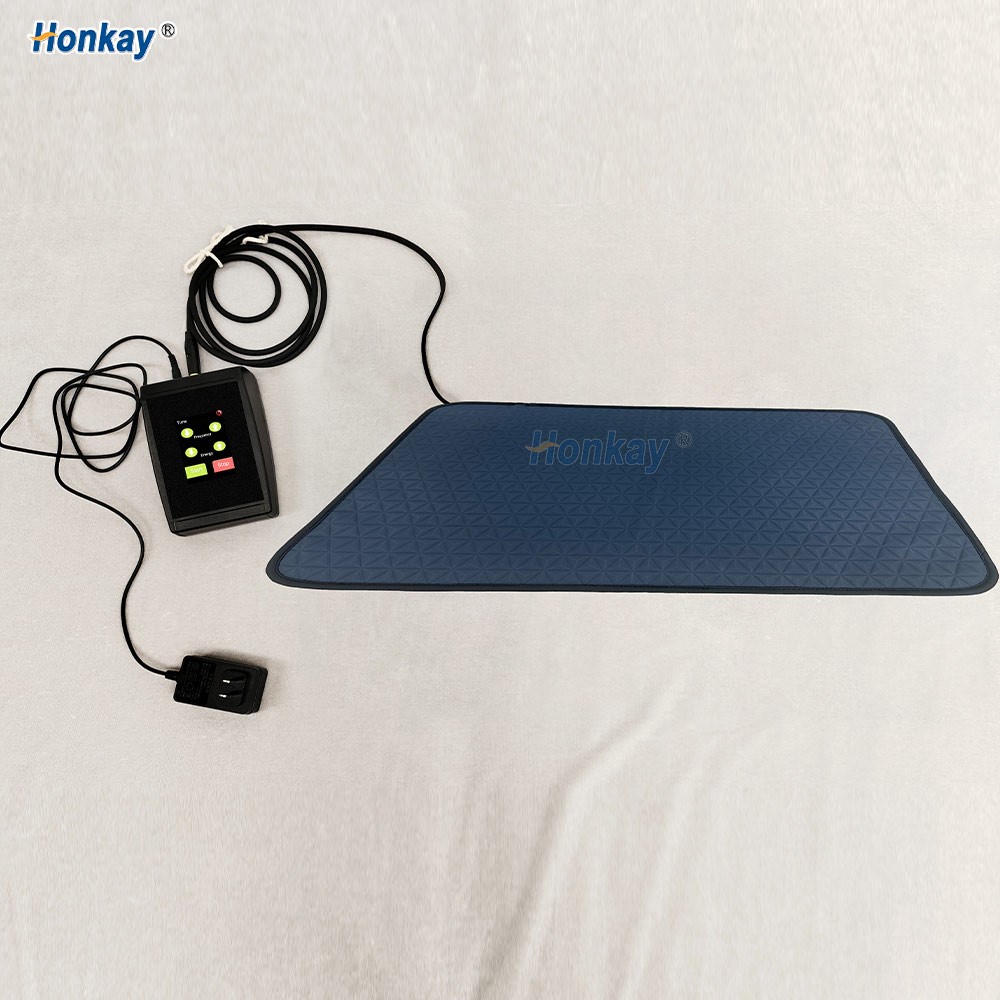
The published dimensions describe the mat only. An installation also needs room for the control box, the cable between the two, and clearance at the head end for a person setting the session up.
| Size | Coils | Where it fits | Coverage in one position |
|---|---|---|---|
| 40 × 60 cm | 2 | Armchair, desk chair, seat cushion, pet crate | One region: lower back, a shoulder, a thigh |
| 60 × 100 cm | 4 | Half a single bed, a two-seat sofa | Legs and hips, or the torso, not both |
| 40 × 120 cm | 4 | Three-seat sofa, daybed, a run of floor | Legs and hips when reclined |
| 60 × 200 cm | 8 | Single bed, treatment couch, clear floor | Whole body in one position |
Height and body length are the numbers people reach for first, and they are the least useful. The mat is not worn; it lies on something. A 90 cm single mattress leaves 15 cm of bare mattress on each side of a 60 cm mat and 25 cm on each side of a 40 cm mat. On a 140 cm double, a 60 cm mat sits on one side and leaves the other side free, which is usually what a couple wants: one person uses the mat, the other keeps their half of the bed.
Length is the same exercise in one dimension. A 200 cm mat covers a standard single mattress end to end. A 120 cm mat covers roughly the lower two thirds of an adult lying down, or the full length of a child. A 100 cm mat covers either the legs or the torso, and choosing between those two is the decision most buyers have not made before they order. A 60 cm mat does not lie along a bed at all; it sits on a seat.
Buying a longer mat does not change the settings, and a shorter mat does not reduce them: every size runs from the same 24 V 100 W supply, the same 1–100 Hz frequency range, the same 0–25 Gs intensity range and the same ten levels. So the honest way to choose is to write down the posture first. Whole body on the mat in one position means the 60 × 200 cm size. Sitting in a chair with the mat behind the back or under the thighs means 40 × 60 cm, because it stays where it is put. Reclined on a sofa with the legs along the seat means 40 × 120 cm.
On the floor, allow the mat's footprint plus a clear strip at the head end for the box and cable, and check the floor is not the walking route between two doors. A mat in a corridor is a mat that gets stepped over.
On a bed, a mattress is soft, so a 200 cm mat follows its contours rather than lying flat, and the cable has to leave at a corner rather than across the pillow. Decide before delivery whether the mat lies on top of the bedding or under a sheet; both work, but the cable route differs.
On a couch, seat depth is the number to measure. A 40 cm mat fits most seat cushions without overhang; a 60 cm mat will hang over the front edge of a narrower sofa, putting a fold where the knees are. If the couch is the main location, measure the seat, not the couch.
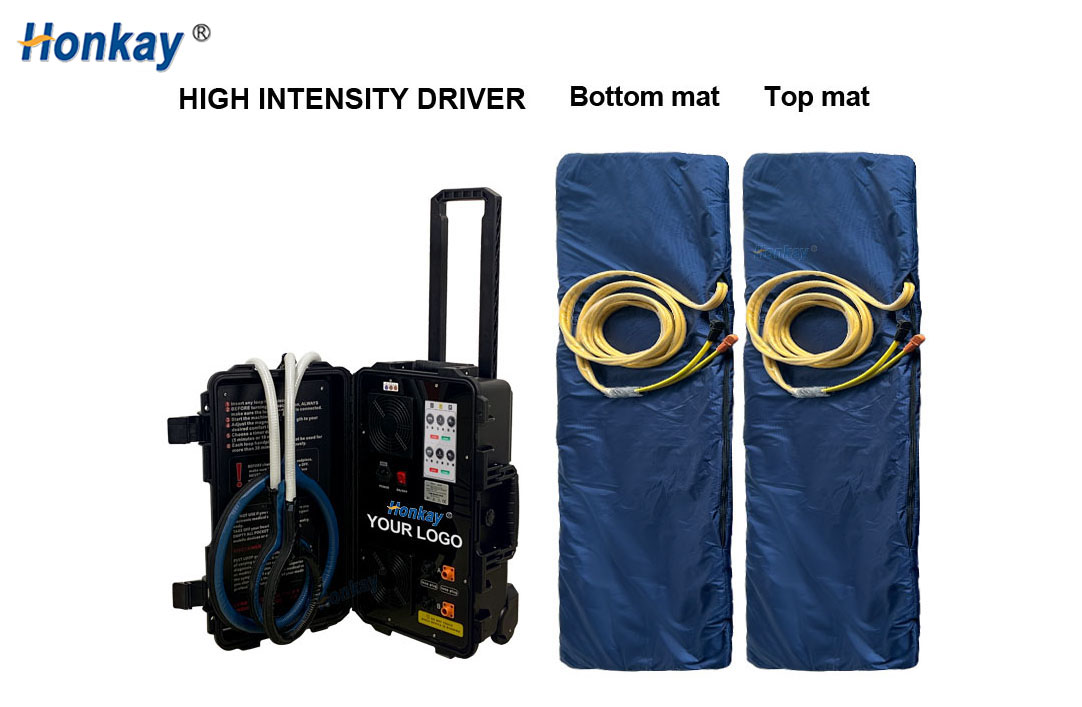
The box is a separate unit at the end of a cable and the part people forget to plan. Put it somewhere fixed: a bedside table, a low shelf, a tray beside the mat rather than in the middle of the room. It holds the buttons and the display, so it has to be reachable while the user is already in position, and it holds the adapter, so it has to be near a socket that can be reached without moving the mat. Check that distance with a tape measure on delivery day rather than by eye.
A 60 × 200 cm mat is a two-metre object, and the space it needs when it is not in use is the reason some mats end up permanently on a bed. Decide that space before the order: under a bed, behind a door, on a shelf, rolled in a corner. If the mat will be rolled or folded, confirm with the supplier what it tolerates, because the manual states storage conditions rather than a folding method: 5–40 °C, no more than 80 % relative humidity, away from direct sunlight, damp and strong magnetic fields. That sentence rules out a cold conservatory, a bathroom, and the shelf next to a speaker.
Two people sharing one mat is a space question before it is a scheduling question. If the mat has a permanent place, both users go to it. If it is moved between rooms, the installation is rebuilt twice a day and the cable and box are what get damaged in the process. Where the two users are very different in size, choose for the larger footprint, because a mat that has to be repositioned mid-session is a mat that gets used less.
| Check | Compare against | If it does not fit |
|---|---|---|
| Mat footprint | The surface you measured, including seat depth or mattress width | Move to the second location before unpacking the cable |
| Cable run | Socket to head end, plus slack | Reposition the box; never stretch the cable across a walkway |
| Box height | Reach from the user's position, seated or lying | Add a side table at the head end |
| Storage space | The place the mat will live, flat or rolled | Choose the permanent location now |
| Label and packing list | Size ordered, plus mat, box, cable, adapter, bag, manual | Report it before use, with photographs of the carton label |
The largest mat is not the most capable one. All four sizes share the same electrical specification and operating range and differ in covered area and coil count, so the choice is a coverage decision, not a capability ladder. One safety rule does follow the size, and it is stated in the manual rather than inferred: when the mat is used at the head region, the frequency must not exceed 2 Hz. A full-length mat makes that situation more likely, because the head is on the mat whether the user intends it or not.
The contraindications do not change with size either. A pacemaker, an implanted neurostimulator or any other electronic implant rules the device out; pregnancy, serious medical conditions and children require professional advice first; and the mat must not be used at the same time as EMS or TENS equipment, high-frequency devices, shortwave or microwave diathermy, or other electromagnetic equipment.
Yes. What changes is coverage: the mat lies across part of the mattress, so the person positions themselves on it instead of lying anywhere. If the mat will live on a bed, the 60 × 200 cm size removes that decision.
It leaves 15 cm on each side, which is workable but leaves no room to roll without leaving the mat. A 40 cm mat gives 25 cm each side and stays put more reliably.
No. Every size runs from the same adapter: input 110–240 V at 50/60 Hz, output DC 24 V, 100 W. The cable length between box and mat is the only thing worth confirming at delivery.
The manual gives storage conditions rather than a folding method: 5–40 °C, up to 80 % relative humidity, away from sunlight, damp and strong magnetic fields. If rolling is part of the plan, confirm the method with the supplier first.
Beside the head end, at a height reachable without standing up, near enough to a socket that the adapter cable does not cross a walkway.
The published range for the series is 0–25 Gs with ten levels, and 1–100 Hz. Coil count changes how much area is covered in one position, not the range printed in the manual.
Sharing works more easily when the mat has one permanent home and both users come to it. A 60 × 200 cm mat moved twice a day is the arrangement most likely to end with a damaged cable.
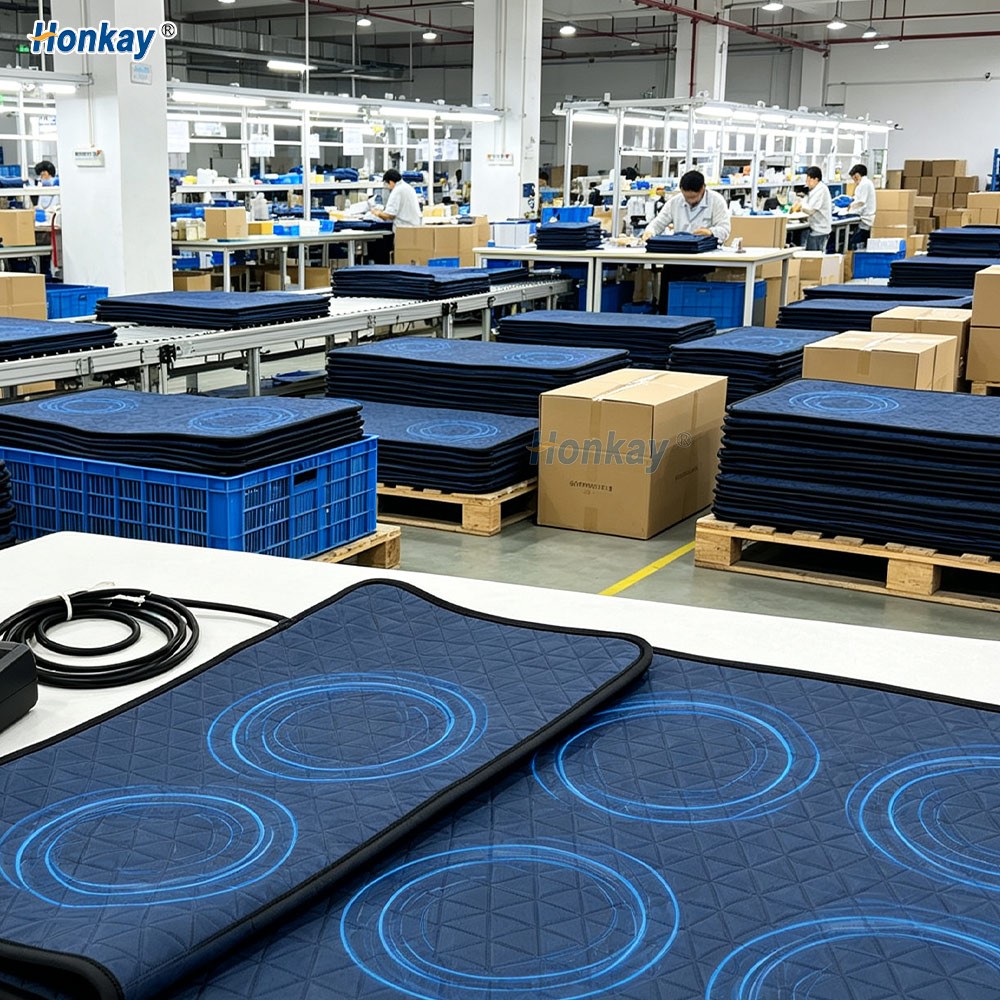
Honkay has been building physiotherapy and wellness equipment since 2005, including the mat range described here, and supplies clinics, studios and distributors across South America, South Asia, South-East Asia, Europe, Oceania and North America. The mats carry a 24-month warranty from the factory shipment date. If a room plan is still open, send the measurements and the intended position and the team will come back with the size that fits.
This device is intended for adjunctive use alongside professional care, not as a replacement for diagnosis or treatment. Suitability should be confirmed with a qualified clinician; individual experience varies.


 English
 中文