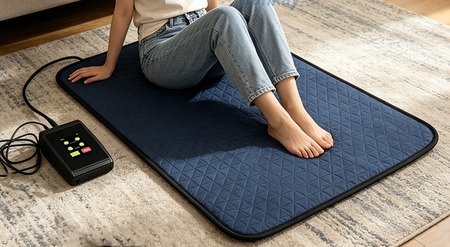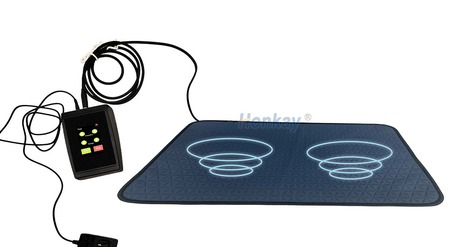
Athletic clients arrive with a training week already in their head: which days are hard, which are easy, when they compete. A mat session either fits into that week or it gets skipped, and the difference is usually decided by scheduling rather than by the device.
This page is about fitting the mat into a training routine without overstating what it does: where it sits in the week, how long a session runs, what to do on the gym floor, and what to tell a client who expects it to replace their warm-up.
The clearest way to describe a mat session to an athlete is that it is a separate, quiet block rather than a substitute for warm-up, cool-down or conditioning. The mat does not load tissue, it does not replace mobility work, and it does not shorten a taper.
Once that is said out loud, the scheduling question becomes simple: which day has a free half hour in a place where the client can lie down without being stepped over.
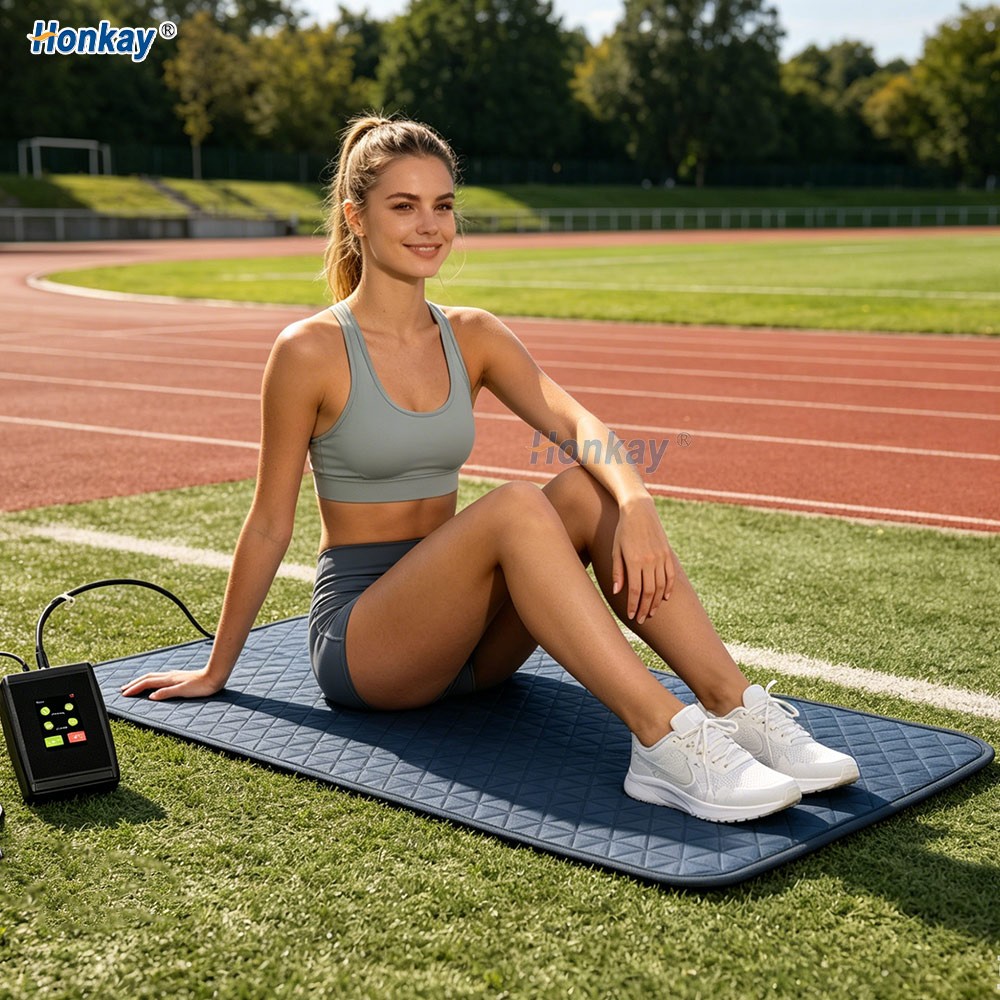
Clinics place sessions in three slots: on a rest day, several hours after a hard session, and before a light session. Each has a practical rationale that has nothing to do with a performance claim: the client is available, the client is not rushing to leave, and the client is not arriving already tired.
| Slot | Why clinics use it | Practical note |
|---|---|---|
| Rest day | Client is unhurried and not competing for the room | Easiest slot to keep as a standing appointment |
| Hours after a hard session | Client has eaten and rested; the visit is separate from training | Needs a shower and a change of clothes first |
| Before a light day | Does not sit between two hard sessions | Keep it short; the client still has a session the next morning |
What should not be promised is a training effect. The honest description is a relaxation and recovery routine that a serious athlete can hold to because it is scheduled like any other appointment.
The manual gives the range: first use five to fifteen minutes at the lowest intensity, ten levels available, 1 to 100 Hz across the programs. For an athletic client the useful discipline is to start at the bottom and extend the duration before raising the level, because duration is the variable the client can feel and describe.
If a client asks to go straight to the highest setting, the answer is the same as for any other client: the highest setting is not the one that produces the most useful session, it is the one that produces the least information about how the client responds.
Three things make a gym harder than a treatment room: traffic, sweat, and noise. Traffic decides where the mat can lie, sweat decides what the surface looks like after ten sessions, and noise decides whether the client can hear the controller's timer finish.
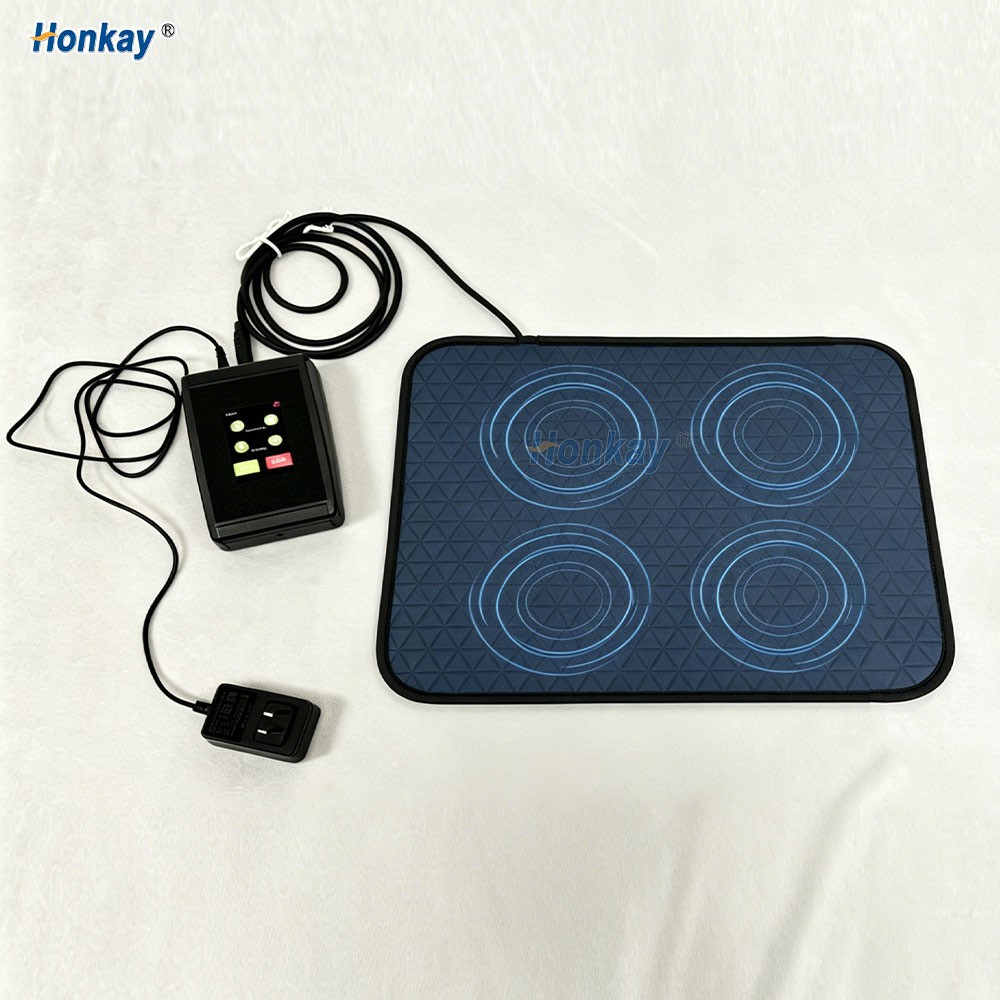
A mat placed against a wall, out of the walking line to the racks, solves most of it. The controller goes on the floor at the mat's head end, tucked against the wall rather than beside the client's shoulder where a passing foot can catch the cable.
An athletic client will arrive warm and will sweat during a session. A thin towel over the mat is the difference between a surface that lasts and one that needs replacing early, and it also means the wipe between clients is short.
Cleaning agents should be confirmed with the supplier in writing rather than chosen at the gym's cleaning cupboard; the manual does not prescribe one. Whatever is approved, wipe rather than soak, and keep liquid away from the controller and the cable entry.
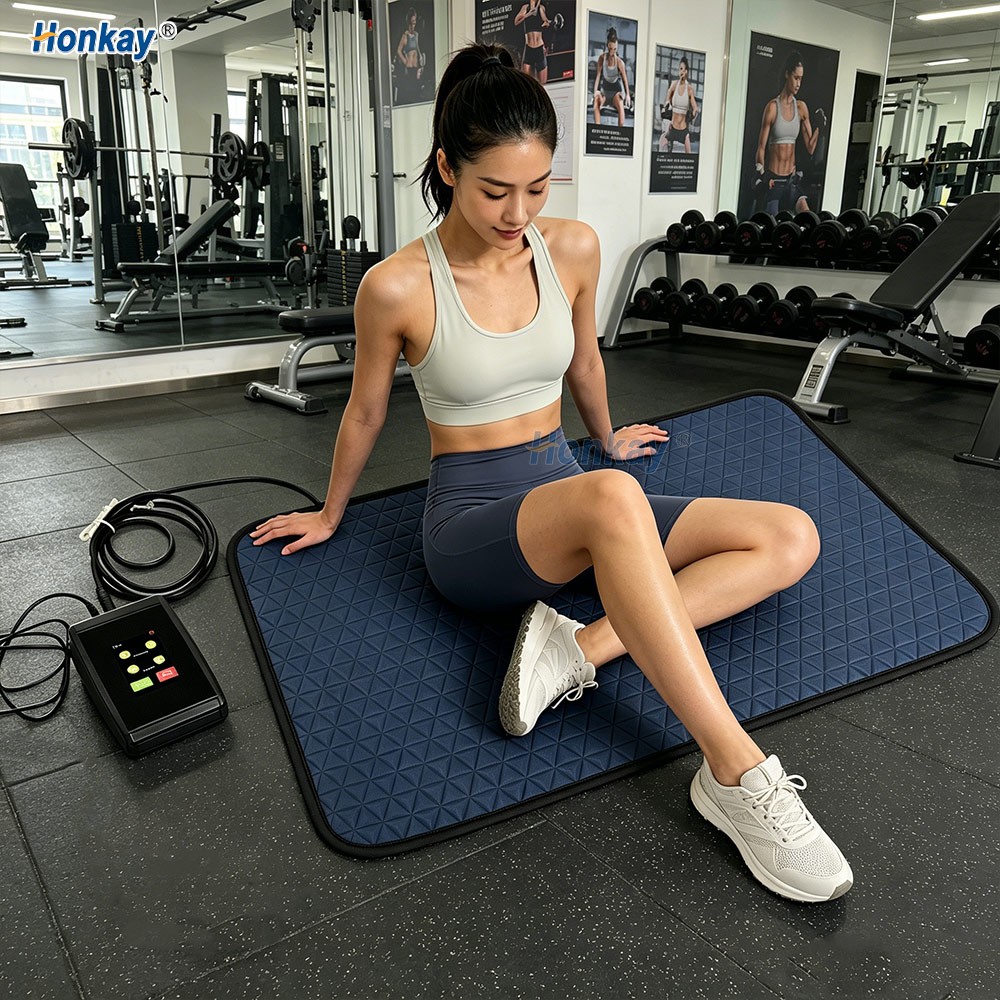
When one mat serves a group, the constraint is turnover. A cover per client and a reset between sessions keeps the queue moving, and a printed card with the three standard programs stops each athlete from inventing their own settings.
It also helps to number the slots. A squad will use whatever is available and skip whatever requires waiting; a schedule posted beside the mat turns an optional extra into part of the week.
Not on a wet floor, not in a sauna, and not beside other electromagnetic equipment in use at the same time. The manual is explicit that the mat should not be used together with EMS or TENS units, shortwave or other electromagnetic devices, and that instruction is easiest to follow when the mat has its own corner rather than sharing a bench.
Nor does it belong in a programme for an athlete with a pacemaker, a neurostimulator or another implanted electronic device, unless a clinician has been consulted. That is a screening question, not a training question.
The most common mismatch is expectation. An athlete who has read marketing copy elsewhere will arrive expecting a session that changes tomorrow's training. The professional answer is short: this is a relaxation and recovery routine, it is not a treatment, and it is not a substitute for the work their coach has planned.
A client who understands that will still use it, because it is thirty quiet minutes that they would not otherwise take. A client who was promised more will stop when the promise does not hold.
| What a client may say | The honest version |
|---|---|
| "This will help me train harder tomorrow" | It is a relaxation and recovery routine; it does not add training capacity |
| "Can I skip my cool-down for this?" | No; it does not replace mobility work or a cool-down |
| "How many sessions until it works?" | There is no session count to promise; what the clinic can promise is consistency and a record |
Five lines, printed and pinned beside the mat: first session five to fifteen minutes at level one; towel on the mat; controller at the head end against the wall; no other electromagnetic devices running; log the session and one sentence from the client.
It is not a clinical protocol and it is not meant to be. It is the difference between a mat that gets used consistently and one that is used twice and then covered with towels.
The training log already exists, so the mat entry can be short: date, slot in the week, duration, level, and one line about how the client felt afterwards. Over a month, that record is what tells you whether the sessions are landing on the right days.
It also gives the client something to look at when they ask whether it is working. The honest answer is that the log shows consistency, and consistency is the part the clinic can control.
Either can work as a scheduling choice. The practical constraint is that the client should not be rushing between the two, so a rest day or a slot several hours after a hard session usually holds better.
No. It is a separate relaxation and recovery routine and does not load tissue or prepare joints for work. Keeping that distinction avoids disappointed clients.
The manual's first-use range is five to fifteen minutes at the lowest intensity. Extending duration before raising the level gives the client something concrete to describe.
The manual specifies that the mat should not be used together with EMS or TENS units, shortwave or other electromagnetic devices. Give it a corner rather than sharing a bench with anything that emits.
Yes, with a towel per client and a reset between sessions. A posted schedule is what stops a shared mat from becoming an unused one.
A pacemaker, neurostimulator or other implanted electronic device is a contraindication in the manual, so the case goes to a clinician before any session is booked.
The manual does not prescribe one, so confirm it with the supplier in writing. Wipe rather than soak, and keep liquid away from the controller and cable entry.
Honkay has been building physiotherapy and wellness equipment since 2005, including the mat range described here, and supplies clinics, studios and distributors across South America, South Asia, South-East Asia, Europe, Oceania and North America. The mats carry a 24-month warranty from the factory shipment date. If you are fitting a mat into a training facility and want the layout and slot plan reviewed, send the floor plan and the weekly training pattern and the team will work through it with you.
This device is intended for adjunctive use alongside professional care, not as a replacement for diagnosis or treatment. Suitability should be confirmed with a qualified clinician; individual experience varies.



 English
 中文