A clinic that adds a shockwave unit almost never removes a therapist. What changes is what a therapist's hour can hold. The room that used to deliver two hands-on appointments in an afternoon can sometimes deliver three or four mixed appointments in the same four hours, with the same two people on the roster, because part of each appointment is now spent with a handpiece doing the repetitive work while the therapist stands there — or, more usefully, is not standing there at all. That is the whole of the operational case, and it is a case about minutes, room turnaround, wages and the price list. It is not a case about which approach is better for a given shoulder.
This page is written for the people who have to make that decision and then live with it: clinic owners comparing a device quote against a job advert, practice managers redrawing a column of appointment slots, senior therapists who will be the ones asked to change how a visit runs, and distributors who need to answer the question "what does this actually replace?" without overstating it. Everything below stays on time, cost, staffing, sequencing and the boundaries of suitability. Which client is appropriate for a session, and what a session should consist of, stays with the trained clinician working under the protocol the clinic follows. Nothing here is clinical guidance and nothing here is a claim that one approach does more than another.
Owners tend to use the word "replace" to mean three quite different things, and most of the confusion in this purchase comes from mixing them. The first is replacing hands-on minutes inside an appointment: some of the time a therapist would have spent in continuous manual contact is instead spent operating a handpiece, or supervising a client who is being worked on. The second is replacing a hire: the clinic takes on enough additional volume to need one more pair of hands, and buys a device instead of recruiting. The third is replacing clinical judgement — the assessment, the decision about what to do, the reading of how the client responds. Only the first two are real, and the second is conditional. The third is not on the table and should not be sold as if it were.
The first substitution is genuine but partial, and it is worth being precise about which minutes move. A manual session is built out of several kinds of time: assessment and reassessment, positioning and draping, the long continuous manual pass over an area, the short pauses where the therapist waits for a response, the talking, the documentation, and the cleaning and turnover between clients. A device can take a large share of the long continuous pass and most of the waiting, because it does not tire, does not need a repositioning break every few minutes, and can keep working at a steady rhythm while the therapist does something else in the same room — or, in a two-room arrangement, something else in the next room. It cannot take the assessment, and it cannot take the part of the visit where a person has to decide that today's plan should be different from last week's.
The second substitution is the one that gets clinics into trouble, because it is arithmetic that looks like a comparison of two prices. A device is bought once and depreciated over several years; a therapist is paid every month and is present whether or not the diary is full. On a spreadsheet the device looks cheaper almost immediately. But the device only displaces a hire if the volume freed up is volume the clinic already has or can fill, and if the remaining staff can supervise the added appointments safely. Where those two conditions fail, the clinic has not replaced a hire; it has added a capital cost to a roster that was already adequate, and the freed minutes go into idle time.

Before a device can be compared with anything, the clinic needs a realistic cost for an hour of delivered hands-on time. The number most owners carry in their head is the wage, and the wage is the smallest part of it. A loaded hour includes employer on-costs, paid leave, insurance, uniform and laundry, continuing education, the share of reception and management overhead the therapist consumes, and the share of the day that is not billable at all. Add those and the cost of an hour actually spent with a client is usually well above the hourly rate on the contract, often by a third or more.
The second correction is the billable share of a rostered day. Very few clinics bill every hour a therapist is paid for. There is the gap between appointments, the late arrival, the note written after the client has gone, the ten minutes spent cleaning a couch and changing paper, the phone call to a referrer, the staff meeting. A day that looks like eight bookable hours is more often six and a half hours of contact and an hour and a half of everything else. If a clinic plans its device case on eight billable hours, the case will look better than it is; if it plans on five, it will look worse than it is.
The third correction is the shape of the appointment itself. A forty-five minute hands-on slot is rarely forty-five minutes of contact. It includes undressing, positioning, the conversation at the start, the reassessment in the middle, the booking at the end. Strip those out and the continuous manual work might be twenty-five or thirty minutes. That stripped figure is the only part of the slot a device can address, which is why the naive comparison — "a device session is shorter than a manual session" — overstates the gain. What actually changes is not the length of the contact; it is who is providing it and what they can do at the same time.
| Component of one hands-on hour | What it covers | How it behaves as volume rises | What a device changes | Where to find the real figure |
|---|---|---|---|---|
| Wage and employer on-costs | Contract rate plus tax, leave, insurance and contributions the employer carries | Steps with each additional roster line, not with each client | Nothing directly — but it is the number the device has to be cheaper than | Payroll export, twelve months, divided by paid hours |
| Paid but unbillable time | Notes, cleaning, turnover, meetings, cancellations, gaps in the column | Grows with the number of appointments, so it scales with volume | Shortens turnover only if the room is set up for it; adds a cleaning step if it is not | Booking system: booked minutes against rostered minutes |
| Physical load on the therapist | The part of the day that ends in fatigue, and the ceiling it puts on a list | Binds sooner than the diary does — the sixth hour is not the first | Moves the ceiling, because the heavy repetitive pass is partly shared | Ask the therapists where the day gets hard, and at what hour |
| Room minutes | The couch, the cubicle, the equipment, the time the space is occupied | Fixed by the number of rooms, so it becomes the constraint first | Nothing, unless a device slot can run in a smaller or shared space | Count rooms, not machines — the room is what sells the hour |
| Supervision and cover | The second person needed when one is operating equipment and one is with a client | Appears at the point where two appointments overlap | Makes overlap possible, which is where the savings actually come from | Roster the overlap on paper before buying anything |
The useful question is not "how long does a device session take" but "which tasks in this appointment can be handed over, and which cannot". If the answer is one task, the clinic has bought a faster way to do that one task and nothing more. If the answer is three or four, the slot can genuinely be redrawn. Most rooms that report a disappointing purchase have handed over a single task, kept every other step exactly as it was, and then wondered why the appointment still takes forty minutes.

One point about the equipment belongs here, because it changes how a slot is written. A radial applicator spreads its output from a broad face near the surface, so it covers an area quickly and tolerates a hand that moves; a focused applicator shapes its output below the skin, so it rewards a hand that holds a position still. A radial pass is therefore easier to hand to a less experienced operator, while a focused pass needs someone taught where to place the handpiece and how to keep it there.
| Step in the appointment | Hands-on by necessity? | Can the equipment carry it? | What still needs the therapist | Net effect on slot length |
|---|---|---|---|---|
| Assessment and history | Yes — contact, movement testing, judgement | No | All of it, including the decision that today's plan is unchanged | No change; this is the fixed cost of every visit |
| Positioning and draping | Yes, but brief | No, though it dictates which areas are reachable | Getting the client comfortable enough not to move | Slightly longer if the device needs a specific lie |
| The long continuous pass | Yes, and this is the physically expensive part | Largely — one hand on a handpiece, steady rhythm, no fatigue | Where to work and how long at each point | The largest single saving in the visit |
| Pauses and waiting | No — they exist because a hand needs a rest | Yes — continuous output removes most of them | A check that the client is tolerating the session | Shortens the middle of the slot perceptibly |
| Cueing and explanation | Yes | No, and a device in the room can eat the attention it needs | All of it — this is where a mixed visit feels rushed | Can lengthen the visit if the slot is cut too hard |
| Reassessment before the client leaves | Yes | No | Comparing this visit with the last, and recording it | No change; often the step that gets squeezed and should not |
| Cleaning and turnover | No | Adds a step: handpiece face, cable, gel residue | Someone has to own the routine, and it is not optional | Roughly two to four minutes added between clients |
| Documentation | No | Not the writing, but it can be done while the session runs | The clinical content of the note | Moves off the end of the slot if the room layout allows |
Read down the third column and the pattern is clear: the equipment takes the two rows that are longest and most physical, and adds a small amount back in turnover. The rows it cannot take are the ones that make the visit worth paying for. That is why the honest version of this purchase is "more capacity per therapist hour", not "fewer therapist hours", and why a clinic that cuts the reassessment to make the arithmetic work has cut the wrong line.
Once a clinic decides to run both in one visit, the next decision is order, and it is a scheduling decision as much as a clinical one. Order determines how many times the client undresses, how long the room is occupied, whether one therapist can supervise two things, and how the appointment is priced. There is no single right order; there are five patterns in common use, and each one suits a different combination of room layout, staffing and client group.
The most common is hands first, then equipment, because the manual part is where the therapist learns what today's session should look like. In this pattern the therapist assesses by hand, works manually on the parts that need judgment, then hands over the repetitive pass to the handpiece for the last portion of the visit. The client is already positioned and undressed, so there is no second set-up. The cost is that the therapist is in the room for the whole appointment, which means the pattern improves the quality of the visit and the therapist's physical day but does not by itself free any minutes for a second client.
The second is equipment first, then hands. This suits a room where the therapist wants to use the device time as a warm-up before manual work, and it has an operational advantage: the therapist can start the equipment, leave the room to check the next client in or finish a note, and return for the manual portion. It is the pattern that most reliably converts the purchase into capacity, because the unattended minutes are real. It depends on the clinic being comfortable with a client on a couch with a device running and no clinician in the room, which is a governance question each clinic has to answer under its own protocols, and it depends on an emergency call bell or line of sight.
| Sequencing pattern | Why rooms choose it | Minutes freed per visit | What it demands | Where it breaks |
|---|---|---|---|---|
| Hands first, then equipment | The assessment tells the therapist what the rest of the visit should be | Few, but the therapist's physical load falls | One set-up, one room, one therapist throughout | When the clinic expects a capacity gain and does not get one |
| Equipment first, then hands | The unattended block can overlap with reception, notes or the next client | The whole unattended block, typically fifteen to twenty-five | Clear supervision rule, call bell, line of sight, documented routine | When nobody is free to be in two places, so the block is watched anyway |
| Split across two visits | Rooms too full to hold both parts on one day | None per visit; the gain is in the length of the hands-on visit | Two bookings per episode and a reception that explains why | Client attrition between the two visits |
| Two rooms, overlapping blocks | Highest capacity per therapist hour without a second hire | Twenty to thirty, if the overlap is protected | Two rooms, two set-ups or one that moves, overlap-aware booking | The first busy day, when both clients need a person at the same minute |
| Equipment-only maintenance visit | Keeps the episode alive between hands-on visits at low cost | Ten to fifteen of therapist time, most of it set-up | A trained operator who is not necessarily the senior therapist | When it becomes the whole episode and the clinic stops reassessing |
Every clinic that runs a mixed list discovers the same thing within a few weeks: a share of the client base cannot be moved onto an equipment-led slot without the visit getting worse, and that share is not small. Identifying it before purchase matters, because the whole capacity case rests on the proportion of the list that can actually be converted. A clinic that assumes every client is convertible will build a roster it cannot fill; a clinic that measures the convertible share first will size the purchase correctly and keep the manual column intact for the rest.
The first group is the first visit and any visit where the picture has changed. Assessment is contact work, and a device cannot ask a question or notice a hesitation. Clinics that try to compress the first appointment into an equipment session usually end up adding a second appointment a week later, which costs more than the original slot ever did.
The second group is the client who cannot settle. Anxiety, a low tolerance for lying still, a cough, a need to change position every few minutes, a hearing or communication difficulty, a language the operator does not share. These visits are supervision-heavy by nature, so the equipment frees no minutes at all — the therapist stands beside the couch exactly as before, with a handpiece instead of a hand. In rostering terms they behave like manual appointments and should be booked as such.
The third is the client whose problem is spread across several areas, or whose presentation changes from week to week, so that the work is a sequence of small decisions rather than a steady pass over one region. The fourth is the client with fragile skin, poor circulation, reduced sensation or a complex medical history, where the clinic's own protocol will keep a clinician's hands and eyes on the area throughout. The fifth is the client who is buying contact — the wellness, massage-led or maintenance customer for whom the hour of attention is the product, not a means to it. Moving that client to a handpiece is not a productivity gain; it is a change of product, and it should be priced and sold as one if it is done at all.
| Client group (operational description) | Why hands stay in the room | What the equipment contributes | Can the slot be shortened? | Book it as |
|---|---|---|---|---|
| First visit, or any visit where the picture has changed | The assessment is contact work and cannot be delegated | Little on the day; it may inform the plan afterwards | No | Full-length assessment slot |
| Clients who cannot lie still or settle | Continuous supervision and repositioning are the visit | A steady pass, but only while someone stands there | No — these cost the same as manual | Manual-length slot, equipment if useful |
| Multi-area or week-to-week variable presentations | The visit is a series of decisions, not one long pass | Useful on the largest area, but the rest is still hands | Marginally | Long slot with a device block inside it |
| Fragile skin, reduced sensation, complex history | Continuous observation under the clinic's own protocol | Only with a clinician present throughout | No | Supervised slot, senior operator |
| Clients buying contact rather than throughput | The hour of attention is the product they came for | Adds novelty, not capacity | No — shortening it changes what is sold | Unchanged manual slot, priced as before |
| Repeat clients on a stable plan over one large area | A short check, then the repetitive work can move | Most of the visit, with a trained operator in and out | Yes — this is the convertible core of the list | Short mixed slot, overlap allowed |
| Maintenance clients between hands-on episodes | Only a brief check each time | The whole session, run by a trained assistant | Yes, and the senior therapist need not attend | Short equipment slot |
The comparison owners actually want is between the price of the device and the cost of the person they would otherwise recruit. That comparison can be made honestly if it is expressed in the right units. Convert both sides into hours of delivered capacity rather than into money, and the question becomes: how many therapist hours does this device free in a year, and how many hours would the hire provide?
Take the delivered cost of the unit, including freight, duties, installation and the first set of consumables, and call it C. Take the fully loaded annual cost of one full-time therapist — wage plus on-costs plus the overhead they consume — and call it A. The ratio C/A tells you what fraction of a hire-year the device costs. In most clinics that ratio lands somewhere between a third and one and a half, which is the range where the decision is genuinely interesting: below a third, the device is a tool purchase and the arithmetic hardly matters; above one and a half, the device has to justify itself against a person and usually will not, unless the freed hours are being sold at a good price.

The other side of the ratio is the capacity freed. Suppose the convertible core of the list is a third of appointments, each converted visit frees twenty minutes of therapist time, and the clinic runs twenty-five appointments a week. That is roughly eight converted visits a week and about two and a half hours freed. Over a year of forty-six working weeks, that is around a hundred and fifteen hours — under three full working weeks of one therapist. Those hundred and fifteen hours only turn into money if the diary was previously full and the freed minutes are filled with additional bookings. If the diary had gaps, the device has freed time that was already free.
This is why the volume test has to come before the price test, and why a clinic with a half-empty column should be looking at marketing or at converting its manual list, not at a capital purchase. The same arithmetic run at sixty appointments a week with a converted share of half produces something over four hundred freed hours a year, which is a quarter of a therapist and begins to look like a hire avoided. The difference between those two clinics is not the device and not the price; it is the diary.
| Weekly appointments | Convertible share of the list | Therapist hours freed per year | What that equals | What it takes to convert it into money |
|---|---|---|---|---|
| 15 | A third | About 75 | Two working weeks of one therapist | More demand than the clinic currently has |
| 25 | A third | About 125 | Three working weeks | A waiting list, or a marketing push that works |
| 40 | Half | About 300 | Seven working weeks, or 0.15 of a therapist-year | A booking template that actually shortens |
| 60 | Half | About 450 | A quarter of a therapist-year | Two trained operators, or one who is never on leave |
| 80 | Half | About 600 | A third of a therapist-year | A second room, before anything else |
A mixed list forces a decision about the price list, and the decision is rarely made deliberately. Clinics tend to keep the old hands-on price for everything, then wonder why the shorter appointments earn less per hour than the long ones. The alternative is to price by what the visit consumes — therapist time, room time, equipment time — and to be explicit on the menu about which is which.
Three pricing structures are workable. The first keeps one price for the episode and lets the clinic decide internally how each visit is delivered; it is simple for the client, it protects the clinician's freedom to choose the mix, and it hides the capacity gain from the accounts. The second prices hands-on time and equipment time separately, which is transparent and creates an incentive for the front desk to book the cheaper option, but it invites the client to compare the two prices and conclude that one is worth less. The third sells packages of visits at a blended price with a defined mix, which is the structure most clinics settle on once they have run a mixed list for a few months, because it keeps the revenue per episode stable while allowing the mix to shift.
| Service on the menu | Hands-on minutes | Equipment minutes | Room minutes | Pricing logic | Who delivers it |
|---|---|---|---|---|---|
| Full hands-on appointment | 40–45 | None | 45–50 | Priced on therapist time; the highest price per visit | Senior therapist |
| Mixed appointment, hands first | 20–25 | 15–20 | 40 | Priced near the full appointment; the mix is the clinic's choice | Senior therapist |
| Mixed appointment, equipment first | 15–20 | 20–25 | 30–35 | Priced slightly under the full appointment, with a shorter slot | Therapist or trained operator |
| Equipment-led visit | 5–10 | 20 | 25 | Priced on equipment time; the lowest price per visit | Trained operator |
| Course of six, blended | Varies by visit | Varies by visit | 25–45 | One price per visit, mix defined in writing | Rotating, under a named lead |
The template behind that menu is where the model either works or does not. A useful version gives each therapist a column with two protected equipment blocks and leaves the rest bookable as hands-on; the equipment blocks are what the overlaps run on, and if they are filled with full manual appointments the moment the diary gets busy, the clinic is back to where it started while still paying for the device. The other useful rule is that the operator does not have to be the most senior therapist. Where the clinic's protocols allow a trained assistant to run equipment-led visits under supervision, the freed senior hours are worth much more than the equipment hours, and the wage structure should reflect that.
A device buys minutes in one place, and those minutes have to get past everything else in the building before they reach the diary. Most clinics that fail to see a return discover that the constraint was never therapist hands; it was rooms, or welcome, or the fact that only one person could operate the equipment and that person was also the clinical lead. Before a purchase, it is worth naming the real constraint, because buying capacity into a bottleneck produces nothing except a busier bottleneck.
Rooms come first. A mixed model needs a space where a client can be left running under supervision, which means either a second room or a layout that lets one therapist see two clients without losing line of sight. A single-room clinic can still get value from a device, but the value is physical relief and a shorter heavy pass, not extra appointments. If the room count is the constraint, the cheapest next purchase is a second room, not a second machine.

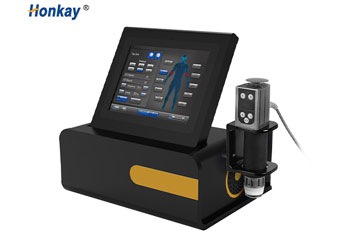
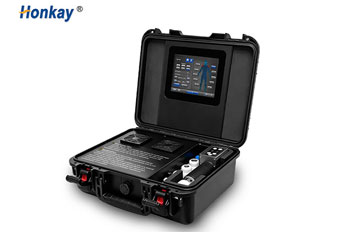
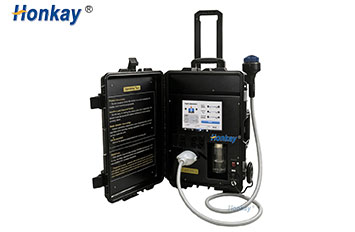
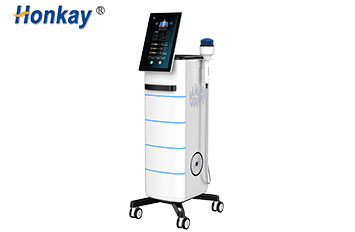
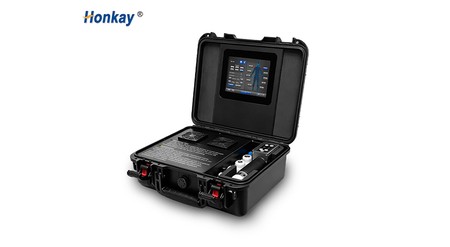
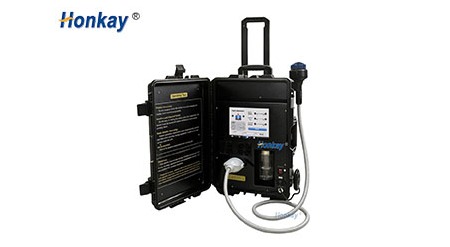
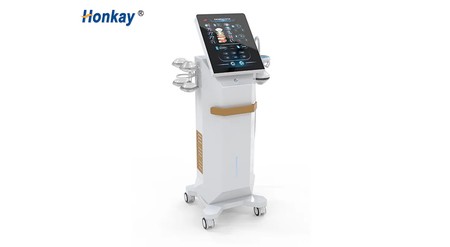
Space is the smaller version of the same problem. A tower unit with a screen, a handpiece cradle and a coiled cable needs a footprint beside the couch plus clearance for the cable to reach the far end of the treatment area, and the case it arrives in needs somewhere to live that is not the treatment room. A clinic that plans to wheel the unit between two rooms on a busy day should check the doorway widths and the floor transitions on the actual route, with the case dimensions in hand, because a unit that technically fits through a door but cannot be steered round a corner will simply stay where it is put.
| Symptom in the diary | The constraint it usually points to | What fixes it | What a second device would do |
|---|---|---|---|
| Lists run late every afternoon | Slot lengths that never got changed, plus turnover | Rewrite the appointment types; add two minutes of turnover | Nothing — it would sit idle while the list still ran late |
| Equipment blocks fill with manual bookings | No protected template; the old booking habit wins | Protect the blocks in the template and review them monthly | Adds another block that will also be filled with manual bookings |
| Two clients ready, one room free | Room count | A second space, even a curtained bay, before more equipment | Creates a queue of clients waiting for the room, not more visits |
| Client waits at reception while a session runs | No overlap rule, or nobody free to greet | A named person responsible for the overlap window | Doubles the number of unattended sessions to supervise |
| Equipment booked only when the senior is in | Single trained operator | Train a second person, and write the routine down | Nothing — both units would wait for the same person |
| Room turns over slowly between clients | Cleaning routine not defined, or supplies stored elsewhere | A written two-minute routine with wipes and a waste bin in the room | Adds a second handpiece to clean instead of one |
There are four conditions under which this purchase should be deferred, plus one money test, and they are common enough that a supplier who never mentions them is telling you something about the supplier. They are worth writing down as tests, because each one is cheap to run and each one is expensive to discover afterwards.
| Condition | Cheap test to run first | Reading that says defer | Reading that says proceed | What to fix first |
|---|---|---|---|---|
| Volume | Four weeks of booking data, unsold minutes per week | More than a fifth of bookable time unsold | Waiting list, or turning work away | Demand, not equipment |
| Rooms | Walk the floor and count spaces where a client could be left supervised | One room and no way to create a second | Two spaces, or one room plus a screened bay | Space, then equipment |
| People | Ask for a named owner of the routine, in writing | Nobody volunteers, or the volunteer is leaving | Two people trained, one of them not the lead | Training plan before order |
| Client mix | Sort the last hundred appointments into convertible and not | Fewer than a quarter convertible | A third or more, with repeat clients over large areas | Service design, not capital |
| Money | Divide the delivered cost by the loaded annual cost of a therapist | Above one and a half, with no plan to sell the freed hours | Under one, and the diary supports it | A smaller or used unit, or a lease |
A clinic that passes all five tests still has one thing to settle before signing, and it is not about the machine: who owns the schedule three months from now. The capacity gain is created by the booking template and by the training, and both decay. A short monthly review — equipment-led visits against plan, unsold slots, whether the conversion share has drifted — keeps the decision honest and gives a basis for a second unit if the numbers justify one. The equipment is supplied with a 24-month warranty from the factory shipment date; the schedule is not, and it decides whether the purchase works.
No. It replaces part of the continuous manual pass inside an appointment, and it can make a short equipment-led visit possible without a senior clinician in the room throughout. The assessment, the decisions about what to do and the reassessment before the client leaves stay with a person. What the purchase can replace, under the right conditions, is a hire — and only when the diary is already full and the freed minutes are sold.
In a mixed appointment where the repetitive pass moves to the handpiece, fifteen to twenty-five minutes of therapist time is a realistic planning figure, with two to four minutes given back for cleaning. In an equipment-led maintenance visit the whole block is unattended apart from set-up. Anything above thirty minutes freed per visit usually means the reassessment has been cut, which is not a saving.
Hands first suits clinics that want the assessment to set the rest of the visit, and it keeps the therapist in the room throughout, so it frees the therapist's body but not the diary. Equipment first suits clinics that can supervise an unattended block and need the capacity, because those are the minutes that get filled with another client, a note or a check-in. Many clinics run hands first on early visits and equipment first once a plan is stable.
First visits and any visit where the picture has changed, clients who cannot lie still for the length of a block, presentations spread across several areas or changing week to week, clients whose skin or history means a clinician's hands and eyes stay on the area throughout, and clients for whom the hour of contact is the product. In most lists these groups plus the routine follow-ups add up to somewhere between half and two thirds of appointments.
Two, at minimum, and at least one of them should not be the clinical lead. A single trained operator means the device's capacity is that person's roster — which is usually three to five days a week, minus leave. Two operators also give the clinic a second person who can clean and check the handpiece, and a fallback when the first is unavailable.
Not necessarily, and raising prices is usually the wrong first move. The common structure keeps the episode price roughly stable and changes the mix inside it, so the clinic earns the same per client while spending less therapist time. What does need to change is the slot length on the booking screen, and the menu needs a genuinely long option at a price that reflects it, so clients who need hands are not squeezed into a short slot.
Two numbers: how many equipment-led or mixed visits actually ran, against how many were planned, and how much bookable time went unsold. If the first is close to plan and the second has not risen, the model is working. If the equipment slots have quietly reverted to full manual appointments, the template was not protected. If unsold time has gone up, the clinic has bought capacity it could not fill and should stop before considering a second unit.
The equipment discussed on this page is made and supplied by Honkay, the brand of Guangzhou Huang-Kai Technology Co., Ltd., an OEM and ODM manufacturer of physiotherapy and wellness equipment based in Guangzhou, China. The factories and offices cover more than 1,000 square metres, the company has more than 50 staff, and an in-house research and development team of eight to ten people works alongside the production floor.
Because the units are built in-house rather than assembled from bought-in parts, the operational questions on this page can be settled at the order stage: how many handpieces and which profiles come with the set, what the cleaning and consumable routine requires, which manual language the operators will need, whether a second handpiece should be added to the order so that a failure does not take the room out of service, and what the warranty terms are on the parts that wear. The 24-month warranty runs from the factory shipment date, and buyers who sell under their own badge order the same units under private label.
Honkay exports to South America, South Asia, South-East Asia, Western Europe, Northern Europe, Southern Europe, Eastern Europe, Oceania and North America, alongside its domestic market, so most of the scheduling and staffing questions behind this page have already been asked by clinics and distributors working in those regions. More background is on our about page, and the questions above can go straight to the team.
Honkay supplies professional wellness and physiotherapy equipment to clinics and distributors. The information on this page is product and purchasing guidance, not medical advice. This device is intended for adjunctive use alongside professional care, not as a replacement for diagnosis or treatment. For any specific condition, consult a qualified clinician; individual experience varies.


 English
 中文