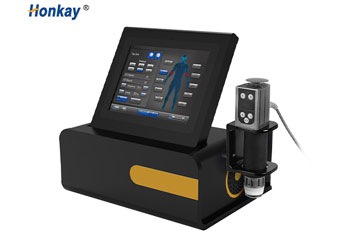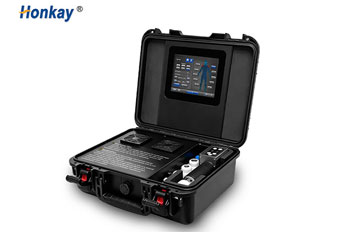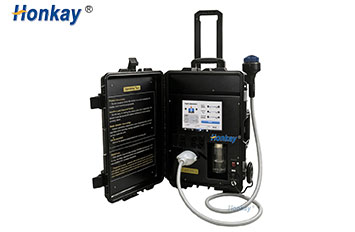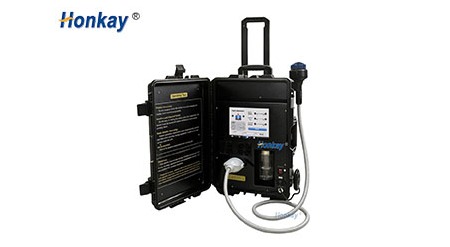
A shockwave unit is chosen on pulse output, head set and the look of the trolley. Then the crate is opened and somebody asks the question that was never on the quotation: where does it plug in, and what else is already on that socket. This page is about the part of the purchase that belongs to the building rather than the device — voltage and plug arrangements across markets, how to read a power rating honestly, running current against start-up surge, when a unit wants a circuit of its own, what surge protection and stabilisation actually buy, why extension leads cause more service calls than internal faults, how a travel unit differs from a fixed one, how to add two or three machines to one room, weak grids and generators, and the checks an electrician should make before the crate is opened. It is written for the clinic owner who signs the order and the electrician who is handed the question. Every figure below is a range for a class of equipment; the authoritative numbers are on the rating label of the unit in front of you and in the manual shipped with it.

Manufacturers build variants for two broad families of supply — roughly 100–120 V at 60 Hz and roughly 220–240 V at 50 Hz — and the variant is fixed at the factory rather than selected on site, which makes it the cheapest thing to settle while the order is still a draft. The usual mistake is assuming "same voltage" means "same connection". Plugs differ within a family, and none of the British fused, Schuko, Indian round-pin or South African large-pin patterns interchange safely. Frequency differs too, and matters more quietly: a compressor or pump built for one frequency runs at a different speed on the other.
So the order should state four things: nominal voltage, frequency, plug or bare-wire termination, and the language of the manual for whoever operates the unit. Two points sit under the table. A building's nominal voltage is not its actual voltage, since a 230 V clinic at the end of a long rural line may see 205 V in the afternoon and 245 V overnight. And the plug on the cable is the least reliable indicator of what the unit was built for, because a plug can be changed in five minutes by anyone with a screwdriver. Read the label on the chassis, not the end of the lead.
| Market | Nominal supply | Frequency | Socket and plug in common use | What the order should state |
|---|---|---|---|---|
| United States, Canada | 120 V single phase | 60 Hz | Earthed three-pin socket; two-pin unearthed sockets still exist in older buildings | 120 V / 60 Hz variant, earthed plug, and whether a 20 A circuit is available |
| United Kingdom, Ireland | 230 V single phase | 50 Hz | Fused three-pin plug, 13 A fuse, ring or radial final circuit | 230 V / 50 Hz variant with a moulded fused plug, not a loose one in the case |
| Continental Europe, much of the Gulf | 230 V single phase | 50 Hz | Two-pin earthed socket, 16 A, with or without an earth pin at the edge | Which earthed two-pin pattern, and whether the site has 16 A or 10 A circuits |
| Australia, New Zealand | 230–240 V single phase | 50 Hz | Three-pin flat-blade socket with an angled earth pin | 240 V / 50 Hz variant and the plug fitted at the factory |
| India, parts of South Asia | 230 V single phase | 50 Hz | Round-pin sockets in two sizes, 6 A and 16 A, often both in one plate | 16 A plug, plus a note on the voltage swing the site actually sees |
| Brazil | 127 V or 220 V, depending on region | 60 Hz | Three-pin round socket, rated 10 A or 20 A | The voltage of the specific building, confirmed in writing, not the city |
| Southern Africa | 230 V single phase | 50 Hz | Large three-pin round socket, with the smaller pattern also common | Which of the two patterns the room uses, and whether a dedicated circuit exists |
| Japan | 100 V single phase | 50 Hz in the east, 60 Hz in the west | Two-pin flat-blade socket, earthed separately in many buildings | Both the 100 V rating and the frequency of the region, which are separate questions |
The number buyers remember from a quotation is energy per pulse, in millijoules, because that is what gets compared between machines. For planning the electrical supply it tells you very little: it describes what leaves the applicator, while rated input describes what the console takes from the wall to produce it. The room needs the rated input in watts or amps from the rating label, and the fuse rating beside it or in the manual.
Rated input is a maximum rather than an average. A console draws a little at the menu, a moderate and fairly steady amount while firing at low rate, and its highest draw at high energy and high repetition — and the label states the worst case the manufacturer will stand behind, which is exactly what a circuit must survive. Real sessions are more fragmented than specifications imagine, so a machine spends much of its day in standby and sees more start-up cycles than any test would suggest. Read the table as a shape rather than a specification.

| Class of unit | Typical rated input | Typical standby draw | What pushes the figure up | What to confirm in the manual |
|---|---|---|---|---|
| Compact single-head unit with an external supply brick | Roughly 60–200 W | A few watts to about 15 W | Repetition rate; the brick itself sets the ceiling | The input rating of the brick, which may differ from the console's own label |
| Bench console, one output, no compressor | Roughly 150–350 W | Around 10–30 W with the screen on | Pulse energy, rate, and how much cooling the enclosure needs | The fuse rating at the inlet, and whether a 10 A circuit is enough |
| Trolley console driving a pneumatic head | Roughly 300–700 W | Around 20–40 W, higher if a pump idles | The compressor, not the pulse stage; the peak is a motor start | Whether the compressor restarts automatically, and how often |
| Console with two outputs or two head families | Roughly 400–900 W | Around 25–50 W | Two drive stages, and the possibility of both being used in one session | Whether the label figure assumes simultaneous use or one channel at a time |
| Same, with a chiller or a circulating pump | Add tens of watts to the class figure above | Add the pump's continuous draw | Continuous rather than pulsed load, which is harder on a shared circuit | That the pump runs whenever the unit is on, not only while firing |
Ask a clinic manager why a unit keeps tripping the electrics and the answer is framed as a machine fault. Ask an electrician and it is usually about the first half second after the switch is thrown. The power supply's capacitors are empty at switch-on and behave, for a few milliseconds, almost like a short circuit; the inrush can be several times the running current. Where a compressor is fitted there is a second event a moment later, as the motor pulls its own multiple of normal current until it reaches speed. Neither appears on a label that quotes rated input, which is why the same machine runs happily in one room and trips in the next — the trade stand had a dedicated supply with nothing else on it.
The pattern of use makes it worse. Eight short sessions in a morning means eight wake-ups at high energy, with compressor cycling in between, on a circuit that may already carry a kettle or a steriliser. Three design responses exist — a soft-start circuit, internal sequencing that stops the compressor starting while the pulse stage fires, or neither — and that is a more useful question than the wattage. The instruction that follows is sequencing: start the unit first, let it complete its self-test and come up to pressure before anything else is switched on.

| Load event | What causes it | How long it lasts | What it stresses in the building | How to make it easier |
|---|---|---|---|---|
| Switch-on inrush | Empty capacitors in the power supply charging at once | Milliseconds — usually far less than one cycle of the mains | The breaker's magnetic trip, and the contacts of any adapter in the path | A soft-start circuit; a circuit with nothing else on it; no multi-way adapter |
| Compressor start from rest | Motor accelerating a pump against an unloaded receiver | A few tenths of a second to a couple of seconds | Breaker and cable; the voltage dip is felt by anything else on the circuit | Start it before other equipment is running, not during a session |
| Compressor restart under pressure | The receiver has not bled down and the motor starts against a load | Longer than a free start, and it repeats all day | Motor windings and the breaker, cumulatively | Follow the manual's shutdown sequence rather than cutting the power |
| First pulse at high energy | The drive stage charging and discharging at its rated maximum | Microseconds per pulse, thousands of times a session | Little at the breaker; more at the supply's ability to hold voltage steady | A supply with low impedance — in practice, a short cable run from the board |
| Boot and self-test | Controller start-up, screen, fans, and any head-detection routine | Seconds | Nothing much, but it is a useful moment to listen to the machine | Let the self-test finish before starting a session |
| Cooling fan or circulating pump | Continuous load that switches on with the unit and stays on | The whole working day | Adds to the sustained load on a shared circuit, where it accumulates | Count it in the room's load arithmetic rather than treating it as part of the machine |
"Does it need its own circuit" has a short answer and a long one. Short: a bench console in a modern building with a healthy circuit will usually run on a shared socket, and a trolley unit with a compressor in an older building on a long spur usually will not. Long: what a socket is shared with matters far more than the fact that it is shared, along with the cable run back to the board. A dedicated circuit removes variables — known breaker, known cable, known earth — keeps a machine fault from taking the reception desk down with it, and makes diagnosis possible, because when a unit on its own circuit trips, the circuit is not the suspect.
Where a dedicated circuit is impractical, the workable compromise is a circuit shared with nothing that cycles: lighting and a laptop are fine, a ring main that also feeds a staff kitchen is not. Two arrangements deserve a warning — the multi-way adaptor, which adds four sets of spring contacts between wall and machine, and the spur taken off a lighting circuit, common in converted rooms. Neither fails on day one; both fail at the busiest hour. On margins, your electrician owns the answer; what they need from you is the label figure plus the start-up allowance, not the pulse energy.
| Arrangement | What it gives the unit | Typical weak point | When it is good enough | When to stop using it |
|---|---|---|---|---|
| Dedicated circuit from the board | Known breaker, known cable, known earth, nothing else on it | Nothing inherent — it only fails if it was sized for less than the label | Always, and it is the arrangement to aim for | Never — this is the target, not the compromise |
| Shared socket with reception or lighting | Adequate current, but shared with other users of the circuit | An unknown addition arriving mid-session — a heater, a printer, a cleaner | For a bench console in a modern building with a short cable run | When the circuit also feeds anything with a motor or a heating element |
| Spur from a lighting circuit | A socket where there was none, on a circuit never intended for it | Small cable, low breaker rating, and lights that dim when the unit starts | Only for a very small unit, and only after an electrician has approved it | As soon as lights flicker or the breaker trips more than once |
| Multi-way adaptor in one socket | More outlets, no more current, and several extra contact interfaces | Warm plugs and a resistance that grows with every load added | Never on a unit with a compressor, even briefly | If any plug in the chain is warm to the touch after a session |
| Extension reel, partly unwound | Reach, at the cost of voltage drop and heat | The coiled turns act as a heater; the cable is rated unwound | For a temporary setup only, fully unwound, and rated well above the label | When the reel feels warm, or when the run exceeds a few metres |
| Socket on an uninterruptible supply | Ride-through for short outages, on battery-backed outlets only | Battery capacity sized for a computer, not for a compressor start | For a bench console where losing power mid-session is the concern | As soon as the unit's start-up exceeds the unit's rating and it alarms |
A console is a power electronics device with a microcontroller inside, and it cares about two things a kettle does not: the shape of the supply and the path to earth. Voltage sag is the common, undramatic problem — at the end of a long service cable, where nominal 230 V arrives at 200 V for part of the day, or where an air conditioner shares the circuit, the voltage dips whenever something heavy starts. The unit keeps working, but its supplies work harder, the output can drift from the display and the electronics run warmer. Overvoltage is rarer and more destructive, and usually takes out the supply at the inlet.
That is what surge protection is for, and the distinction that matters is between a device at the board, which protects the installation and everything downstream, and a plug-in strip, which protects only what is plugged into it. Where the supply genuinely swings every day, a stabiliser is the standard remedy — sized for start-up demand rather than rated input, or it trips on the very event it was bought to absorb, and a mechanically corrected unit will not stop a fast transient. Earthing deserves its own sentence: the chassis and any patient-connected accessory depend on a low-resistance path to earth, and lifting the earth to chase out a hum, a two-pin adaptor in an old socket or a painted-over earth pin all remove it. If a socket has no usable earth, the answer is a new socket.
| Device or measure | What it actually protects | What it does not do | Where it belongs | How to check it is working |
|---|---|---|---|---|
| Miniature circuit breaker | The cable in the wall, from overload and from short-circuit current | Protects nothing inside the machine, and does not protect people | Distribution board, one per circuit | Confirm the rating matches the cable and the unit's label |
| Residual current device | People, by detecting current leaking to earth rather than returning | Nothing at all if the earth path is broken or lifted | Board or socket, on the circuit that feeds the treatment room | Press the test button monthly and have the trip time measured annually |
| Surge protective device at the board | The installation and everything downstream, from large transient overvoltages | Does not correct a low supply, and does not stop every event | Beside the main switch, sized for the building's supply | Many have an indicator window that changes colour when spent |
| Plug-in surge strip | Only the equipment plugged into it, and only modest transients | Does not replace board protection, and adds contacts in the path | As a second layer on a small unit, never as the only layer | Replace it after a known surge; the indicator is not always reliable |
| Voltage stabiliser or regulator | The unit, from a supply that sits persistently above or below its band | Does not remove fast spikes, and does nothing if undersized | Between the socket and the unit, in sites with a known daily swing | Log the input voltage for a week before and after fitting one |
| Isolation transformer | Separates the unit from the building's supply for noise and for fault currents | Does not regulate voltage, and does not fix a bad earth on the primary side | Where the supply is noisy or the building shares a supply with heavy plant | Confirm the secondary earth arrangement with the electrician, not by assumption |
| Earth continuity and electrode | The return path every protective device depends on | Cannot be assumed from the presence of a third pin | Every socket the unit might be plugged into, including the spare room | Measured, not eyeballed; record the reading in the equipment file |
The extension lead accounts for more unexplained behaviour in treatment rooms than any other item, not because leads are dangerous but because the one chosen is always the nearest, and the criteria are length and whether the plug fits. Current capacity, voltage drop and whether the cable is coiled never enter the decision, and all three matter with a pulsed load. Voltage drop rises with length, thinness and current, and it is largest exactly when the machine needs the voltage most — so the unit sees a dip on every start. A cable on a drum cannot shed heat like an open one, and the rating on a reel assumes it is fully unwound; run a load on a partly wound reel and the middle turns warm.
Travel adaptors fail for a related reason. A universal adaptor is a mechanical compromise: pins thin enough to fit several patterns, contacts sprung rather than solid, the whole assembly hanging from the socket by its own weight. For a phone charger that is fine; for a unit that starts a compressor it is the weakest link, and it is usually the part that discolours first — useful, because discolouration is a warning you can see. The rule is easy to state: the unit's lead should reach its socket without an intermediate connector, and if it does not reach, the fix is a socket in the right place.
| Lead or adaptor | Conductor and nominal rating | Sensible length for this load | What goes wrong with a pulsed load | Acceptable use |
|---|---|---|---|---|
| Thin household lead | Around 0.75 mm², often rated for a domestic lamp or a charger | Under 3 m, and only for very small loads | Noticeable drop on the surge; the plug end warms | Not on a shockwave unit at all |
| Standard 1.0–1.25 mm² lead | Typically rated 10 A, the common domestic extension | Up to about 5 m if fully unwound | Fine for a bench console; marginal with a compressor start | Temporary only, for the smallest class of unit |
| Heavy-duty 1.5 mm² lead | Typically rated 13–16 A depending on the market | Up to about 10 m, fully unwound | Acceptable drop; still an extra interface at each end | A workable temporary solution where no socket is closer |
| 2.5 mm² lead or workshop extension | Typically rated 16–20 A, with a heavier plug and socket | Up to about 25 m with an acceptable drop | Bulk and trip hazard more than electrical loss | Outdoor or mobile work, with the run protected from traffic |
| Cable reel, partly unwound | Rated for the cable, but the rating assumes it is unwound | None — unwound or not used | Trapped heat raises resistance, which raises heat | Never coiled while powering the unit |
| Universal travel adaptor | Spring contacts sized for several socket patterns at once | Not applicable — remove it from the chain | High contact resistance, poor grip, and no earth in many patterns | Never on a unit that will be used for work |
| Socket doubler | Two outlets sharing one set of circuit terminals | No length, but doubles the load on one point | Invites a second appliance onto the same outlet without anyone deciding | Only where the second outlet stays empty |
A unit that stays in one room and a unit that travels can be electrically identical and still present different problems, because the installation is designed once for the first and never for the second. A fixed unit is part of a room that can be prepared around it: socket at the right height, circuit with the right rating, cable route clear of the walkway. A mobile unit is part of a rota, and inherits whatever socket is free wherever it lands, often behind a couch and often through an adaptor. It also accumulates mechanical wear — the cable flexed at the gland on every move, the plug pushed into sockets of varying quality — and both show up as intermittent behaviour rather than clean failure.
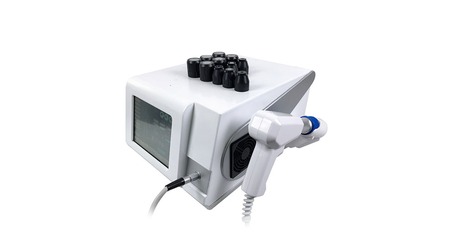
What travels with it is the part of the kit that gets lost. The photograph above shows a set of replaceable pads of increasing width, each shaped for a particular working depth — the accessory set that lets one console serve several areas of the body. A case without an inventory label in the lid loses one of those pads within a month.

| Aspect | Mobile or trolley unit | Fixed unit in one room | Where it typically goes wrong | What to arrange in advance |
|---|---|---|---|---|
| Supply | Whatever socket is free at the destination, of unknown history | A socket chosen for the purpose and surveyed once | A room that only has a socket on a lighting spur | Survey every destination room, not just the main one |
| Cable | Coiled and uncoiled several times a day; gland takes the load | Laid once, then left alone | Intermittent output traced to a break inside the gland | A strain relief loop and a hook on the trolley for the cable |
| Start-up demand | Lands on a different circuit each time, with different neighbours | Known and repeatable, so it can be measured once | A trip that only happens in one particular room | Record which socket each room's unit is allowed to use |
| Plug and adaptor | Repeated insertion, plus the temptation of a travel adaptor abroad | Plugged in once and left | A warm plug nobody checks because it is behind the couch | Carry a correctly fitted spare plug, not a universal adaptor |
| Accessories | Packed and unpacked daily; heads and pads are the first loss | Stay in a cradle on the machine | A missing pad discovered at the start of a session | An inventory label inside the case and a check at packing |
| Service access | Wherever it happens to be standing when it faults | A fixed position with the rear vents clear | Overheating because the vents sat against a curtain for months | A marked position on the floor and a gap behind the unit |
The moment a second machine arrives, the room stops being a room with a machine in it and becomes a small installation. The arithmetic is not complicated, but it must use label figures rather than brochure figures, and it must include what nobody counts: the air conditioner, the steriliser, the towel cabinet, the kettle, the vacuum, the computers, the lighting. In most clinics the shockwave units are a minority of the load and the kettle is the reason the breaker goes. List every load that could run at once, add the rated inputs, then add a start-up allowance for the largest motor or inrush in the list. That total is what the circuit must survive at its worst moment, and it belongs below the circuit rating with a margin your local rules define.

A generator is not a substitute for a mains supply; it is a different supply with different habits. Voltage and frequency move with the load, the waveform is rarely as clean as the grid, and capacity is quoted in a way that hides the difference between continuous output and the short burst a motor needs to start. A small set that runs lights and a laptop happily may collapse when a compressor asks for its start-up current, and the collapse is not graceful: voltage sags, the controller resets, the session stops. Sizing starts from the rated input on the label plus that allowance, and three properties then matter as much as the kilowatt figure — frequency stability, waveform quality, and the neutral-to-earth arrangement at the generator, which decides whether the protective devices can work at all. That last question belongs to the electrician.
| Load in the room | Where the figure comes from | Quantity to count | Start-up allowance | Notes for the electrician |
|---|---|---|---|---|
| Main unit | Rating label on the chassis, not the brochure | One per machine in the room | Add a multiple for switch-on and compressor start | State whether the units run simultaneously or in sequence |
| Second unit | Its own label, which may differ from the first | One, or more if the room is a training room | Add the larger of the two, not both small ones | Separate circuit preferred; two machines on one outlet is not |
| Air conditioning or heating | Its own label, plus the compressor start figure | Every unit that can run at once | Significant — this is often the largest single start in the room | Keep it off the treatment circuit where possible |
| Steriliser or autoclave | Its label; heating elements are a steady high draw | Per unit, and per cycle if two overlap | Modest at start, large while heating | Shares badly with anything pulsed; give it its own circuit |
| Hot towel cabinet, kettle, washer | Label or nameplate, usually in watts or amps | All of them, if they are in the same room | Low, but the sustained draw is what accumulates | The most common cause of a "machine fault" that is not one |
| Lighting, screens, chargers | Sum of the fittings on the circuit | All of them | Negligible | Include it anyway; the total is what matters, not the biggest item |
The earliest point to find a supply problem is three weeks before delivery, while the order can still change and the wiring can still be booked. The next chance is an hour before the first session. The worst is four minutes into it.
1. Get the label and the manual before the crate ships. A photograph of the rating label and the manual page stating supply requirements, fuse rating and intended circuit. Everything else depends on those two figures.
2. Confirm the variant in writing, for the building rather than the country. Voltage, frequency, plug. A Brazilian site can be 127 V or 220 V, a Japanese site can sit either side of the frequency divide, and a building with its own transformer can be anything in reason.
3. Measure the socket, do not look at it. Record the voltage with the unit connected and running at working settings, then again with the room's other equipment on. A reading taken with nothing switched on tells you almost nothing.
4. Identify the circuit and everything else on it. Confirm which breaker feeds the socket and its rating, then switch it off and walk the room. This step most often changes the plan, because the socket behind the couch is frequently not on the circuit anyone assumed.
5. Decide on a dedicated circuit, and on the position. With the label figure, the start-up allowance and the shared load known, this becomes arithmetic rather than opinion. Fix the socket height at the same time, leave a gap behind the unit for the vents, and check the plug can be reached without moving the machine.
6. Test the protective devices, not just their presence. Earth continuity at every socket the unit may use, the residual current device tripped with its button, and the indicator on any board-level surge device checked.
7. Decide the supply treatment, then run the unit. Stable supply: board protection is enough. Daily swing: a stabiliser sized for start-up demand. Generator: capacity, frequency and neutral-earth arrangement confirmed first, then the unit run under load before it is used for work. Remove every improvisation — extension lead, doubler, travel plug — before installation rather than after the first intermittent fault, and record the baseline with the manual: label photograph, socket voltage under load, circuit and breaker rating, earth reading, date. Note the warranty position at the same time; the unit carries a 24-month warranty from the factory shipment date, and a supply event that damages a machine is a different conversation from a manufacturing fault.
Occasionally, and only with a transformer that is properly sized, correctly earthed and approved for the purpose — which in practice means a step-up transformer rated well above the unit's start-up demand, not a travel converter. The frequency cannot be transformed, so a 50 Hz unit on a 60 Hz supply or the reverse is still a mismatch, and any compressor or pump in the unit will run at a different speed. The cleaner answer is to order the variant built for the market, and to treat transformer operation as a temporary measure for a machine that is being moved, not as a permanent installation.
Less than its label, most of the time. The label states the maximum the manufacturer will stand behind at the highest energy and rate the unit supports, and a session that alternates firing with repositioning rarely sits at that maximum. What matters for planning is the label figure, because the circuit has to survive the worst moment rather than the average one. If you want the real number for your room, a plug-in energy meter left connected for a week will give you a figure you can trust more than any calculation, and it costs very little.
It depends entirely on what the other equipment is. A laptop, a lamp and a phone charger will make no difference. A kettle, a fan heater, an air conditioner, a vacuum cleaner or a steriliser will, because each combines a high sustained draw with its own start-up event, and the two events can coincide. The useful test is to switch on everything the room normally uses, then start the unit, and see whether the voltage holds. If it does not, the fix is a circuit rather than a smaller machine.
Only if the supply actually swings. The way to know is to log the voltage at the socket for a week — many plug-in meters will do this — rather than to rely on an impression formed during one difficult afternoon. If the reading stays inside the band the manual specifies, a stabiliser adds a component without adding protection. If it regularly sits low in the evening or high overnight, a stabiliser sized for the unit's start-up demand is a reasonable purchase, and it should be installed alongside surge protection rather than instead of it.
An extension lead is acceptable as a temporary measure if it is fully unwound, correctly rated and short. A travel adaptor is not acceptable at all for a unit that will be used for work, because its contacts are a compromise by design and many patterns carry no earth. Neither should be a permanent part of the installation. If the socket does not reach, the socket is in the wrong place, and moving it is a smaller job than replacing a controller board.
Size it from the label figure plus a start-up allowance, not from the running load alone, then add whatever else the site draws at the same time. Beyond the kilowatt figure, two properties matter as much: frequency stability, because the compressor and the pump are speed-dependent, and a clean output waveform, because a noisy supply stresses the power stage. Confirm the neutral-to-earth arrangement with an electrician, and run the unit under load on the generator before the first appointment rather than during it.
That the label matches the supply, that the plug is the correct pattern and correctly fitted, that the socket voltage holds when the unit starts, that the earth is continuous, and that the protective device trips when tested. Then run the unit at working settings for ten minutes with the room's other equipment on, and listen. A click, a dimming light, a warm plug or a reset during that ten minutes is a finding worth acting on while the installation is still open, and much cheaper than the same finding made by a client.
The equipment described on this page is made and supplied by Honkay, the brand of Guangzhou Huang-Kai Technology Co., Ltd., an OEM and ODM manufacturer of physiotherapy equipment working from Guangzhou, China. Our factory and offices cover more than 1,000 square metres, and we run an in-house research and development team alongside the production floor.
Because the console and the applicators are built together rather than assembled from separately sourced parts, the supply variant is settled at the order stage rather than at the port: the voltage and frequency the unit is built for, the plug fitted to the lead, the fuse rating stated in the manual, and the language of the manual that ships with it. Buyers who sell under their own badge order the same platform under private label, and the configuration travels with the order so a repeat shipment matches the first one.
Honkay exports to South America, South Asia, South-East Asia, Western Europe, Northern Europe, Southern Europe, Eastern Europe, Oceania and North America, so most of the questions behind this page have already been asked by buyers working in those markets. More background is on our about page, and the checklist above can go straight to the team as a request list.
Honkay supplies professional wellness and physiotherapy equipment to clinics and distributors. The information on this page is product and purchasing guidance, not medical advice. This device is intended for adjunctive use alongside professional care, not as a replacement for diagnosis or treatment. For any specific condition, consult a qualified clinician; individual experience varies.


 English
 中文