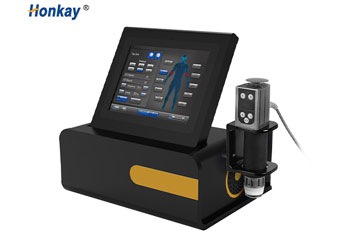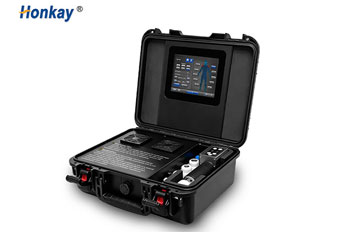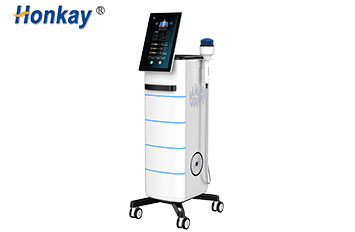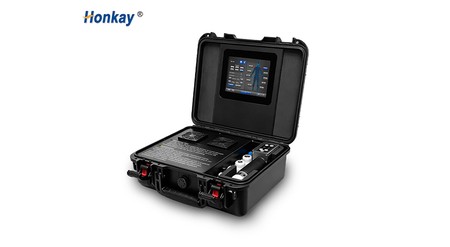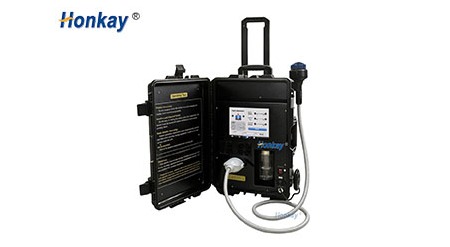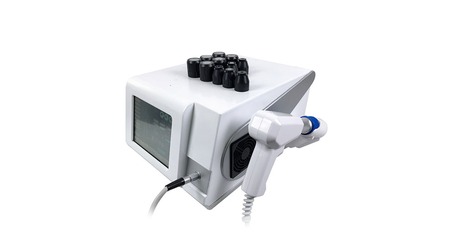
A shockwave unit arrives with a manual, a set of applicator heads and an assumption that it can be learned in an afternoon. That assumption is true for the buttons and false for everything around them. The buttons take twenty minutes. The room takes a week, and the week is where most of the problems later blamed on the machine are actually created.
The pattern is familiar to anyone who installs equipment for a living. The unit is commissioned on a Tuesday by whoever is most interested in it. That person gets the console working, runs two sessions on a colleague, and by Thursday is the only human being on the premises who knows that the green patch on the front panel is a cable port and not a status light. Then they take a week of leave. The room either stops, or somebody presses whatever looks closest to correct, and the machine acquires a reputation it does not deserve. This page is a schedule for the seven days that prevent that, written for clinic managers, distributors who install units and then leave, and senior operators handed a new colleague and no plan. It is an operations schedule, not a clinical one: which clients suit a session, and which settings a session should use, stays with the trained operator under whatever protocol the clinic follows.

Every clinic manager recognises the later version of this. The machine was bought for a sound reason and eighteen months later it is a table. Nobody decided to stop using it. One operator became fast with it, the fast operator got the bookings, the other two stopped being asked, and when that person moved on the room discovered it had a machine and no method. The purchase was never the problem; the absence of a second person who could run the room alone was.
What makes the week hard to run is not laziness. A room cannot usually afford to stop, so the person with the fullest list is also the one most able to train, and training arrives in fifteen-minute gaps: too short to build a sequence, too interrupted to correct a habit, and always beginning with the trainee already holding the handpiece in front of somebody. A written hour, protected in the diary and treated as a booking, is worth two improvised days. And the goal is not speed. A trainee who finishes a session in twenty minutes on Friday but cannot describe what they did, in order, is not trained; they are rehearsed. The target is a session that looks the same on Tuesday as it did on Monday, run by either of two people, and can be described afterwards in a line someone else could read.
By the end of the first day the trainee should be able to walk into a dark room, bring the unit to the point where a session could start, and put it back the way they found it, without asking a question. Not run a session — reach the starting line and return from it. Start with the mains. The switch is usually at the rear beside the inlet, which means the first lesson is that the front of the machine is not where the machine begins. Show the inlet, the fuse holder if there is one, and the route the cable takes to the wall, because a lead crossing a walkway becomes an intermittent fault that gets reported as a faulty unit. Then power up and stand back. A console boots through a short self-check, presents a home screen and shows which head position it believes is connected. The trainee should watch that twice and then do it themselves, and the supervisor should watch their hands rather than the screen: a trainee who reaches for the trigger before the boot finishes has learned the wrong order and will keep it.

The stop button is the next ten minutes and the most important ten of the day. It is not enough to point at it. The trainee should find it with a hand while looking somewhere else, because when it matters the operator will be looking at a person and not at a panel. Then they should press it with the unit running into a cushion and nobody on the couch, and see what it actually does: on some units it removes output and leaves the console live, on others it drops the whole system. Confirm which before the first client, not during. Then reset it and confirm the machine returns to a working state, because a stop button that has been pressed and never reset is a machine that gets reported as dead.
The handpiece comes third, and it is where day one usually gets rushed. The connector is keyed, so it goes in one way and seats with a positive action rather than force; the trainee should fit and remove it five times until the action is boring. The cable has a strain relief at the gland, and the rule that follows is simple: the handpiece is carried in the hand, never by the cable, and never lifted off the couch by the lead. Between sessions it lives in its cradle, not on the couch, not on top of the console, and never face down. Head changes carry the same lesson — the collar releases, the head lifts straight out, the new one seats fully, and each head has a numbered position in the tray it returns to. A room that loses track of which head is which has lost the ability to compare one week with the next.
Last is the consumables station, and the test is reach. Gel, wipes, gloves, paper, a spare coupling pad if the clinic uses one, and the note book should all be within one arm's length of the working position, on the operator's side of the couch. A bottle of gel on the far side of the room is the most common cause of a thin film, because the operator weighs a two-metre walk against finishing the pass, and finishing the pass always wins. The day ends with the shutdown drill, run in reverse and timed: output off, handpiece cleaned and cradled, cable coiled loosely rather than wrapped around the housing, gel capped, tray checked, counter read and written, unit off at the console rather than at the wall. Then the trainee does it again from memory with the supervisor silent.
| Station on day one | What the trainee must do unaided | What good looks like | What it costs when it goes wrong | Signed off |
|---|---|---|---|---|
| Mains inlet and switch | Power up and down in the right order, cable out of the walkway | One clean boot, no error screen, lead flat to the wall | A cable fault reported as a dead machine | Day one |
| Stop button | Find by touch, press under load, reset, confirm output returns | Hand on it inside a second, unit back inside a minute | A late stop, or a unit left dead because nobody knew it needed resetting | Day one |
| Handpiece connector | Fit and remove without force, carry by the body, coil loose | Connector seats in one action, cable clear of the floor | A break inside the gland, months later, as intermittent output | Day one |
| Head change and tray | Swap heads, name each position, return every head to its pocket | The tray ends the day as it started | Heads dropped, left on the couch, or mixed so the record means nothing | Day two |
| Console at session start | Set head, level, rate and count, then start, in the same order | The same sequence twice, manual closed | Fields touched mid-boot, or output started before the check clears | Day two |
| Consumables station | Restock to a written par level at the start of every shift | Everything within one arm's reach, nothing below par | A film that thins halfway through a pass | Day one |
| Shutdown and hand-back | Clean, coil, cap, count, log and switch off, in reverse | The next operator could start without touching anything | Gel dried onto a face overnight, or a counter nobody wrote down | Day one |

The screens above are the same console photographed in four states, with different presets selected and a different area highlighted on the body outline each time. For a trainee the useful exercise is not to memorise the four panels but to find, on the real screen, where each of those values is set and which of them they are allowed to change. That last part matters. A console offering four adjustable fields invites a new operator to adjust all four, and the sessions that go sideways in week one are almost always the ones where two fields moved in the same minute.
The word feel gets used as though it were mysterious, and it is not. When an experienced operator says a session felt right, they are usually reporting three observable things without naming them. The first is how much of the contact face was actually touching — full contact feels broad and even, part contact feels like a point and wanders. The second is whether the head was sliding or skipping: a head with an even film glides, a head with a thin film grabs, and the grab is felt in the wrist before it is seen. The third is whether the grip was doing work the arm should have been doing; a hand clamped around the housing to stop it rotating will be tired in ten minutes and pressing by fifteen.
Pressure deserves its own paragraph because it is the error that outlives the training. Physically it does three unhelpful things at once. It squeezes the coupling film out from under the face, so the part that was transmitting stops transmitting. It lifts the rim as the centre sinks into soft tissue, so contact migrates to the edge where the geometry suits it least. And it makes the head drag, which the operator answers with more pressure — a loop that ends with a mark on the skin and an operator who reports that the machine runs hot. The correction is not press less, because that instruction has no reference point. It is to give the hand something to do that is not gripping: forearm on the couch edge, wrist neutral, the weight of the handpiece providing the contact, movement from the shoulder. Then give the trainee a way to check themselves without a supervisor — lift the head after a pass and look at the trail. An unbroken glossy stripe means the film survived the pass. A stripe with dry islands means the hand was heavy, the gel was thin, or both.
Cadence is the second half of day two and the part trainees find most tedious. A pass has a speed, the passes overlap, and the rhythm does not accelerate towards the end of an area. Ten minutes with a count spoken out loud is uncomfortable and effective: the trainee hears themselves speed up when they get bored, and once heard it cannot be unheard. The same drill exposes scrubbing — a small fast oscillation over one spot, usually where the operator is unsure, which delivers a great deal of attention to a very small area for no reason anyone can articulate afterwards. Day three adds the room. Couch height matters, because too low bends the operator and too high lifts the shoulder, and either way the grip tightens within minutes. The trainee should work from both sides of the couch, since half the areas a room sees are awkward from the habitual side, and an operator who has never crossed over will contort rather than walk around. Ten minutes of continuous running also answers a question no demonstration can: where this particular person's arm gets tired, and therefore where their technique will start to decay on a busy afternoon.
| Dry-run drill | What it trains | How it is set up | Pass standard | Minutes |
|---|---|---|---|---|
| Blind start-up | Sequence memory, and waiting for the self-check | Unit off, lights down, no manual on the bench | The same order twice, unprompted | 10 |
| Call-and-stop | The reflex, and the reset after it | Running into a cushion; stop called without warning | Hand on the button inside a second, working again inside a minute | 5 |
| Head rotation | Connector, collar, numbering in the tray | Three heads out and back, called by number | Under a minute, no force, each head in its pocket | 10 |
| Gel trail | Film thickness, and reading the result by eye | Folded towel, one pass, then lift and look | An unbroken glossy stripe, no dry islands | 10 |
| Contact sweep | Angle and contact without pressure | Cushion at three heights, free hand behind the back | Face flat through every pass, no rocking | 15 |
| Cadence pass | Rhythm, overlap, the end-of-area rush | Ten minutes, counting out loud, no conversation | Constant from first minute to last, no scrubbing | 10 |
| Far-side reach | Room geometry, the habit of walking round | Work from the opposite side, cable routed deliberately | No pull on the gland, no lead underfoot | 10 |
| Ten-minute hold | Fatigue, and where technique starts to drift | Continuous running on a cushion, no break | Grip unchanged at the tenth minute | 10 |
The first body under the handpiece should not be a paying client. It should be a colleague, then a second colleague, then a client who has been told in advance that a colleague is being signed off and may decline without it costing them anything. That conversation is awkward for about ninety seconds and worth having, because a client who has agreed to be practised on will say that felt different instead of saying nothing — and that is the most useful sentence a trainee can hear in week one.
The supervisor's job on these two days is narrower than it looks. It is not to demonstrate and it is not to talk. It is to watch the hands and say almost nothing, from the operator's shoulder, close enough to see the contact face. For the first ten minutes the supervisor corrects only what is unsafe — a head about to be lifted with output running, a cable across a neck, a hand where it should not be. After that, one correction per session. Two corrections in a session produce a trainee who is watching the supervisor's face instead of their own hands.
The sequencing is the same trick used to teach anything done with the hands: take one support away at a time. On the first session the trainee holds and moves and the supervisor speaks to the client. On the second, the trainee holds and speaks and the supervisor is silent. On the third, the trainee runs the whole thing including the start and the close. By the fourth, the supervisor is out of the room for part of it. The step where it falls apart is diagnostic rather than a failure, and it is usually the speaking step, because holding a handpiece well and holding a conversation at the same time is a separate skill from either.
Two rules govern these sessions and both are boring on purpose. One change at a time: only one field on the console moves within a session, it moves once, and then the operator watches before deciding anything else. And the opening is said out loud — unit ready, head fitted and named, film applied, area confirmed, count set — not because anyone needs to hear it, but because saying it is the cheapest way to find out whether the trainee actually knows it. An operator who can narrate the start of a session can debug the middle of one. Day five ends with the trainee closing the room and writing the note themselves; the supervisor reads it, asks one question, and does not rewrite it. A rewritten note teaches nothing and destroys the only record of what the trainee noticed.
| Step | Who is on the handpiece | Who speaks to the client | What the supervisor watches | Move on when |
|---|---|---|---|---|
| One: observe | Supervisor | Supervisor | Nothing; this step is for the trainee's eyes | The sequence can be described back in order |
| Two: hands only | Trainee, supervisor's hand resting on the cable | Supervisor | Contact face, wrist angle, gel trail between passes | A full pass without the rim lifting |
| Three: hands and prompts | Trainee | Trainee, prompted at each stage | Whether the same prompts are needed twice | The opening said aloud with no prompt |
| Four: silent | Trainee | Trainee | Cadence, and whether the film is checked unprompted | A whole session with no correction offered |
| Five: door open | Trainee | Trainee | From the doorway, then from the corridor | The trainee looks up at the right moments, not at the door |
| Six: the record | Trainee | Trainee | The shutdown, and the note written afterwards | A note the supervisor would accept unedited |

Reference sheets of this kind get pinned up in clinic rooms and quietly do damage, because they show areas and invite an operator to read the picture as a map of what the machine is for. It is not: the areas a clinic works on are set by the clinic's own protocol, and no wall chart substitutes for it. What the sheet is useful for in week one is smaller. It shows a trainee that areas come in very different shapes, and that the head which sits flat on a back is not the head that sits flat on a wrist. Contact geometry, not indication.
A room with two operators and no note is not one room; it is two rooms that happen to contain the same machine. The second session on Tuesday cannot be compared with the last session on Monday, a head that has been behaving oddly for a fortnight cannot be identified, and a client who says it was different last time cannot be checked against anything. All of that costs one line per session, and the reason rooms do not keep the line is that writing machine fine feels like enough.
The most valuable line on the page is not the tick boxes. It is the anomaly line, and it has to be phrased so that writing something in it is normal rather than alarming. Head two felt warmer at the rim than yesterday is a useful entry. Nothing to report, written every day for a month, is not an entry; it is a habit, and it usually means nobody was looking. Read the anomaly lines at the end of the week and ask about the ones that repeat, because repetition is what turns an observation into a maintenance decision. The counter reading deserves its own instruction: write it at the end of every shift, by hand, against the head position rather than the unit, because heads move between machines and a machine total tells you nothing about the head that is wearing.
| Field in the note | Why it has to be there | An entry that is not usable | An entry that is | Who reads it |
|---|---|---|---|---|
| Date, shift, both names | Fixes who did what without an argument later | A first name and no date | Date, shift, who ran it, who closed | Next operator, manager |
| Unit state at the start | Separates a fault that arrived from one the shift created | A tick in a box headed OK | Booted clean, no error screen, stop tested at opening | Operator taking over |
| Heads fitted, by position | Makes the counter meaningful and catches a mixed tray | The word heads, with no numbers | Positions one and three used; two and four stayed in the tray | Next operator, technician |
| Counter reading | The only cumulative record of wear once a head moves | A figure with no head attached | End-of-shift figure written against each position used | Whoever plans spares |
| Consumables level | Prevents a thin film at four in the afternoon | Gel low, and nothing done | One bottle open, one in reserve; wipes restocked | Opening operator |
| Anomaly line | Where a change accumulates instead of disappearing | Nothing to report, every day, for a month | Head two warmer at the rim after ten minutes; cable pulls when raised | Supervisor, weekly read |
| Anything a client said | The only outside opinion on whether delivery changed | Client happy | Client said the sensation was sharper on the second area | Supervisor, senior operator |
| State at close | Confirms the room was left fit for the next shift | Closed | Head cleaned and cradled, gel capped, cable loose, unit off | Opening operator next day |
| Flag for the next shift | Turns an observation into an action without a meeting | A blank space | Try head three tomorrow and compare the sound | Next operator, manager Friday |
The split that works is not senior and junior. It is hands and room. One person is on the handpiece and owns the contact, the cadence and the conversation. The other owns everything that would otherwise make the first person break contact: gel, wipes, linen, the door, the timer, the note, the next client's arrival. That is not a lesser role and should not be described as one, because a room where the second person believes they are assisting will produce a second person who never learns to run the machine.
The changeover between clients is where two-person shifts leak. Three actions in a fixed order, every time: the head is wiped and returned to its pocket, the gel is capped, the note gets its line. Whoever finishes a session writes the line; whoever starts the next one reads it before touching the console. That single rule removes the possibility of two people holding different versions of what the machine was doing an hour ago. During a session the second operator has one job that is easy to get wrong — do not correct the person holding the handpiece while they are holding it. A quiet word between areas is fine; a hand reaching in to adjust an angle mid-pass teaches the operator that their own judgement is provisional and makes the session look uncertain to the client. If something is unsafe, say so and take the handpiece. If it is merely imperfect, write it down and raise it at the end.
Rotate the roles weekly rather than daily, so that both people can do both jobs; the test of whether that is working is simple. On a day when the senior operator calls in sick, the room should run without a question being asked about the machine. If it cannot, the split has become a hierarchy, and the hierarchy has become a single point of failure.
The same errors appear in every room, in roughly the same order, and none of them are signs of a careless person. They are the reasonable responses of a nervous beginner to a machine that gives no feedback except through a stranger's face. The first is pressure, and its signature is worth naming from outside: white knuckles on the housing, a locked elbow rather than a soft one, the head tilted so one edge digs in, the operator's whole body leaning into the contact, and a track on the skin narrower than the contact face because the face is no longer flat. Any one of those is enough to say the word once, quietly, and then go back to being silent.
The second is gel, in three disguises. Applied once and never topped up, which gives a session that begins well and ends thin. Wiped off between areas with the cloth that was just used on the couch, which removes the film exactly when new contact is about to be made. And skipped on a hairy area, where the first pass pushes the film aside and the second runs on skin. The third is the level ladder, and it does the most damage in the shortest time: an operator who is unsure whether a session is working will step the output up two or three places in the first minutes, on the theory that somewhere further up the scale is where the session becomes effective. What that produces is a client whose first impression of the machine is its strongest setting, and a session nobody can repeat tomorrow. The rule is one step, then observe, then decide — and the observation has to be long enough to be an observation rather than a pause. Three more belong on the list because they appear in week two: two console fields changed in the same minute, regripping mid-pass so the face lifts for a fraction of a second, and the cable over the shoulder as a permanent habit.
| Error | What the supervisor sees | Why a newcomer does it | What it costs | The correction that works |
|---|---|---|---|---|
| Pressing into the tissue | White knuckles, locked elbow, narrow track, body leaning in | Pressure is the only input a body can add, and effort feels like care | Film squeezed out, contact to the rim, the head drags and gets pressed harder | Give the free hand a job, and check the trail after every pass |
| Gel applied once | Starts glossy, ends with the head dragging | The film is invisible under the head, so nothing is noticed until it fails | A change in sensation the operator cannot explain afterwards | Top up on a fixed interval tied to the pass count |
| Wiping the face between areas | A cloth in the hand at every change of position | It looks hygienic, and the cloth is already in the hand | The film is gone just as new contact is made | Clean at the end of the session, not between areas |
| Ladder stepped two or three places | Several presses early, then a long pause | Uncertainty, and a scale that invites searching | An unrepeatable session and no sense of the working range | One step, a full pass of observation, then decide and write it down |
| Two fields at once | The console touched twice within seconds | Both look adjustable, so both get adjusted | The note stops being a record | A house rule on the quick-start card |
| Regripping mid-pass | The hand opens and closes while the head is still on skin | The housing rotates slightly and the hand chases it | Brief loss of contact every few seconds, invisible except to the client | Find a grip that needs no adjusting, and practise it dry |
| Head set down face-first | The head on the couch while both hands are busy | There is nowhere else within reach | A flattened rim, long before the head is due for replacement | A cradle within reach, or the tray moved to the working side |
Ready is not a feeling and it is not a number of days. It is three demonstrations, and any one missing means the answer is not yet. The first is that the trainee opens and closes the room unaided, in the dark, in the right order. The second is that they run the same session twice and it looks the same both times: same order, same pauses, same point at which the gel is topped up, same moment at which the head is lifted and checked. The third, and the one that separates a trained operator from a rehearsed one, is that they notice a change nobody told them to look for.
That third test is easy to run and almost never run. Before the session the supervisor changes one thing without announcing it: swaps a head for a different profile, leaves the film thin on the first area, half-seats the connector, or fits a head with a faint ripple at the rim. Then says nothing and watches. A trainee who completes the session without noticing has learned the sequence but not the job; one who stops, looks at the face and says it feels different from yesterday has learned the thing that will keep the machine honest for years. What is not evidence of readiness, in order of how often it is mistaken for it: seniority, confidence in front of a client, a completion slip from an online session, and a first week without complaints. Put the sign-off in writing and keep it with the machine rather than in a personnel file, because it is as much a statement about the room as about the person. Repeat it at thirty days, when habits have had time to drift, and at ninety, when the first head is likely to show wear.
Most manuals supplied with equipment of this class are specification documents rather than training documents. They are accurate about voltage, weight, fuse ratings and disposal, and largely silent about what a new operator needs in the first hour: which head suits which contour, how much gel is a film rather than a puddle, what to do when the console shows no output, and who to call. That gap is normally filled by whoever installs the machine, which is why the quality of a first week so often depends on the seller rather than the buyer. It does not have to. A supplier who builds the unit can assemble the pack at the same time, because everything in it is already known to the people who build and test the machine. Ask for it at order stage rather than complaining after installation.
The one-page quick-start card matters more than the manual, because it is the only document a new operator will read on the morning they are alone. It should fit on a single laminated sheet, in the language of the room, and say what to check before the first client, the order of start-up, the order of shutdown, and the one thing that must never be done. The fault tree is the second most valuable item and the one most often missing: not a service manual, but a short list written for a non-technical operator of what to check, in what order, when the unit does nothing, when output cuts in and out, or when the sound changes — four lines that end with a number to call. Pair it with the counter and record procedure, so that the note book is a supplier-specified process rather than a local invention, and with the terms of the 24-month warranty measured from the factory shipment date, so that nobody has to reconstruct them from memory in month ten.
| Item | What it must contain | Who uses it | Format | If it is missing |
|---|---|---|---|---|
| Quick-start card | Pre-session checks, start-up order, shutdown order, the one prohibition | Every operator, every shift | One laminated page | Write it locally and have the supplier confirm it |
| Head map | Each head by position, its contact profile, the contour it is shaped for | New operators, spare planning | One page beside the tray | Heads get bought by shape and used by habit |
| Cleaning sheet | Approved agent, method, drying, and what must not be used | Whoever closes the room | Posted where wipes are kept | Somebody uses alcohol on a polymer face and blames the head |
| Fault tree | No output, intermittent output, unusual sound, error screen, escalation number | Operators alone on shift | One page, non-technical | The room improvises and small faults become visits |
| Counter and record procedure | Where the cumulative count lives, how to read it per head, when to write it | Operators, spare planning | Half a page plus a sample line | No history, so every replacement is a guess |
| Spare parts list | Part numbers for head, membrane, seal kit and cable, with prices and lead times | The buyer and the reorder | A printed table | A repeat order becomes a new order at a new price |
| Training record sheet | The competencies, a signature line, a date, a place for the thirty-day review | Supervisor and manager | One sheet per operator | Training happens, leaves no trace, happens again |
A week of protected hours is enough to produce someone who can run a room to a consistent standard, provided the hours are protected. Training delivered in the gaps between clients takes three or four weeks to cover the same ground and produces habits nobody had a chance to correct. If the diary cannot give five days, give three half-days and hold the last two for supervised sessions rather than spreading ten minutes across a month.
An experienced operator in the same room is usually the better trainer, because they know how the machine is used in that clinic and can correct against the protocol the clinic actually follows. What they cannot supply is the manufacturer's own information: approved cleaning agents, rated duty cycle, counter procedure, fault tree. The useful split is a supplier pack for the facts and a colleague for the routine.
Then the risk is not that the operator is untrained but that nobody is there to notice a change. Two things help. A written routine explicit enough for a locum to follow, which is worth doing even in a single-operator room. And a monthly session on a colleague or a cushion with the variation built in — swap a head, thin the film, see whether it is noticed.
Both, in that order. A cushion cannot tell you that you are pressing, but it also cannot make you self-conscious, and self-consciousness is what turns a small error into a fixed habit. A colleague gives the feedback a cushion never will: that contact was lost for a moment, that the sensation changed, that the gel ran out. Neither substitutes for the other.
Start with the room rather than the machine. A person with no equipment background is not short of capability; they are short of a mental map of where things are and what order they happen in. Day one as described here gives them that map before they are asked to do anything with a handpiece. The commonest mistake is starting with the interesting part, which leaves a trainee holding the object they are most anxious about while still unsure where the gel is kept.
Almost always because of three things that have nothing to do with the console: more pressure, a thinner film, a faster ladder. The settings can be identical and the session will still feel different, because the physical interface between head and skin is where the difference lives. That is also why copying a senior operator's settings does not reproduce their session.
Three questions and the note book. Can the operator still open and close the room unaided, a month after being shown? Has the anomaly line been used, and does anything in it repeat? Has anything on the machine been replaced, adjusted or reported? Read the answers against the head counters rather than against memory. A blank book and nothing replaced more likely means nobody was looking than that nothing happened.
The equipment described on this page is made and supplied by Honkay, the brand of Guangzhou Huang-Kai Technology Co., Ltd., an OEM and ODM manufacturer of physiotherapy equipment working from Guangzhou, China. Our factory and offices cover more than 1,000 square metres, and we run an in-house research and development team alongside the production floor.
Because the units and the applicator heads are built in the same place, the training pack can be settled at the order stage rather than requested after installation: the quick-start card in the room's language, the head map for the tray, the cleaning and storage sheet, the fault tree, the counter and record procedure, the spare parts list with lead times, and the terms of the 24-month warranty measured from the factory shipment date. Buyers who sell under their own badge order the same documentation under private label.
Honkay exports to South America, South Asia, South-East Asia, Western Europe, Northern Europe, Southern Europe, Eastern Europe, Oceania and North America, so most of the questions behind this page have already been asked by buyers working in those markets. More background is on our about page, and the training-pack request can go straight to the team.
Honkay supplies professional wellness and physiotherapy equipment to clinics and distributors. The information on this page is product and purchasing guidance, not medical advice. This device is intended for adjunctive use alongside professional care, not as a replacement for diagnosis or treatment. For any specific condition, consult a qualified clinician; individual experience varies.


 English
 中文