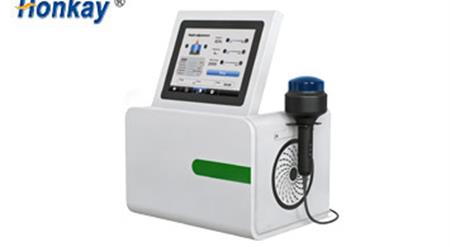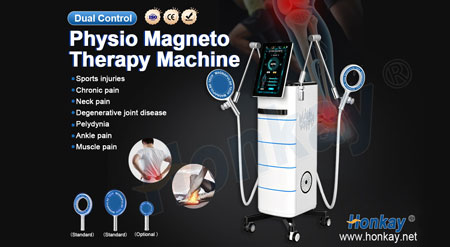
Short answer: if you are sourcing a PEMF machine to resell or to equip a clinic, judge the manufacturer on four things only — published technical parameters, applicator flexibility, OEM/ODM capability, and post-sale supply of spare loops and consumables. Everything else (catalogue size, logo artwork, packaging promises) is secondary. This guide sets out the parameters that actually decide whether a PEMF machine performs in the field, and the verification steps to run before you place an order.
This guide covers magnetic therapy equipment specifically. If you are also evaluating suppliers for other physiotherapy modalities, the same discipline applies — see our 8-point checklist for choosing a physiotherapy equipment manufacturer in China, and the parallel electromagnetic shockwave machine OEM/ODM sourcing guide.
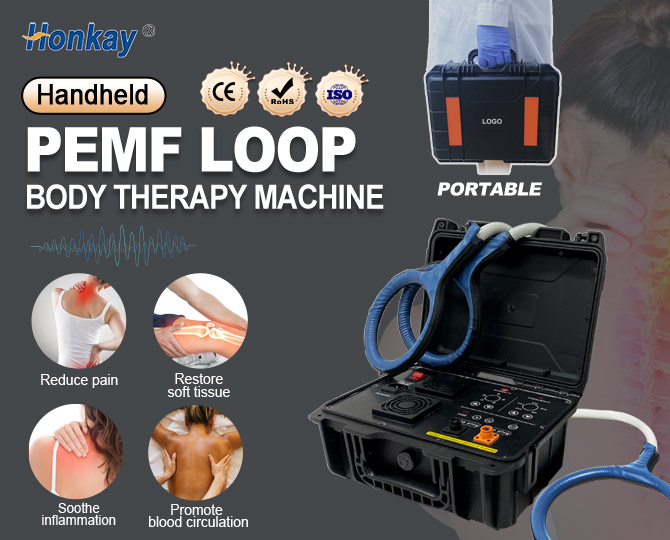
A PEMF machine (pulsed electromagnetic field therapy machine) consists of a control unit, one or more coil applicators, and the firmware that drives pulse frequency and intensity. Manufacturers in this category typically operate in one of three commercial models, and the model you choose determines how much control you have over the finished product.
For distributors building a brand, OEM or ODM is the practical option. Ask specifically which parts are tooled to your specification and which are shared — shared parts are cheaper but give you no differentiation.
Two numbers dominate field performance: magnetic intensity and pulse frequency control. A professional full-body loop machine should offer adjustable intensity rather than a fixed output, and multiple discrete frequency channels so a therapist can vary the protocol per body area.
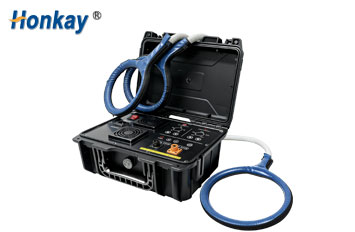
The table below shows the specification of our single-control PEST LOOP platform, published here so you can benchmark any quotation you receive against a concrete baseline.
| Parameter | Specification |
|---|---|
| Power consumption | 850 W |
| Magnetic intensity | 1000–6000 Gauss, adjustable |
| Pulse frequency | 2 / 4 / 6 / 8 Hz |
| Oscillation | 4500 Hz |
| Timer settings | 5 / 10 minutes |
| Applicators supplied | Large loop + butterfly loop |
| Fuse | 15 A |
| Ingress protection | IP 31 |
| Packaging dimensions | 630 × 410 × 350 mm |
| Gross weight | 34 kg |
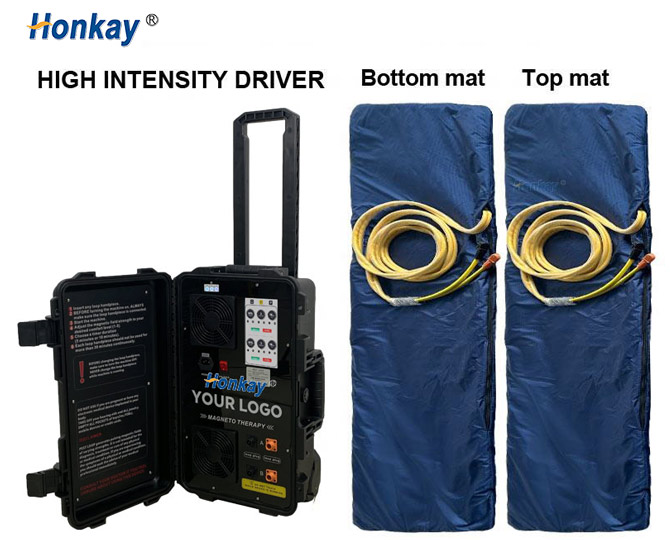
Form factor is a commercial decision, not a technical one. It determines your treatment throughput, your price point and who you can sell to.
| Form factor | Best for | Commercial note |
|---|---|---|
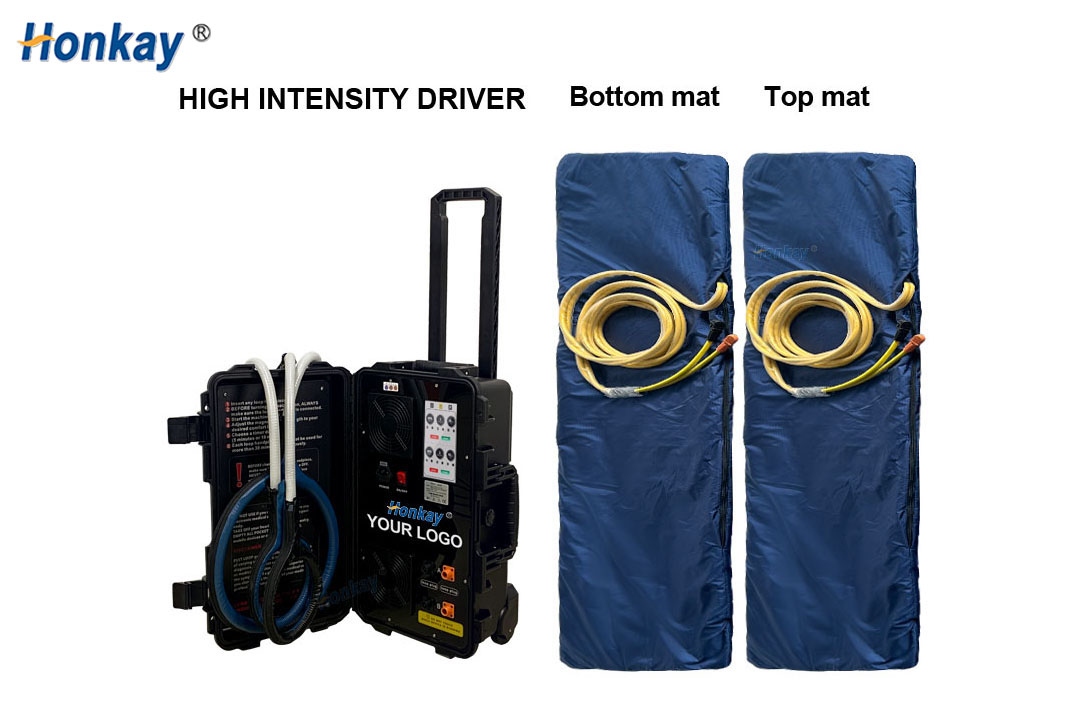
| Single-control loop (portable case) | Mobile therapists, clinics starting a PEMF line | Lowest unit cost, easiest to ship and demo |
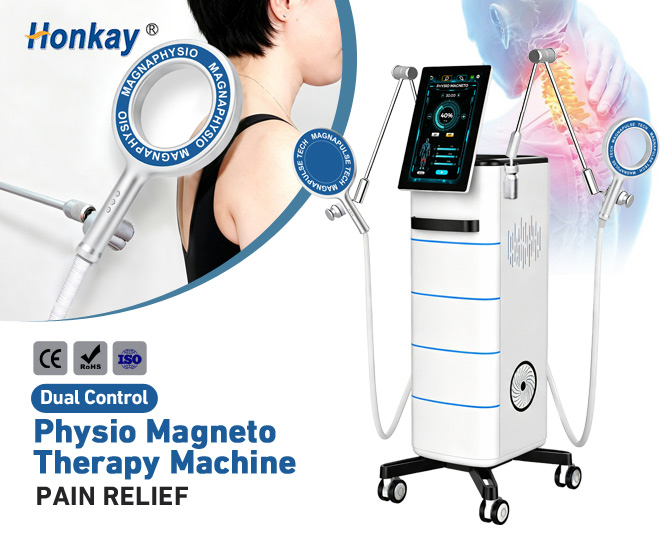
| Dual-control loop | Clinics, studios treating two areas or two clients at once | Highest throughput per hour; supports a premium price |
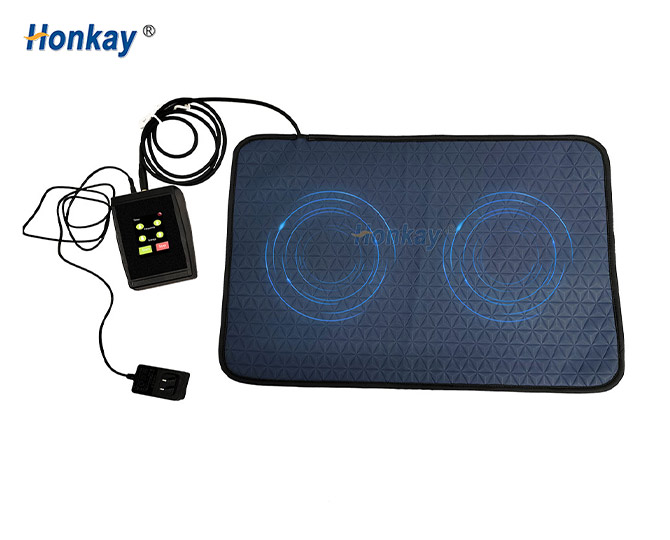
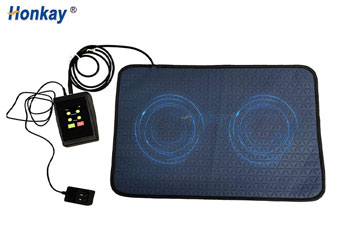
| Therapy mat (upper + lower body) | Home-use retail, wellness retail channels | Consumer price point, high repeat volume |
| Hard-shell desktop loop | Fixed clinic rooms, veterinary practice | Durable housing for high daily use |
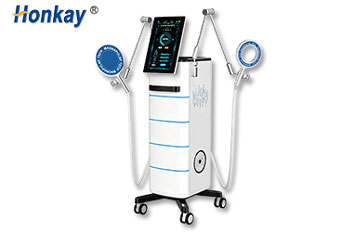
| Vertical magnetic ring | Full-body sessions, rehabilitation centres | Strong visual presence in a showroom |
Customisation in this product class realistically covers the following. Confirm each item in writing on the quotation, because "OEM supported" on a website can mean nothing more than a logo sticker.
This is the part most buyers skip, and it is where the money is lost. Work through the list in order.
A credible PEMF supplier should be able to hand you a starting protocol by body area. Ours is derived from the PEST LOOP manual and is reproduced here as an example of the level of detail to expect.
| Body area | Energy level | Frequency (Hz) | Time | Sessions | Interval |
|---|---|---|---|---|---|
| Elbow | 3 | 2 | 15 min | 6–8 | Twice a week |
| Wrist | 3 | 2 | 15 min | 6–8 | Twice a week |
| Shoulder | 4 | 6 | 20 min | 6–8 | Twice a week |
| Cervical vertebra | 4 | 6 | 20 min | 6–8 | Twice a week |
| Lumbar vertebra | 5 | 8 | 20 min | 6–8 | Twice a week |
| Groin | 5 | 6 | 15 min | 6–8 | Twice a week |
| Hip | 5 | 8 | 20 min | 6–8 | Twice a week |
| Thigh | 4 | 6 | 20 min | 6–8 | Twice a week |
| Knee | 3 | 8 | 20 min | 6–8 | Twice a week |
| Foot / ankle | 2 | 4 | 15 min | 6–8 | Twice a week |
Indications the modality is applied to include degenerative joint conditions (arthrosis of knee, hip, hand, shoulder and elbow; herniated disc; spondylarthrosis), chronic pain presentations (back pain, lumbalgia, tension, radiculopathies, heel pain), and chronic inflammatory or overload conditions of tendons and joints.
Safety information belongs on the machine, not only in the manual. Contraindications that must be respected include vascular disease in or near the treatment area, local infection, the region around malignant or benign tumours, cartilage surfaces and the small facet joints of the spine, and any site with an implanted electronic device such as a pacemaker or analgesic pump. Metal objects near the treatment site can heat or vibrate, and the strong field will damage ID cards, keys and wireless devices placed near the ring. Any supplier that omits this section from its documentation is not supplying professional-grade material.
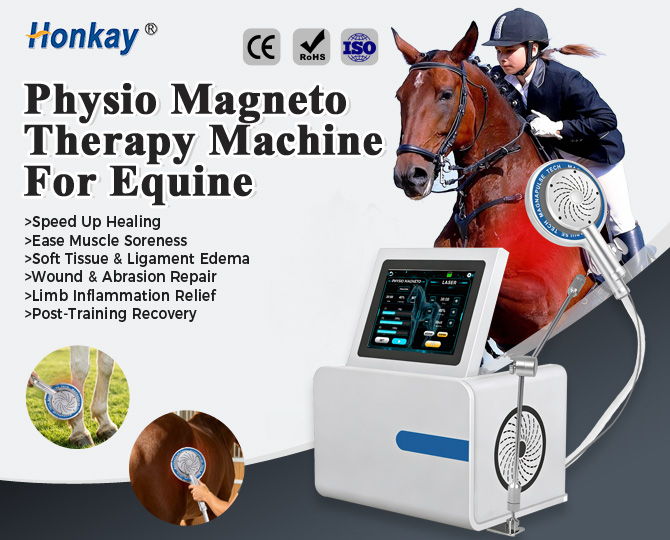
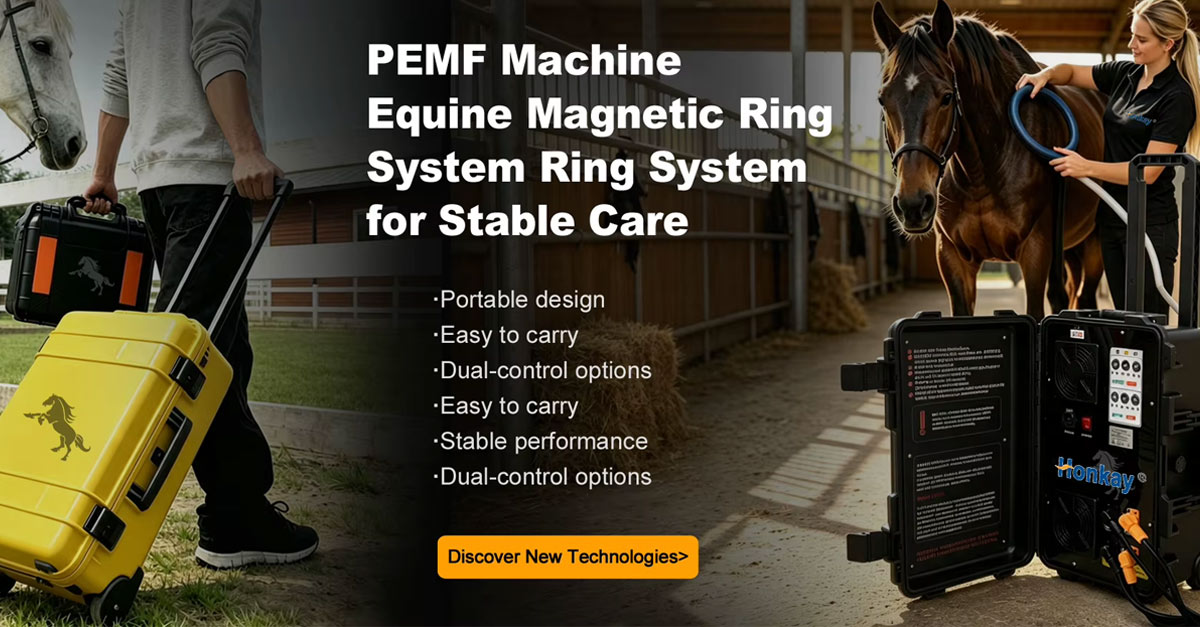
Yes, and for distributors this is a meaningful commercial point. A loop machine with a long applicator line can be positioned around a horse's back, shoulder or hind leg as well as a human treatment area, which lets one SKU address two markets — human physiotherapy and equine recovery — instead of one. If you intend to serve both, confirm the applicator line length and the machine's protocol presets for animal use before ordering, not afterwards.
Guangzhou Huang-Kai Technology (Honkay) designs and manufactures PEMF and physiotherapy equipment for OEM and ODM programmes. The PEMF range covers single-control and dual-control loops, hard-shell desktop units, vertical magnetic ring units, therapy mats and portable veterinary configurations — so the form factor you need for your market is a configuration question rather than a development project. Buyers who want to see the unit running before committing can request a live demonstration and a sample unit order.
The manufacturer builds the control unit and coil applicators, defines the pulse frequency and intensity ranges, supplies the treatment protocol documentation, and remains responsible for spare loops, warranty service and technical support after the sale.
Our full-body PEMF loop platform is adjustable between 1000 and 6000 Gauss, with pulse frequency selectable at 2, 4, 6 and 8 Hz. Adjustable intensity matters more than a headline maximum figure, because a single fixed setting cannot serve different body areas or different client tolerances.
A single-control machine drives one applicator at a time. A dual-control machine has two outputs, so two areas — or two clients — can be treated simultaneously, which raises treatment throughput per hour and supports a higher service price.
Yes. OEM and ODM programmes typically cover housing colour and print, control panel language, applicator set, packaging artwork, manual language and plug standard. Confirm each item in writing on the quotation so the scope is unambiguous.
Yes. Loop machines with a long applicator line are used for equine muscle recovery, circulation support and relaxation. Confirm that the applicator reaches the treatment sites you need before you commit to a model.
The full parameter sheet for the exact model, certification documents bearing the matching model number, the warranty term and start date in writing, the price and lead time for replacement loops, and a documented protocol table. Ask for a sample unit if the order is large enough to justify it.
PEMF should not be applied over vascular disease or infection in the treatment area, near tumours, directly on cartilage surfaces or spinal facet joints, or over implanted electronic devices such as pacemakers. Metal implants near the treatment site require caution, and magnetic media and wireless devices must be kept away from the ring.
Send us your target market, the form factor you want and your expected monthly volume, and we will come back with the configuration, OEM scope and pricing for your programme.


 English
 中文
中文