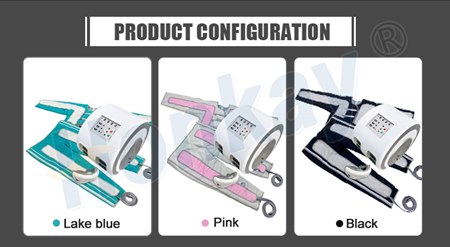
An EMS machine looks like a small box with a screen, and almost everything that separates one quotation from another is invisible in the photograph on the quotation. The unit is a pulse generator with a bank of output channels, each channel driving a pair of electrodes that sit on the client's skin. Four things decide what a room can actually do with it: how many channels the controller drives at once, how the electrodes are held against the skin, how the pulse settings are read and reproduced, and what the consumables cost per session once the machine is two years old.
This guide is written for the people who buy and run treatment rooms — clinic owners, physiotherapy practice managers, sports studios, and the distributors who supply them. It stays on the machine and the room: what the current does when it reaches a muscle, how a channel and a pair of electrodes work together, how to read frequency, pulse width and intensity off a panel, what pads and gel really cost over a year, and how one unit fits into a booking sheet. Which client is suitable for a session, and which settings a session should use, is a decision for the trained operator working under the protocol the clinic follows. That is not something a supplier's page can settle, and nothing here is written as a treatment protocol.
The output is a short burst of current, repeated. Each burst travels out of one electrode of the pair, through the skin and the tissue between the two pads, and back through the other one — which is why a channel needs two pads rather than one, and why the position of the second pad changes the effect as much as the first. What the current reaches first is the small motor nerve fibres running into the muscle, because nerve tissue responds to a far smaller charge than muscle tissue does. When a burst arrives, those fibres fire, and the muscle fibres they supply contract together. When the burst stops, the muscle relaxes.
That chain is worth holding on to, because every dial on the panel acts somewhere along it. Intensity decides how much current is delivered. Pulse width decides how long each burst lasts, and therefore how much charge one burst carries. Frequency decides how many bursts arrive per second, and therefore whether the muscle has time to relax between them. The outcome is visible rather than theoretical: at low frequencies the contractions can be counted one at a time, and as frequency rises the gaps shorten until the muscle appears to hold a steady contraction instead of pulsing.
| Stage of one pulse | What the current is doing | What you see and what the client reports | Which setting governs it |
|---|---|---|---|
| Current leaves the pad | Charge passes from the electrode, through the gel or the conductive layer, into the skin under the pad | A tingling patch the size of the pad, felt before anything moves | Intensity, and the condition of the pad surface |
| Motor nerve fires | The burst reaches the small nerve fibres entering the muscle and drives them above their threshold | A jump or a twitch under the pad, sometimes with a visible skin flick | Pulse width, which decides how much charge a burst carries |
| Muscle contracts | All the fibres served by those nerves shorten together, so the belly of the muscle thickens and the joint moves | A visible, palpable contraction; the limb lifts or the tissue tightens | Intensity above all, then pulse width |
| Pulse ends | The output stops and the muscle is left to its own resting tone until the next burst arrives | The limb settles; a shorter settle means a higher frequency | Frequency, and the work-to-rest pattern of the programme |
| Bursts repeat | The same sequence runs again at the frequency set, for as long as the timer allows | A rhythm the client learns within a minute, which is what makes the session tolerable | The programme, the timer and whether on-time and off-time are editable |
A multi-channel stimulator of this kind carries its outputs along one side of the housing, with the vacuum cups resting in clips between sessions, and the pump that holds those cups to the skin built into the same case rather than sitting on the trolley as a separate box.
The cups visible along the side of that unit are the part of the chain most buyers underestimate. A vacuum cup holds itself to the skin by negative pressure from a small pump inside the housing, and the electrode is a conductive insert seated inside the cup. Because suction does the holding, no strap is needed and the contact survives the client shifting position. Because the rim seals, the contact area also stays the same for the whole session — which is the reason the number on the intensity display means something from one visit to the next. A pad that has lost its adhesion, by contrast, changes the contact area mid-session, and the same displayed intensity then produces a different contraction than it did a fortnight ago.
Two practical consequences follow, and both belong in the purchase decision rather than in the training session. The first is that the machine is only as good as its contact: the cup rim, the insert, the gel and the cleanliness of the skin decide how much of the displayed output actually reaches the nerve. The second is that contact quality degrades quietly. Nobody calls the supplier when the pads are merely tired; they call when a client says the session felt different, and by then the consumable has been under-delivering for weeks.
Both are pulsed-current outputs delivered through surface electrodes, and on many units they come out of the same socket, which is why buyers assume the difference is a label on the panel. The difference is in what the pulse is shaped to reach. An output set up for muscle work is built to drive motor nerve fibres and produce a contraction you can see: longer pulses, a wider intensity range, and electrodes placed over the belly of the muscle. An output set up for sensory work is built to stimulate nerve endings nearer the skin: shorter pulses, lower intensity, and placement that follows a nerve path or a body segment rather than a muscle.
For a buyer the consequence is simple and commercial. The two jobs need different pulse ranges, different placements and different intensity ceilings, so a unit that covers only one of them narrows what the room can sell. Before ordering, ask which modes the controller carries, whether frequency, pulse width and intensity are set independently in each mode, and whether both can run from the same channel bank at the same time — the last of those is where cheap controllers show their limits.
| What differs | Output built for muscle work | Output built for sensory work | Why it matters when you compare two quotations | The question to put in writing |
|---|---|---|---|---|
| Target tissue | Motor nerve fibres entering the muscle, which sit deeper than the skin surface | Nerve endings closer to the surface, reached with far less charge | The first decides whether you can offer a contracted-muscle service at all | Which modes the controller carries, and whether they are separate outputs or presets over one |
| Pulse width | Longer, so each burst carries enough charge to fire a motor nerve | Shorter, matched to surface nerve endings | A unit whose width cannot be changed is locked to one of the two jobs | The pulse width range, the steps inside it, and whether it is set per channel or globally |
| Frequency | A low band where contractions can be counted, and a higher band where they fuse | A higher band, where separate pulses are no longer felt as separate | Overlap between the two bands is what lets one box serve both menus | The full frequency range and the step size, not just the maximum |
| Intensity ceiling | Higher, because a visible contraction needs more current through a larger mass | Lower, because the target is nearer the surface | A ceiling quoted for one mode tells you nothing about the other | The intensity range per mode, in milliamps, and whether the display is in milliamps or in levels |
| Electrode placement | Both pads over the belly of the same muscle, so the current crosses the muscle | Pads spread along a nerve path or around a segment, not necessarily over muscle | Placement is what the operator trains on, so it decides the training you need to buy | Whether a placement chart is supplied per mode, and whether training covers both |
| What the client reports | A pull or a grip under the pads, and a limb that moves | Tingling and a spreading warmth, with little or no movement | It is the fastest way to tell in a demonstration which mode you are actually watching | A demonstration on a colleague, in both modes, before the order is placed |
One channel is one circuit: two electrodes, one positive and one negative, and the current passes between them. That arrangement is bipolar, and it matters because it fixes where the current goes. The current takes the shortest useful path between the two pads, so the tissue on that path is what gets stimulated: put both pads over the belly of the same muscle and the muscle contracts; move one pad to the other side of a joint and the current redistributes across everything in between. There is no third electrode and no return plate to worry about, which is why setup is quick and why placement is the operator skill that decides the result.
Multi-channel means the controller carries several of those circuits in one housing, each with its own intensity control, so a client can have two thighs, a shoulder and a lower back connected at the same time and each area can be turned up or down independently. This is the specification that decides throughput, and it is easy to misread: a machine with many cups in the box is not the same as a machine with many channels. Cups are the consumable; channels are the electronics. Ask for the channel count, then ask how many of those channels can run simultaneously rather than in a rotation.
| Body area | Where the pair of pads sits | Why the pair is arranged that way | What the client notices first | What to confirm before the first session |
|---|---|---|---|---|
| Shoulder | One pad over the top of the shoulder, one below it on the outer upper arm | Both sit across the same muscle mass so the current crosses the fibres rather than running along the skin | A lift of the whole shoulder rather than a local tingle | Whether the cup size supplied will seal on a curved shoulder without being pressed by hand |
| Upper arm | Both pads on the belly of the muscle, spaced along its length, clear of the elbow crease | The current follows the length of the muscle, which is why the contraction is a clean bend at the elbow | The forearm swinging up, which surprises first-time clients | That the pads clear the crease, and that the arm is supported so the movement is free |
| Forearm | One pad near the elbow end, one towards the wrist, on the thicker side of the forearm | The muscle mass is thin here, so a small cup and a lower starting intensity are needed to avoid a sharp sensation | A strong local sensation for a small movement | Whether small-diameter cups are part of the supplied set or an extra order line |
| Lower back | Two pads either side of the spine at the same level, or one above the other alongside it — never straddling the spine | Keeping both pads on one side of the midline keeps the current in the muscle rather than across the vertebrae | A broad pull across the back rather than a pinpoint | Whether the client can lie prone comfortably, and how the cups are held in place in that position |
| Abdomen | A pair on each side of the midline, set symmetrically at the same height | Symmetry gives an even pull and keeps the sensation away from the rib margin | A drawing-in sensation across the whole waist | That the client is lying flat and that the suction does not pull the skin uncomfortably |
| Thigh | Both pads along the front or the outer thigh, clear of the knee and of the groin | The largest muscle mass on the body takes the highest intensity comfortably, which is why it is the easiest place to demonstrate on | A clear knee extension, and often a comment that it is easier than expected | Whether a strap is needed to keep a large cup seated on a moving thigh |
| Calf | One pad on each head of the calf, well below the knee crease | Two heads means a pair can sit across them, and clearance below the crease keeps the current out of the joint | A quick, strong pull that some clients find the least restful placement | That the leg is supported at the ankle so the foot does not have to be held still |
The placement sheet that ships with a machine of this type usually labels shoulder, wrist, back, waist, belly and leg positions, because those are the contours the cups are shaped to seal onto — and each of them is a placement the operator has to be able to reach, seal, and keep sealed while the client lies still.
That list is a reminder of how much of a multi-channel purchase is really a placement purchase. A machine supplied with small cups as well as large ones is telling you that the neck and the wrist are within its intended reach — and small cups are usually the first item to go missing from a clinic's accessory box, because they are the ones that get lost between the couch and the trolley.
Three numbers do most of the work, and they only mean anything read together. Frequency is how many pulses arrive each second. Pulse width is how long each of those pulses lasts. Intensity is how much current each pulse carries. Change one and the sensation changes even though the other two have not moved, which is why a brochure that lists a frequency alone tells a buyer almost nothing about what a session will feel like.
Frequency behaves in a way that is easy to watch. At the low end, each pulse produces one contraction and the muscle relaxes fully between them, so the contractions can be counted and the tissue gets a rest in every cycle. Raise the frequency and the rest gaps shrink, the individual pulls merge, and what the client feels becomes a sustained grip rather than a rhythm. Somewhere between those two behaviours is the setting that suits a given area, and finding it is a matter of watching the muscle rather than reading the number. Pulse width works the other way round: a wider pulse carries more charge, reaches fibres that a narrow pulse misses, and is also felt more sharply on the skin. Intensity is simply how far above the firing threshold each pulse pushes, and it is the one setting that must always be started low, because the threshold changes with the pad, the gel, the area and the person.
| Setting | What it changes in the contraction | How to read it off the panel | What to confirm in writing |
|---|---|---|---|
| Frequency | How many contractions per second, and whether they stay separate or fuse into one hold | A figure in hertz, or a numbered level that maps to a fixed frequency the manual lists | The range, the step size, and whether a level on the panel can be translated into a hertz figure at all |
| Pulse width | How much charge each pulse carries, and therefore how deep and how sharp the stimulation is | A figure in microseconds, or a width bar that moves in fixed steps | The width range in microseconds, the number of steps, and whether it is adjustable while a session is running |
| Intensity | How far above threshold the muscle is driven, from a first flicker to a full contraction | Usually a rising bar per channel; on some panels a milliampere figure instead | Whether the display is in milliamps or in arbitrary levels, and the ceiling on each channel |
| Work and rest | How long the contraction is held and how long the muscle is left alone between holds | Seconds of on-time and off-time, either as a figure or folded into a preset programme | Whether on-time and off-time can be edited, and whether the edit can be saved as a new programme |
| Mode | Which combination of the settings above the box will run, and in what order | A row of mode buttons, each letter or number covering one fixed combination | A list of what each mode does, and which modes an operator is expected to use on which area |
| Timer | How long the whole sequence runs, and therefore how long the couch is occupied | A countdown in minutes and seconds at the top of the screen | The timer range, whether it counts up or down, and whether it stops the output or merely alarms |
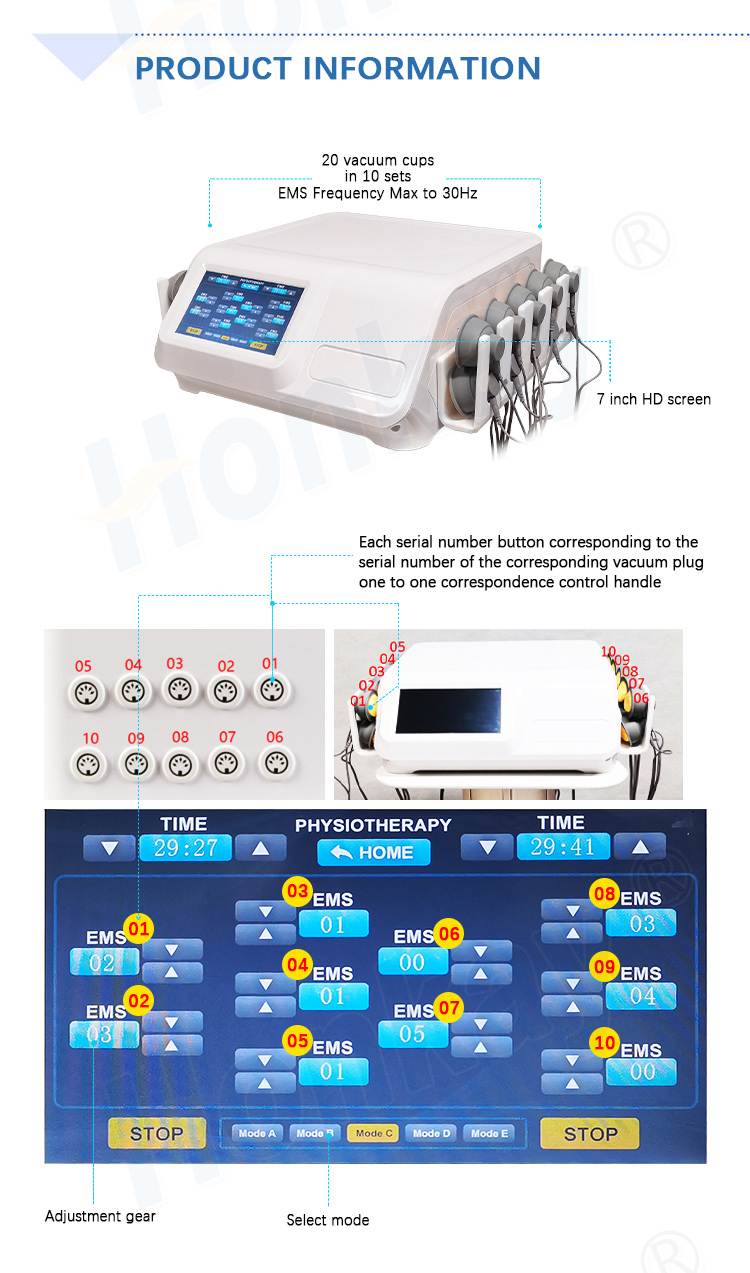
A panel like the one above repays ten minutes of study before you sign, because it shows the three questions that a specification sheet never answers. First, whether each channel has its own intensity block with its own pair of arrows, or whether one master control drives everything — the former is what lets you treat two areas at different strengths on the same client. Second, whether the timer is a single global countdown or one per side, which decides whether the machine can run two programmes of different lengths at once. Third, whether the modes are fixed letters or editable programmes, because a room that cannot save its own settings re-enters them at every appointment, and eventually stops bothering.
One habit is worth building in at this stage: write the settings that worked into the client's record in the machine's own units. If the panel shows levels rather than hertz and microseconds, note the level and the mode, and ask the supplier for the table that converts levels into figures. Without that table, a setting recorded as a number on one machine cannot be reproduced on the second unit you buy next year, and the two rooms quietly drift apart.
The machine is bought once; the contact layer is bought forever. Every session consumes something — a gel layer, an adhesive pad's useful life, a cup rim's seal — and the difference between two suppliers on this line is often larger over three years than the difference in the price of the unit. It is also the part of the purchase that is almost never quoted alongside the machine, which is why a buyer should ask for it deliberately rather than discover it.
Two contact systems dominate. Self-adhesive pads carry their own conductive gel layer, stick to dry skin and are thrown away when the adhesive goes. Vacuum cups hold a reusable insert against the skin by suction and need a separate gel or a moistened contact layer, because the cup rim only seals on skin that has something for it to seal against. Cups are cheaper per session and better on curved or hairy areas; pads are faster to place and need no pump. Most clinics end up with both, using cups for the areas that move and pads for the areas that do not.
| Consumable | What it does in the circuit | How it is held to the skin | What ends its life | What to buy at the same time as the unit |
|---|---|---|---|---|
| Self-adhesive pad | Carries the current from the lead into the skin through its own gel layer | Its own adhesive, pressed on dry, unbroken skin | The adhesive fails at the edges first, then the gel dries and the pad stops conducting evenly | Two sizes at least, and a written price per pad so the monthly figure can be calculated |
| Vacuum cup | Holds the reusable insert and keeps the contact area constant for the whole session | Negative pressure from the pump; the rim is the seal | A rim that hardens, nicks or stops sealing, so the cup pops off mid-session | A full spare set, because a session that loses one cup loses that channel |
| Conductive gel | Fills the gap between insert and skin so the current spreads instead of concentrating at one point | Applied to the skin under the cup, or to the insert | It dries during a long session and is used up at a predictable rate per client | A written consumption estimate per session, so a litre price can be turned into a cost per visit |
| Strap or belt | Keeps a cup seated where suction alone cannot hold against movement | Elastic or hook-and-loop around the limb or the torso | Elastic loses tension, so the cup starts drifting and the operator compensates by hand | Two lengths, and confirmation that both are stocked as separate items |
| Leads and connectors | Carry the output from the housing to the electrode, one pair per channel | Plugged into the port, then into the pad or the cup insert | The wire breaks inside the insulation near the plug, where it is bent every session | Two spare leads, and the connector type in writing so a third-party lead fits |
| Cleaning supplies | Nothing electrical — they protect the contact surface between clients | Wipes for cups and inserts, and a method for the housing | Solvent-based wipes attack the rim and the printed markings, so the wrong product is itself a wear item | The manufacturer's list of what may and may not be used on the cups and the housing |

The cups in that photograph are the reusable half of the consumable equation, and the yellow inserts are the part that wears rather than the plastic shell. An insert is a conductive plate, and it degrades in a way that is invisible until it matters: the surface becomes pitted, the gel no longer spreads evenly across it, and the current starts concentrating on the high points. The client describes that as a prickle at one spot instead of a pull across the area, and the operator's instinct is to turn the intensity down — which treats the symptom and leaves the cause in the cup.
Working out the repeating cost is arithmetic, not negotiation. Count the pads a typical session uses, multiply by the number of sessions in a week, and divide by the number of uses the supplier states per pad; then add the gel at the supplier's own per-session estimate. Do the sum for both contact systems before you choose between them, because a cup set that costs more on day one can still be the cheaper line by month six — and ask for the price of a replacement set in writing at the same time as the price of the machine, since that is the figure that decides what year three costs.
The timer sets how long the output runs; the room sets how long the client is on the couch, and those are never the same number. Fitting cups to four areas, adjusting each one until it seals, setting intensity channel by channel and then removing everything afterwards adds several minutes at each end of a session. A room that plans on the timer will double-book itself by the second week; a room that plans on occupied couch time will price the service correctly from the start.
The throughput question is the one buyers ask most directly, and it has a precise answer that has nothing to do with the marketing. One channel is one circuit on one person, so the number of people who can be connected at once is the number of channels divided by the number of circuits each client needs. If a typical session uses four pads — two circuits — then a controller with ten numbered channels could in principle have five clients connected simultaneously; if sessions use six pads, it is three. The arithmetic is the easy part. The hard part is supervision: each client still needs an operator who can see the couch, hear a comment and reach the intensity control, so the real ceiling is usually the staffing plan rather than the socket bank.
| Session format | Circuits in use on one client | What it occupies on the booking sheet | Operator attention during the session |
|---|---|---|---|
| Single area, one circuit | One pair of pads, one channel live | The shortest slot in the day, and the one that can be slipped between other bookings | Set-up, a ramp in the first minute, then nothing until the timer ends |
| Two areas, paired limbs | Two channels live, one per limb, set independently | A normal appointment slot, with the second channel costing set-up time rather than session time | Two intensities to set at the start, then a check on both before leaving |
| Four to six areas | Three or more channels live at once on the same client | The longest slot, and the one that ties up both a couch and a large part of the cup set | Full set-up, a comfort check on each area, and a deliberate look at the cups mid-session |
| Two clients in parallel | Half the channel bank each, two sets of consumables | Two overlapping slots, which only works if both couches are in one operator's line of sight | Continuous light supervision; the operator does not leave the room |
| Back-to-back block | Re-used between clients, so a second cup set matters more than a spare channel | Three or four sessions per couch per half-day, with a changeover and a wipe between each | The changeover is the bottleneck, not the session |
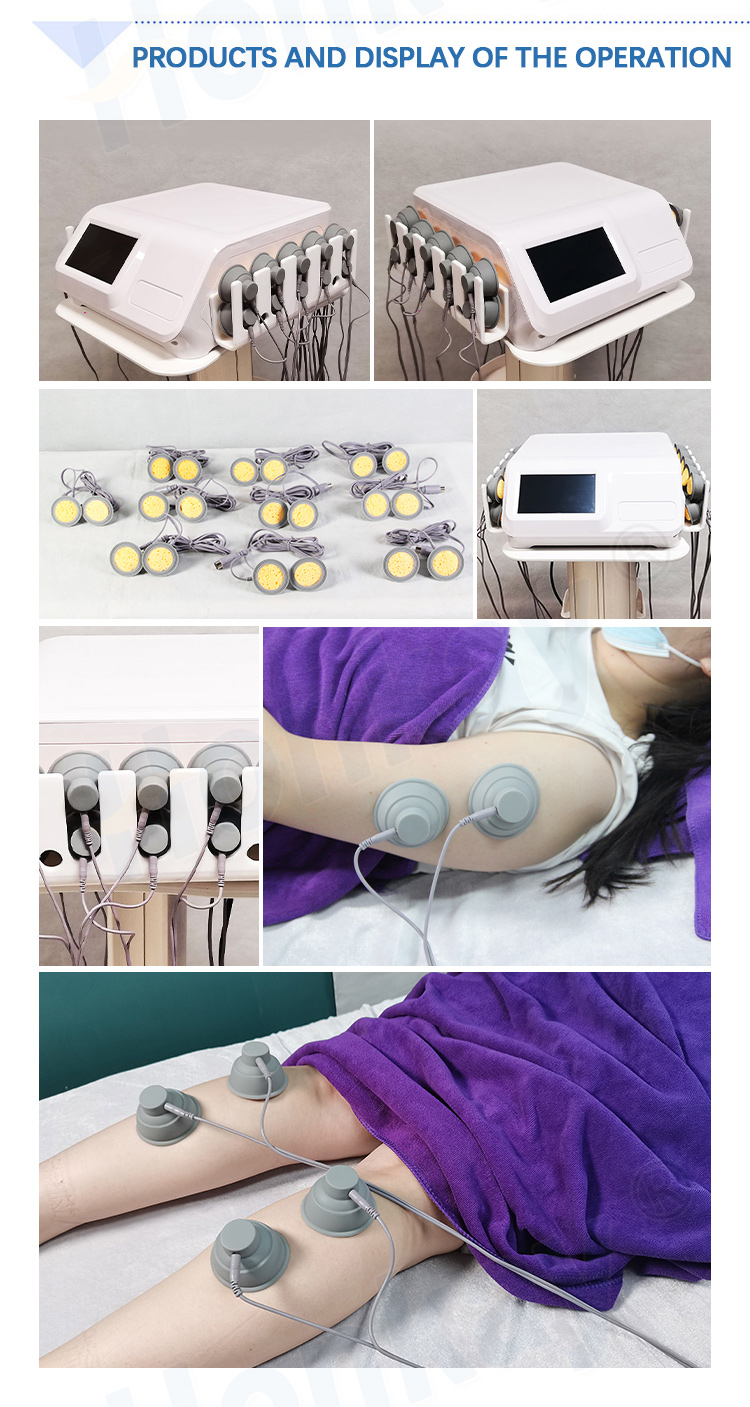
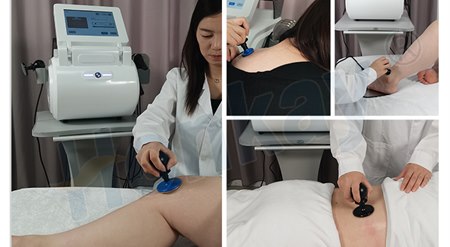
The operational sequence in those photographs is worth copying exactly, because the order is what keeps a session short. Cups are laid out and paired before the client arrives, so no time is lost hunting for a matching insert. The client is positioned first and the cups are seated second, working from the area that needs the most access to the one that needs the least. Leads are connected at the cup end before the output is switched on, and intensity is brought up one channel at a time while the operator watches the muscle rather than the display.
Two details cost rooms more time than they should. The first is a cup that will not seal on a curved area because the wrong diameter was chosen; keeping three diameters at the couch removes the problem entirely. The second is a lead that has been plugged in by the wire rather than by the plug, which bends the pin and produces an intermittent channel that everyone blames on the machine. Both are solved by storage rather than by training: a labelled tray with one compartment per channel, and a rule that leads are coiled loosely and never knotted.
Most of the mistakes on this class of equipment are not made at the machine but in the gaps between what the quotation says and what the room needs. Because nearly every figure that matters depends on the configuration you pick, the practical move is not to accept a number from a brochure but to send a written list and require each answer in writing. Attach the list below to the enquiry and keep the replies in the order file; two years later, a question about a setting or a spare is answered by reading a document instead of searching an inbox. If the factory decision is still open, our guide to evaluating a physiotherapy equipment manufacturer covers that separately, and buyers who intend to sell under their own badge should read the private label, minimum order and margin guide alongside it.
| Area to pin down | The written answer you want before payment |
|---|---|
| Channel count | How many independent channels the controller drives, how many can run simultaneously, and whether each has its own intensity control |
| Modes | What each mode does, whether muscle-work and sensory-work outputs are separate, and whether the two can run at the same time |
| Parameter ranges | Frequency, pulse width and intensity ranges with their step sizes, in hertz, microseconds and milliamps, plus the table that converts panel levels into those figures |
| Timing | On-time and off-time ranges, whether they are editable, whether a session timer can be set per output side, and what happens when it reaches zero |
| Cups and inserts | The diameters supplied, the number of inserts, whether inserts are sold separately, and the replacement price of one cup and one insert |
| Pads, gel and straps | Pad sizes and stated uses per pad, the gel type and an estimate of consumption per session, and the strap lengths available |
| Leads | The number and length of leads supplied, the connector type at both ends, and the price of a spare lead |
| Space, power and weight | The footprint in use, the weight, the supply the unit expects in your market, and the plug standard supplied |
| Cleaning and hygiene | The approved cleaning method for cups, inserts, leads and housing, and the list of agents that must not be used |
| Documents and training | The manual in your market's language, the placement charts, the training included for operators, and a set-up video for new staff |
| Service and warranty | The warranty term and what it is counted from, the spare-part list with lead times, and how a consumable is handled if it fails inside that term |
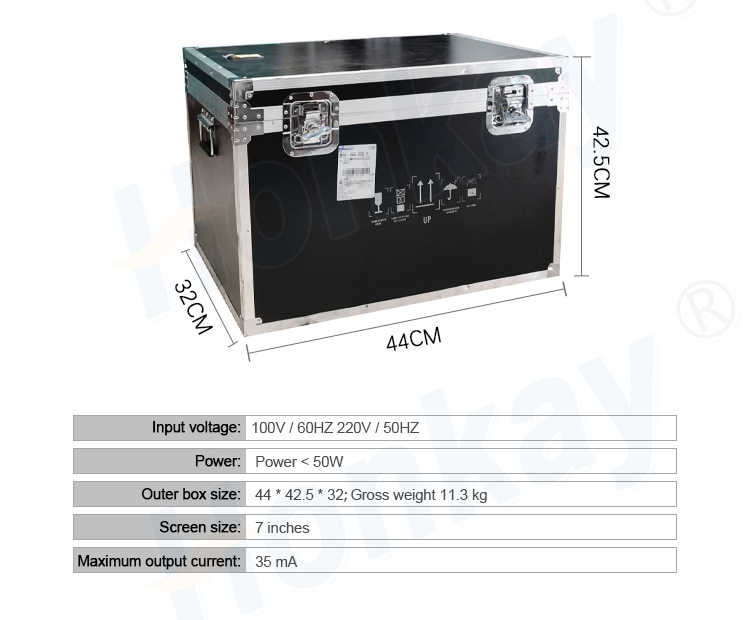
The case above is on the page for a reason that has nothing to do with the photograph. A unit of this kind arrives in a flight case with its cups, leads and a set of pads, and the case is usually how a distributor ships it onward or how a mobile practitioner carries it between sites. Its outer dimensions and gross weight are therefore freight figures as much as product figures: the same machine that fits a shelf in a clinic is a volumetric shipment when a distributor orders twenty, and the per-unit freight cost changes what margin is available. Ask for the packed dimensions and gross weight in writing, and price the freight on those rather than on the unit's own footprint.
Send the list before you ask for a quotation, not after. A supplier who answers it in writing has shown you how the machine is built and how it will be supported; one who waves it away with an assurance that everything is standard has told you something just as useful, and rather more quickly. Where an answer is a range rather than a figure, keep the range and note which end of it your room will actually work at.
The electronics in these units are simple and rarely the reason a machine comes out of service. What fails is the contact layer: a cup rim that stops sealing, an insert that pits, a lead that breaks at the plug, a pad whose adhesive has gone. All of those are cheap and predictable, which is good news for a buyer — provided the decision about which of them to hold as spares is taken at the order stage rather than in the week one of them fails.
Between clients, the routine is short: switch the output off, remove the cups, wipe the rim and insert with the approved agent, wipe the housing where hands have been, and coil the leads loosely rather than dropping them in a heap. Once a day, check every cup rim for nicks by running a thumb round it, and check every lead by flexing it near the plug while the channel is live — an intermittent channel usually announces itself that way long before a client notices. Once a week, clean the pump's intake filter if the housing has one, because a dusty filter makes the pump run hot and slows the suction that holds the cups on.
| Item | Routine that extends it | The sign it is finished | Keep in stock |
|---|---|---|---|
| Self-adhesive pads | Press back onto the liner after use, seal in the bag, store cool and flat; never stretch them off the skin | Edges lift, the pad needs pressing down repeatedly, or the client reports stinging at one point | One unopened pack per size, so a dead pad never cancels a session |
| Cup rims | Wipe, dry, store rim-up in a tray; keep away from heat and from solvent wipes | The cup needs holding down, or pops off when the client moves | Two spare cups in the most used diameter |
| Conductive inserts | Remove gel residue after every use; do not scrub the conductive face with an abrasive | The surface is pitted or discoloured, and the sensation concentrates instead of spreading | A spare insert for every cup in daily use |
| Leads and plugs | Coil loosely, hold the plug body to connect, never pull by the wire or knot the bundle | A channel drops out when the lead is moved, or the intensity reading flickers | Two spare leads of the same connector type |
| Suction filter | Check weekly, clean or replace on the schedule in the manual | Cups take longer to seat and the housing runs warmer and louder | A pack of filters, since they cost little and take a minute to change |
| Housing and touchscreen | Wipe with a barely damp cloth; never spray onto the panel; keep the vents clear | Dead areas on the screen, or a fan that is audible across the room | A screen protector if the supplier offers one |
The commercial side of maintenance is the warranty, and it is worth settling the wording before the order rather than reading it off the box. Units supplied through this channel carry a 24-month warranty counted from the date of shipment from the factory, and the three questions worth asking are what the term covers, what the buyer is expected to have done before a claim is accepted, and how a worn consumable is treated when it fails inside the term rather than outside it. A supplier who answers all three without hesitating is one whose parts list will still be available in year three, which matters more on this equipment than the warranty itself, because the parts that fail are the cheap ones you will want to re-order every year.
They use the same kind of hardware but aim at different tissue: an output built for muscle work uses longer pulses and higher intensity to drive motor nerves and produce a visible contraction, while an output built for sensory work uses shorter pulses at lower intensity to reach nerve endings nearer the skin. At purchase, the practical question is whether the controller carries both, with frequency, pulse width and intensity adjustable in each.
Count the pads a typical session uses and add one channel of headroom. A room treating single areas needs very few; a room that fits four to six pads per client and occasionally runs two clients at once needs considerably more. Ask for the channel count and the number that can run simultaneously, because those are two different figures on some controllers.
Yes, in principle, because each channel is an independent circuit with its own intensity control. Divide the channel bank by the number of circuits one client uses and that is the arithmetic ceiling. In practice the limit is supervision rather than sockets: every connected client must stay in the operator's line of sight, and the intensity of each channel must be reachable without leaving the others.
By watching the muscle rather than reading the number. Start at the low end of the frequency range so the contractions stay separate and countable, bring intensity up until a clear contraction appears, and then raise frequency only until the response suits the area. Pulse width is adjusted separately: wider reaches more fibres and is felt more sharply, narrower is gentler on the skin. Record the setting in the machine's own units so it can be repeated.
They need a conductive contact layer, and in practice that is a small amount of gel on the skin under the cup or on the insert. The rim seals better on skin that has something to seal against, the current spreads instead of concentrating at one point, and the insert lasts longer because it is not being pressed dry against the skin. Self-adhesive pads are the opposite case: they carry their own layer and should not be used with extra gel.
Judge it by behaviour rather than by a calendar. A pad is finished when its edges lift or it needs pressing down repeatedly; a cup insert is finished when its face is pitted and the sensation concentrates at one point; a lead is finished when a channel drops out as the wire is flexed. All three degrade gradually, so the room usually notices a client commenting on the sensation before anyone notices the part.
The channel count and how many run simultaneously, the modes and their parameter ranges in hertz, microseconds and milliamps, the conversion table from panel levels to those figures, the cup diameters and replacement prices, the pad sizes and stated uses, the lead length and connector type, the packed dimensions and gross weight, the approved cleaning agents, the manual language and training, and the warranty term with what it is counted from.
The equipment described on this page is made and supplied by Honkay, the brand of Guangzhou Huang-Kai Technology Co., Ltd., an OEM and ODM manufacturer of physiotherapy equipment working from Guangzhou, China. Our factory and offices cover more than 1,000 square metres, and we run an in-house research and development team alongside the production floor.
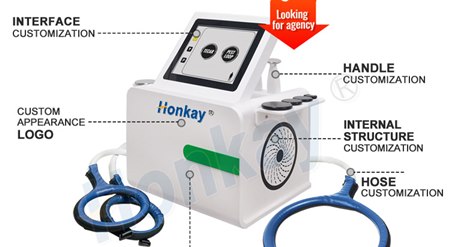
Because the units are built rather than resold, an order can be configured instead of assembled from a catalogue: the channel bank and its modes, the cup diameters in the set, the consumables packed with it, the interface language and the housing form are all settled at the factory. Buyers who need their own badge on the housing order the same platforms under private label, and the placement charts, the spare-part list and the manual language travel with the order.
Honkay exports to South America, South Asia, South-East Asia, Western Europe, Northern Europe, Southern Europe, Eastern Europe, Oceania and North America, so most of the questions on this page come from buyers who have already worked through their own market. More background is on our about page, and the request list above can go straight to the team.




 English
 中文