Short answer: when you source a shockwave therapy machine from a manufacturer, three specifications decide whether the unit is commercially usable — impact frequency range, energy range and head variety, and the consumable service interval. Everything else follows. This guide publishes the real specification of our box-type electromagnetic shockwave platform so you can benchmark any quotation against a concrete baseline, and lists the verification steps to run before you commit.
Sourcing more than one modality? Read the equivalent PEMF machine OEM/ODM sourcing guide, and the 8-point checklist for choosing a physiotherapy equipment manufacturer in China, which applies to any supplier you are comparing.
This distinction decides which market you can sell into, so settle it first.
Both are legitimate OEM product lines. The mistake is ordering a radial unit and marketing it with focused-therapy claims; the specification tables are different and buyers in clinical channels will notice.
When the unit is energised, the electromagnetic coil generates a pulsed magnetic field that drives an internal metal impactor into high-speed reciprocating motion. The impactor strikes the conductive block of the treatment handle, transmitting mechanical vibration as a radially divergent shock wave through the coupling gel into the superficial and intermediate soft tissue layers.
Three mechanisms follow, and they are the basis of every training session you will run for your distributors: mechanical vibration suppresses pain signal transmission at local nerve endings for rapid analgesia; the cavitation effect improves local microcirculation and accelerates clearance of inflammatory metabolic waste, reducing oedema; and mild mechanical stimulation activates the self-repair capacity of tendinous and fascial tissue, supporting release of adhesions and softening of calcified nodules.
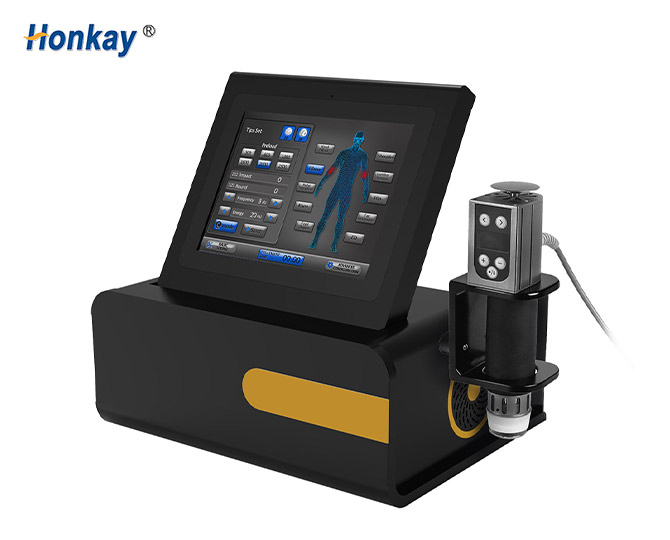
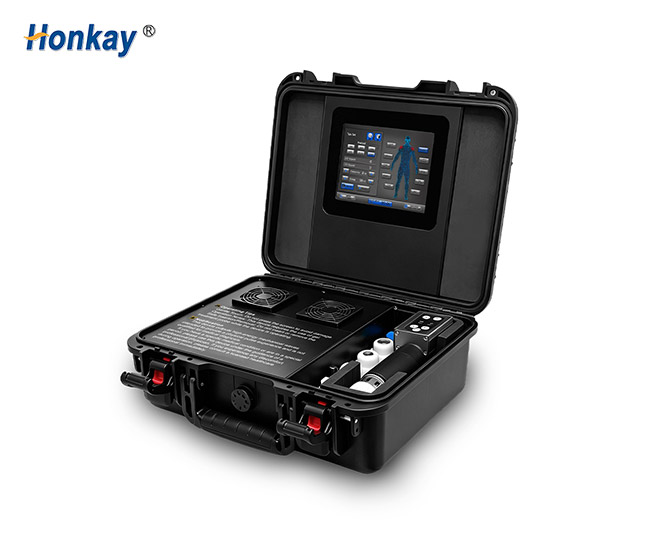
The table below is the published specification of our E-20A box-type electromagnetic shockwave device. Use it as a comparison sheet — ask every supplier for the same rows.
| Parameter | Specification |
|---|---|
| Input voltage | 220 V / 50 Hz, 110 V / 60 Hz |
| Total power rating | 200 VA |
| Impact frequency | 1–22 Hz |
| Energy intensity | 30–185 mJ |
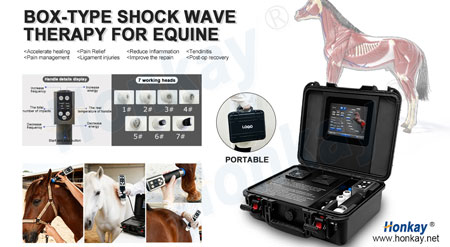
| Working heads | Seven interchangeable heads (9 mm, 15 mm, 20 mm, 35 mm, 35 mm) |
| Display | 8-inch touchscreen with body-zone selection |
| Cooling | Dual cooling fans |
| Packing measurement | 53 × 42 × 25 cm |
| Case material | Aircraft storage box |
| Warranty | 24 months, calculated from factory shipment date |
Two observations on this table. First, the 1–22 Hz frequency range combined with a 30–185 mJ energy range is what allows one platform to serve both a relaxation protocol at the low end and a deeper orthopaedic-style protocol at the high end — a narrower range limits your treatment menu. Second, the warranty line is the one buyers most often misread: most quotations give a term without saying when the clock starts. Our platform carries a 24-month warranty calculated from the factory shipment date. Ask any supplier to state both the term and the start date.
Heads are how a single machine addresses different anatomical sites safely. Our seven-head set maps as follows:
| Head type | Design intent | Typical body areas |
|---|---|---|
| Small circular focusing head | Concentrated energy for precise targeting | Heel, sole of foot, elbow joint, wrist joint, deep lumbar muscle |
| Standard head | Balanced deep and superficial coverage; the everyday head | Shoulder and neck, lumbar region, upper and lower legs, buttocks, all extremities |
| Large circular diffusion tip | Genuine coverage for superficial soft tissue | Entire back, lateral thigh, gluteus maximus, large arm muscle groups |
| Flat head | Even force distribution on smooth muscle surfaces | Trapezius, latissimus dorsi, lumbar and back flat muscle groups |
| U-shaped head | Delivers energy through both sides to avoid compressing bone | Both sides of the cervical spine, scapula, erector spinae, neck-shoulder groove |
| Conical tip | High energy density for fine trigger points | Hand and foot joint spaces, tendon insertion sites, small muscle nodules |
| Curved soothing head | Gentle contact for sensitive or muscle-sparse areas | Axillary region, lumbar area, flexor surfaces of the limbs |
The U-shaped head deserves a specific note: the central hollow design allows energy delivery to both sides of the spine without compressing the vertebrae, which is why it is the head specified for close-range work along the cervical and thoracic spine. If a supplier offers a head set without a spine-specific applicator, the machine cannot safely serve that protocol at all.
A manufacturer supplying professional-grade equipment should be able to give you a starting protocol by body area. Ours is reproduced here from the E-20A manual, verbatim, as an example of the expected level of detail.
| Area | Energy / Frequency | Shocks | Sessions | Interval |
|---|---|---|---|---|
| Elbow | 3 Hz / 50 mJ | 2500 | 5–10 | 5–7 days |
| Wrist | 1 Hz / 50 mJ | 2500 | 5–10 | 5–7 days |
| Synchondroses pubis | 4 Hz / 80 mJ | 2500 | 5–10 | 5–7 days |
| Knee | 3 Hz / 50 mJ | 2500 | 5–10 | 5–7 days |
| Ankle | 3 Hz / 50 mJ | 2500 | 5–10 | 5–7 days |
| Shoulder | 8 Hz / 100 mJ | 2500 | 5–10 | 5–7 days |
| Lumbar spine region | 9 Hz / 130 mJ | 2500 | 5–10 | 5–7 days |
| Hip | 11 Hz / 150 mJ | 2500 | 5–10 | 5–7 days |
| Fat accumulation | 11 Hz / 150 mJ | 2500 | 5–10 | 5–7 days |
| Erectile dysfunction | 3 Hz / 5 mJ | 1500 | 2–3 | Twice a week |
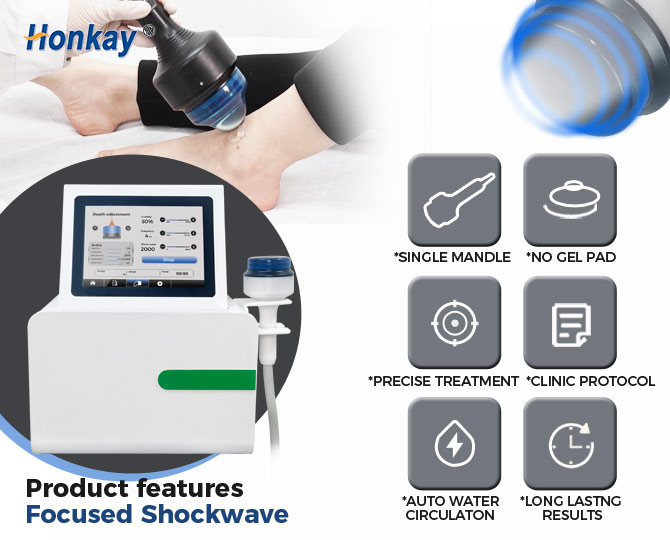
Shockwave machines have moving parts, and this is where a cheap quotation becomes expensive. On our platform the head and the bullet are consumables:
Operationally, stop for 5 minutes after every 20,000 impacts, and stop for 30 minutes when the unit temperature reaches 80 °C. Before you buy any machine, ask the supplier for the consumable intervals, the unit price of each consumable, and the lead time for delivery. A distributor who cannot quote those three numbers cannot price the machine's lifetime cost, and neither can their customers.
This section is not optional packaging. It is what separates a professional supplier from a trading company, and in several markets it is what your buyer's compliance review will read first. The following must appear in the manual that ships with the unit.
Absolute contraindications: coagulation disorders, haemophilia, prolonged use of anticoagulant medication, abnormal platelet counts; malignant tumours, thrombosis, acute suppurative infection, osteomyelitis, open skin wounds; implanted electronic devices including cardiac pacemakers, defibrillators and cerebral neuromodulators; pregnancy, with manipulation of the abdomen or lumbosacral region strictly prohibited; adolescents and children with unfused epiphyses; severe cognitive impairment or uncontrolled epilepsy; uncontrolled severe hypertension, aortic aneurysm, or severe cardiovascular and cerebrovascular disease.
Site restrictions where shock application is prohibited: brain, upper cervical spine, eyeball, pharynx, trachea, main branches of major blood vessels, cardiac region, lungs, spinal canal segments, reproductive organs, the abdomen and lumbosacral area in pregnancy, acute red or ulcerated wounds, severe superficial varicose veins, and epiphyseal growth zones. Treatment in the same area should not exceed three times in one week.
Procedural rules: never run the probe without coupling gel; never plug or unplug the treatment handle while the unit is operating; never blindly raise energy or apply prolonged strikes at a single point; and unsupervised self-treatment on vital areas is prohibited.
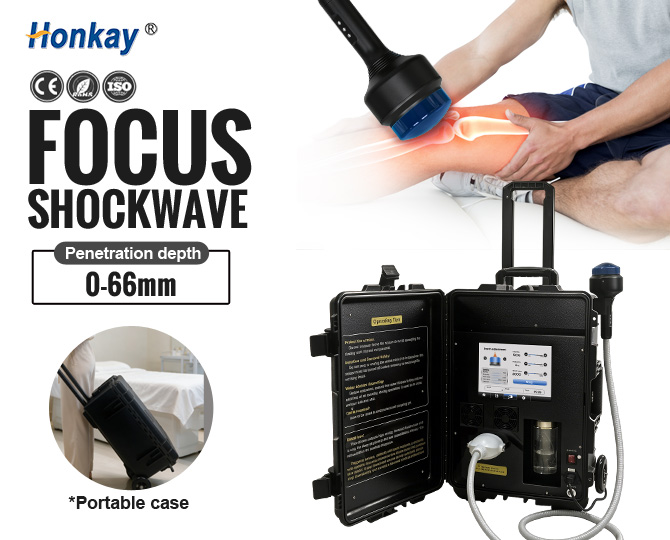
| Form factor | Best for | Commercial note |
|---|---|---|
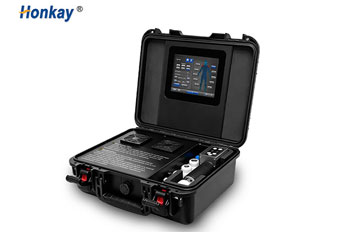
| Box-type portable (aircraft case) | Mobile therapists, clinics with limited room, home-visit services | Easiest to ship; strong online retail candidate |
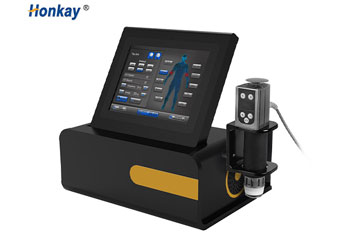
| Desktop unit | Fixed clinic rooms, higher daily volume | Larger head set and accessories storage |
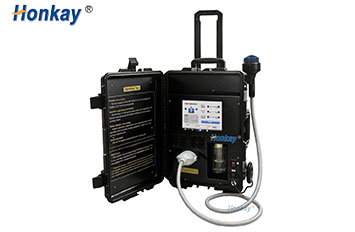
| Trolley case | Multi-room clinics, sports facilities, events | Moves the service to the client |
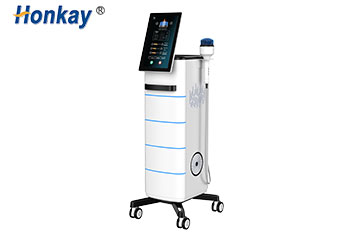
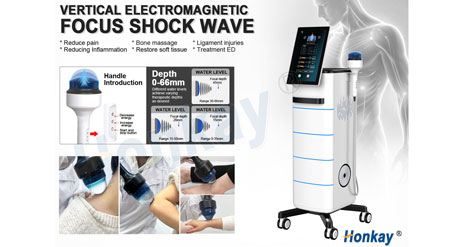
| Standing floor unit | Rehabilitation centres, showrooms | Premium positioning |
Guangzhou Huang-Kai Technology (Honkay) manufactures electromagnetic and focused shockwave systems for OEM and ODM programmes, alongside its PEMF, TECAR, EMS and pressotherapy lines. That matters to a distributor for a practical reason: an OEM partner who can supply several modalities from one factory reduces your supplier count, consolidates your shipping and documentation, and lets you build a treatment-room package rather than a single-product listing. Buyers in rehabilitation, sports recovery and veterinary channels can request a sample unit or a live demonstration before committing to volume.
It is a device in which an electromagnetic coil drives an internal impactor that strikes the treatment handle, sending a radially divergent mechanical shock wave through coupling gel into superficial and intermediate soft tissue layers. It is a non-invasive, non-pharmacological modality.
Our E-20A platform runs 1–22 Hz with 30–185 mJ energy. A wide frequency and energy range is what allows one machine to serve both low-intensity relaxation protocols and higher-intensity orthopaedic-style protocols.
Our box-type platform ships with seven interchangeable heads covering focused, standard, diffuse, flat, spine-specific, conical and curved contact geometries. Head variety determines how many anatomical sites one machine can safely serve.
On our E-20A platform, a 24-month warranty calculated from the factory shipment date. Claims require the device serial number and video evidence. Always ask a supplier to state the term and the date it starts from.
Yes. The head and bullet are consumables — bullets are typically replaced at around 1,000,000 impacts and the air pipe at around 5,000,000. Ask for unit prices and lead times before you buy.
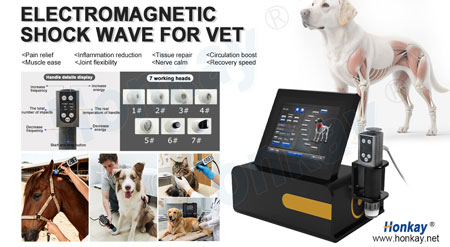
Yes, certain models can be applied to athletic animals such as horses as well as human patients. If you sell into both markets, confirm the applicator and preset configuration for each before ordering.
Coagulation disorders and anticoagulant therapy, malignant tumours, thrombosis, acute suppurative infection, open wounds, implanted electronic devices such as pacemakers, pregnancy, children with unfused epiphyses, and uncontrolled severe cardiovascular or cerebrovascular disease. Shock application is also prohibited over the brain, eyes, pharynx, trachea, heart, lungs, spinal canal and reproductive organs.
Yes. OEM and ODM programmes cover housing and case branding, panel language, head set composition, packaging artwork, manual language and plug standard. Confirm the full scope in writing on the quotation.
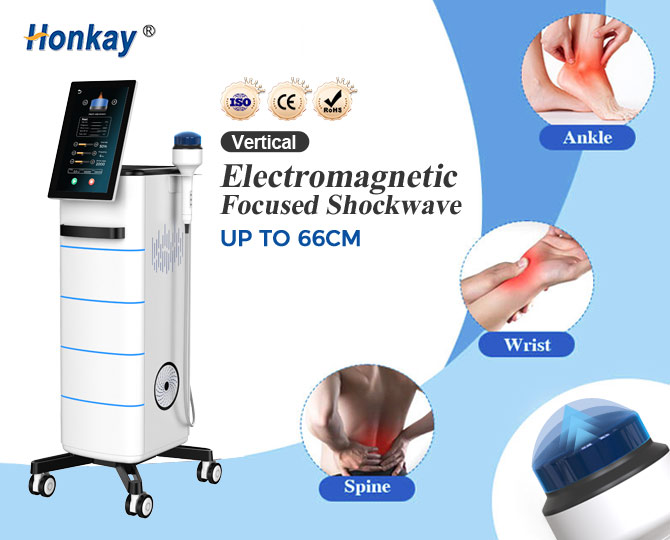
Tell us your target market, the form factor you want (box-type, desktop, trolley or standing), the head set you need and your expected monthly volume. We will come back with the configuration, OEM scope, price and lead time for your programme.


 English
 中文
中文