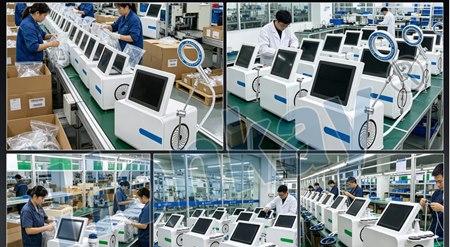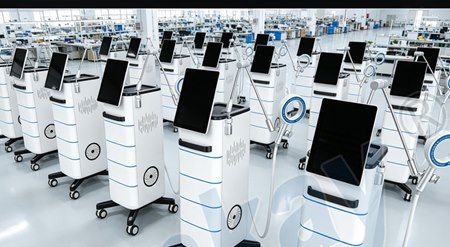
Fitting out a rehabilitation room is a different job from buying a single machine. The single-machine buyer asks which console is better; the room buyer has to ask which set of consoles, sharing one space and one or two operators, will cover the clients who actually walk in. That second question is the one this page is written for, and it is the question most quotations never answer, because a supplier quoting line by line cannot see your floor plan, your appointment pattern or the mix of people you treat.
This page works through the four equipment families a general rehabilitation, physiotherapy or wellness room most often needs to combine — electrotherapy in its two modes (TENS and EMS), therapeutic ultrasound, air-compression therapy, and the energy modalities that sit alongside them — and treats them as one configuration problem rather than four separate purchases. It is written for the buyer fitting out a treatment room or a small rehabilitation centre, or for a distributor building a demonstration room, so the language stays on coverage, channels, throughput, consumables and service life rather than on clinical outcomes. Where a figure could be read as a specification, the text says what to confirm in writing with your supplier instead of quoting a number, because the right figure depends on the model, the configuration and the market you sell into.

The cleanest way to plan a room is to stop listing products and start mapping client complaints to equipment families. Almost every general rehabilitation room ends up covering five jobs: easing surface discomfort before or after hands-on work, waking up a muscle that the client cannot fire on their own, delivering deeper local treatment to a specific structure, moving fluid and reducing swelling in a limb or the whole body, and applying an energy modality that the operator has trained on. Each of those jobs maps to one equipment family, and each family imposes its own demands on space, on the operator's time and on the consumables you will keep re-ordering.
The table below is the map. Read it as a starting point for the shortlist: identify which rows your client base actually needs in the first six months, and only then look at models. A room that opens with two families well chosen will serve more clients than a room that opens with six machines nobody has been trained on.
| Equipment family | The job it covers in the room | Who is usually in front of it | Space and power footprint | What to confirm in writing |
|---|---|---|---|---|
| Electrotherapy: TENS mode | Surface-level comfort work around a hands-on session | Walk-in clients and short appointments | Bench-top unit, two channels, no dedicated socket | Which waveforms are included and how the intensity is limited |
| Electrotherapy: EMS mode | Muscle activation and controlled contraction work | Clients in a progressive programme over several weeks | Bench-top unit with leads and reusable electrode cups | Whether the TENS and EMS modes share one console or need two |
| Therapeutic ultrasound | Deeper local treatment on a defined structure | Clients who come for a specific area, not a whole-body session | Bench-top unit with a transducer and coupling gel | The transducers supplied, their condition, and the gel and cleaning routine |
| Air-compression therapy | Fluid movement, swelling relief and recovery after effort | Clients who can lie or sit through a longer cycle-based session | Either a standing cabinet or a bench-top pump, plus a couch | Which garment set is included and how the chambers are cleaned |
| An energy modality | The deeper or practitioner-led work that anchors the service menu | Referral and returning clients who book the modality by name | A console plus applicators, usually on its own trolley | The applicators included, training, and how a worn applicator is replaced |
| Magnetic-field applicator | Localised or whole-limb sessions alongside the hands-on work | Clients who want a hands-off, wrap-and-rest format | A console with one or more loop applicators | Which applicator shapes the console accepts and the coil service position |
Notice that only the energy modality and the magnetic-field family usually need an operator standing beside the client for the whole session. The other four can often run while the operator does something else, which is exactly why they earn their place in a small room: they multiply the number of clients an hour without multiplying the number of people you employ.
Channel count is the specification buyers get talked into upgrading, and it is worth settling from your appointment pattern rather than from a specification sheet. A channel is one independent output: one pair of electrodes, or one site, running at its own settings. The honest question is not how many channels the machine can have, but how many outputs are in use at the busiest hour of a normal week.
Two channels suit a single operator who treats one client at a time and wants to place electrodes on two sites. Four channels let one operator run two clients, or one client on two separate areas, without moving the machine. Five or more channels suit a room that deliberately stacks short electrotherapy sessions — but only if there is a second operator, or a booking sheet that keeps several clients in the room at once. If neither of those exists, the extra channels will spend the year switched off, and the money is better spent on the second equipment family.
| Channels | The room pattern it fits | Operators needed | The trade-off you accept |
|---|---|---|---|
| Two | One client at a time, one or two sites | One, standing beside the couch | The room's throughput is capped by appointment length |
| Four | Two clients, or one client on two areas, at once | One, if the couch layout keeps both clients in view | More leads to store, clean and replace |
| Five or more | A deliberately stacked electrotherapy hour | Usually two, so no client is left unattended | Unused channels and a busier booking sheet |
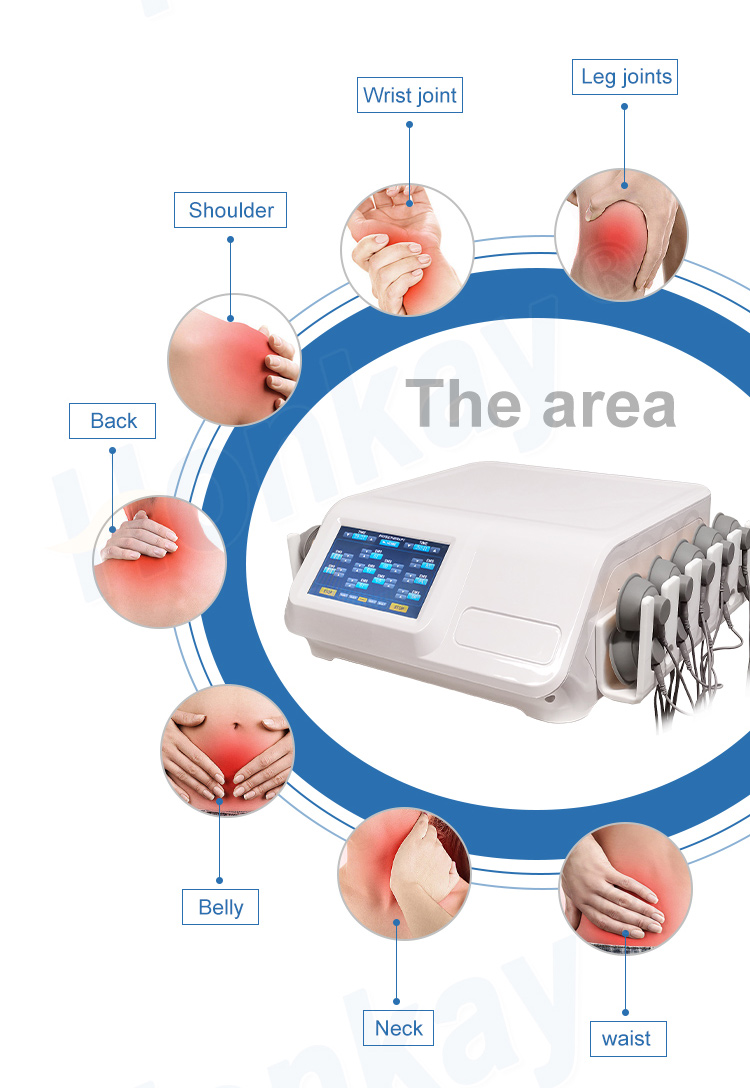
The diagram above is a useful reminder that channels are not the only way a room scales. Placement decides which areas the electrodes can reach, and a two-channel console with the right pads and cups will reach more of the body than a four-channel console with one electrode type. When you compare quotations, compare the electrode and pad sets as carefully as the channel count, because that is what the operator actually works with all day.
Waveform is the second specification that separates two otherwise similar quotations. Operators ask for waveforms by name, and a machine that lacks the one they trained on becomes a machine they avoid. The list below covers the waveform families most often requested in a general rehabilitation room; treat it as the vocabulary to check off against a supplier's specification, not as a treatment protocol, because which waveform is suitable for which client is a professional judgement that belongs to the trained operator, not to a brochure.
| Waveform family | What the operator uses it for | What to check before you buy |
|---|---|---|
| TENS | Short surface sessions around a hands-on treatment | Whether the pulse width and rate ranges can be set, not just selected from presets |
| EMS / neuromuscular | Controlled muscle activation in a progressive programme | Whether the on/off cycle and ramp are adjustable for comfort at the start |
| Interferential and premodulated | Comfort work over a broader area using four electrodes | That the four-electrode configuration is supported on the channel count you chose |
| Biphasic and Russian | Muscle re-education work in a structured session | Whether the parameters can be stored as a recallable programme for the team |
| High-volt and microcurrent | Session formats the operator has trained on and wants to offer | Whether the accessory electrodes for these modes are part of the quotation |
The practical test is simple: ask each operator in the room to write down the three waveforms they use most, then check those three against the quotation. A specification list that runs to fifteen waveforms but omits the one your senior operator relies on has answered the wrong question.
A combination unit puts two or more families inside one chassis — most often electrotherapy with ultrasound, or two energy modalities together. The appeal is obvious: one footprint, one plug, one manual, one training session. The caution is equally simple: when one part of a combination unit needs service, the whole unit may leave the room, and a fault on the second function can strand the first. A room that depends on the combined functions for most of its income should weigh that risk carefully.
The table below sets the two approaches against each other on the things that decide the answer: how the room is used, how the team is trained, and what happens on the day a part wears out. If your plan also involves putting your own brand on the equipment, our guide to private label, minimum order quantity and distributor margin takes that side of the project from there.
| Consideration | Combination unit | Separate machines | The room that usually prefers it |
|---|---|---|---|
| Footprint | One position on the bench or trolley | Two positions, or one moved in as needed | A tight room where every centimetre is booked out |
| Service interruption | One fault can take both functions out of the room | A fault sidelines only one family | A room where the combined functions carry the day |
| Training and manuals | One session covers everything, but the manual is long | One session per family, but each manual is short | A team with several part-time operators |
| Upgrading later | Adds a function only if the chassis and software allow | Adds a family without touching the existing units | A room growing service by service |
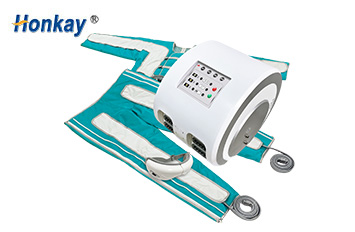
Air-compression therapy is the family that most often changes how a room is staffed, because it runs on a timer while the client rests. The decision is therefore less about the pump and more about the format. A standing cabinet — the pump built into a tall unit that carries its own garment set — occupies a fixed corner, looks substantial in a showroom and suits a room that runs several compression clients a day. A table-top pump sits beside a couch, can be stored on a shelf, and suits a room that offers compression as one option among many.

The garment set matters as much as the pump. A jacket, arm sleeves and leg cuffs that fasten quickly are what let a single operator start a client and move on; a set that takes several minutes to fit turns a hands-off treatment into a hands-on one. Ask to see the full set laid out, and check how it connects, before you decide between the two formats.

The finishes shown above are also a commercial point for anyone buying for a salon or a retail showroom: a garment set in a colour that matches the room reads as part of the fit-out, while a mismatched set reads as an afterthought. If you distribute, ask which finishes are available in the same specification and whether a colour is a stock item or a special order.
| Format | Where it suits | Operator effort per client | What to confirm in writing |
|---|---|---|---|
| Standing cabinet | A fixed treatment room running several clients a day | Low after set-up, but the client stays on the couch | The floor footprint, the socket position and how the garments store on the unit |
| Table-top pump | A flexible room, a salon bay or a mobile setup | Slightly higher, because the pump is unpacked and packed away | The storage case, the hose length and whether a spare garment set can be ordered |
Electrotherapy, ultrasound and compression cover a great deal of a general room's day, but most rooms that grow add at least one practitioner-led energy modality, and the question is how it sits beside the simpler families rather than whether it replaces them. In practice the energy modality anchors the appointment: the client books by name for it, and the electrotherapy and compression sessions fill the programme around it. That is why a room can justify an energy platform even when the simpler families already look busy — they serve different parts of the booking sheet.
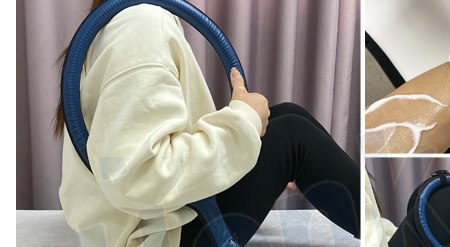
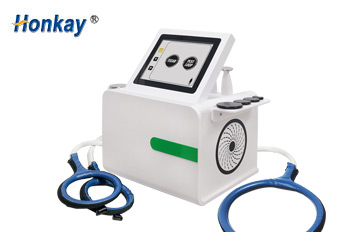
Some energy families reach the client through a handheld applicator that the operator moves continuously, while others use an applicator the client lies or sits inside. The magnetic-field loop applicators below are the wrap-and-rest kind: the client keeps the position, and the operator can step away for part of the session. That difference in operator attention is the single most useful thing to understand when you decide how many energy sessions the room can actually run in a day.

If you are unsure which energy modality belongs in the room, the honest starting point is the operator's training, not the specification sheet. A modality the team has not been trained on will not be sold, and a console that sits unused takes up a position that a family you can deploy would have earned. Confirm the training and the applicator set before you commit to the platform, and confirm how a worn applicator is replaced, because that is the part that eventually leaves the room for service.
The recurring cost of a rehabilitation room is not the machines; it is the small items that touch the client. Self-adhesive pads lose their tack, reusable cups have to be cleaned and re-seated, coupling gel runs out, air garments crease and eventually leak at a seam, and cables fray. None of these is expensive on its own, and together they are the line item buyers most often forget when they compare quotations.
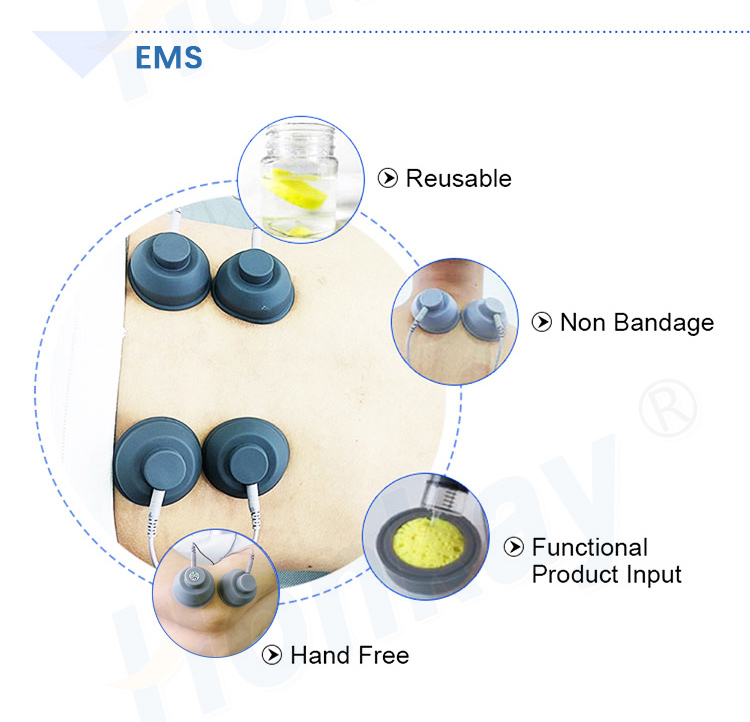
Reusable cups are the clearest example of why the consumable list belongs in the quotation. They are re-usable but not permanent, they need to be cleaned between clients, and their bands and leads are the parts that fail first. A room that standardises on one cup system keeps a small spare set and replaces it on a schedule; a room that mixes systems ends up with a drawer of parts that fit nothing. Ask the supplier to list every item that touches the client and to state which are consumable.
| Item | How it is used up | Sensible stock policy | What to confirm with the supplier |
|---|---|---|---|
| Self-adhesive pads | Tack fades with each use and cleaning | Keep a box in the room and top it up monthly | The pad size for each area and the standard connector type |
| Reusable electrode cups | Bands stretch and leads fray with handling | Standardise on one cup system and hold one spare set | How the cup is cleaned and how a replacement lead is ordered |
| Conductive gel and coupling gel | Used every session and thrown away | Order in bulk and store out of the sun | Whether the gel is a standard product you can source locally |
| Compression garments | Crease, discolour and leak at a seam over time | Keep a spare sleeve set so a leak does not close the service | Whether garments are sold separately and how they are repaired |
| Cables, hoses and leads | Fail at the connector after repeated plugging | Hold one spare of the lead you use most | The part number and lead time for the connector you use daily |
A room configuration only becomes an order once the operational details are written down. Because the correct figures here depend on the model and the configuration, the useful move is not to accept a number from a brochure but to send your supplier a request list and ask for each answer in writing. The list below is the one that has quietly prevented the most expensive room-level mistakes; treat it as the checklist you attach to the enquiry, and keep the written replies with the order file. If you are still choosing the factory itself, our guide to evaluating a physiotherapy equipment manufacturer covers that decision separately.
| Area to pin down | The written answer you want before payment |
|---|---|
| Families and functions | Exactly which function each unit performs, and which are combined in one chassis rather than offered separately |
| Channels and waveforms | The channel count per console and the full waveform list, with the modes your operators actually use highlighted |
| Applicators and electrodes | Which electrodes, cups, transducers, applicators and garments are included, and which are optional |
| Programmes and controls | Which preset programmes are stored, whether custom protocols can be saved, and whether settings can be locked for a team |
| Throughput | How many clients the configuration supports at once, and any duty limit across a working day |
| Space, power and storage | The footprint of each unit in use and in storage, the supply it expects in your market, and the plug standard |
| Consumables and spares | The full list of items that touch the client, which are consumable, and the lead time on the ones you will re-order |
| Documentation and training | The operation manual in your market's language, and what training is included for each unit |
| Service and warranty | The warranty term, what it is counted from, what the serial number is used for, and how a worn applicator or garment is replaced |
Send the list before you ask for a quotation, not after. A supplier who answers it in writing has told you how it builds and supports each family; a supplier who waves it away with an assurance that everything is standard has told you something just as useful. Keep the replies with the order file so that a question in year two can be answered by reading the file rather than by searching an inbox.
Choosing the families for a rehabilitation room is a decision about the clients, the operators and the floor plan, not about which single machine is superior in isolation. Map the complaints to the families first, settle the channel count against the busiest hour second, confirm the applicators, consumables and service position third, and leave the deeper specifications for last, once you know they apply to the configuration you have actually chosen.
If you are fitting out a room and want the families matched to your case mix, send us the treatments you plan to offer, your floor plan and your expected client flow, and we will come back with the equipment set we propose, the applicators and consumables included with each family, the service and spare-part position, and a 24-month warranty statement counted from the date of shipment from the factory.
Most rooms open well with two families rather than four: a combined electrotherapy and ultrasound unit, and one energy or compression family that the operators are trained on. Two families the team can deploy fully will serve more clients than four machines that are only partly understood. Add the remaining families once the booking sheet shows where the gaps actually are, rather than guessing them at the start.
Usually yes, and it is one of the most common configurations in a general room, because TENS and EMS share the same output stage and differ mainly in the waveform and the way the current is timed. Check that both modes can be set independently on the same channel count, and that the electrode sets for each mode are included, rather than assuming one mode's accessories will do for both.
Combining them saves a position on the bench and gives you one manual and one training session. The trade-off is that a fault can take both functions out of the room at once, so a room that earns most of its income from those two functions should weigh that risk. If the combined unit is one tool among several, the convenience usually wins; if it is the room's mainstay, keeping the two separate is the safer choice.
It depends on how often you run it. A standing cabinet keeps its garment set with the unit and suits a fixed room where compression runs several times a day; a table-top pump is unpacked and packed away each time but stores on a shelf and suits a flexible or mobile setup. Compare them on garment convenience and storage, not on the pump itself, because that is where the daily difference lies.
That depends on how often they are used and how they are cleaned, so it is worth fixing the policy rather than a date. Self-adhesive pads lose their tack over repeated cycles and cleaning; reusable cups wear at the band and the lead connector. The practical answer is to standardise on one system, hold a spare set, and replace items on a routine the team follows, so the room is never closed for want of a pad.
It can, and many busy rooms do, because compression and electrotherapy can run while the operator works with another client on an energy session. The limit is attention, not equipment: some energy families need continuous operator input while others let the client rest. Decide how many clients one operator can genuinely supervise at once, and let that number, rather than the number of sockets, set the schedule.
The function of each unit and which are combined, the channel count and waveform list, which electrodes, applicators and garments are included, the stored and customisable programmes, the footprint and supply for your market, the full consumable and spare-part list, the manual language and training, and the warranty term with what it is counted from. Send that list as part of the enquiry and keep the written replies with the order file, so a question in year two can be answered from the file rather than from memory.
The equipment described on this page is made and supplied by Honkay, the brand of Guangzhou Huang-Kai Technology Co., Ltd., an OEM and ODM manufacturer of physiotherapy equipment working from Guangzhou, China. Our factory and offices cover more than 1,000 square metres, and we run an in-house research and development team alongside the production floor.
Because the units are built rather than resold, a room order can be configured instead of assembled from a catalogue: the channel count, the waveform set, the applicator and electrode list, the garment sizes, the programme library, the control language and the housing form are all settled at the factory. Buyers who need their own badge on the panel order the same platforms under private label, and the training material, the spare-part list and the manual language travel with the order.
Honkay exports to South America, South Asia, South-East Asia, Western Europe, Northern Europe, Southern Europe, Eastern Europe, Oceania and North America, so most of the questions on this page come from buyers who have already run the numbers for their own market. More background is on our about page, and the request list above can go straight to the team.


 English
 中文