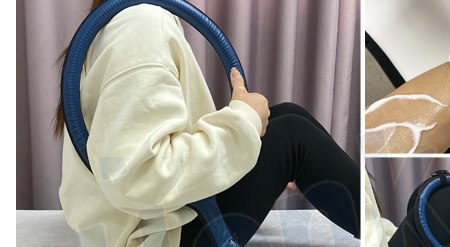
When a buyer starts comparing magnetic-field therapy equipment, the conversation usually jumps straight to output numbers: how strong the field is, how many frequencies a console offers, how many programmes sit in the menu. Those numbers matter, but they answer a different question from the one that decides whether the equipment works in your setting. The question that decides it is shape — the form of the applicator the client lies on, wraps a limb with, sits inside, or is positioned against.
This page compares the four form factors you will meet when sourcing this category of equipment: the full-length mat, the loop applicator, the ring mounted on a stand, and the rigid hard-shell coil. It is written for the buyer fitting out a treatment room, a sports-recovery service or a retail shelf rather than for a clinician reading a protocol, so the language stays on coverage, throughput, positioning and service life rather than on clinical outcomes. Where a figure could be read as a specification, the text says what to confirm in writing with your supplier instead of quoting a number, because the right figure depends on the model, the configuration and the market you sell into.

They are two separate decisions, and keeping them apart is the single most useful habit to build before you compare quotations. Shape answers one question: where does the field reach, and how easily can an operator put it there? Output level answers a different question: with what character does the unit deliver that field? A buyer who fixes the shape first, and only then settles the output level, usually ends up with equipment that fits the room. A buyer who buys on output level alone often ends up with an applicator that is awkward to place on the client in front of them.
Think of the two as independent axes. A loop and a mat can be driven by consoles of very different output characters, and the same console is often delivered with more than one applicator family. That is why the form-factor comparison below should be read before any specification table, and why it pays to describe your intended use to a supplier in plain operational terms — who is treated, where they sit or lie, and how much time the operator can spend with each client — rather than opening the conversation with a preference for one number. If you are still working out the technology itself, our explainer on what a PEMF machine is and how it works covers the mechanism separately; this page takes the mechanism as given and compares only the shapes.
One consequence follows immediately. Two suppliers can both quote "a machine with a mat and a loop" and be describing quite different operating experiences, because the mat and the loop each impose their own placement routine, storage requirement and demand on the operator. Ask to see the applicators themselves, on a real client in a real room, before you compare the consoles that drive them.
The four shapes below are the ones buyers ask about most often. None of them is a better or worse platform in the abstract; each trades coverage against precision, or throughput against positioning discipline, in a slightly different way. Read them as four ways of placing a coil near the client, and match the trade to the room the equipment is going into.
| Form factor | How the coil is applied | Typical area covered | Where it is usually placed | Operator involvement | Positioning repeatability |
|---|---|---|---|---|---|
| Full-length mat | The client lies on a flat pad that carries coils along its length | A large, body-length zone in a single pass | Home rooms and wellness or relaxation settings | Low: the client is placed once and the mat stays put | Fixed by the mat outline; the client lines up on it |
| Loop applicator | A coil formed into a flexible or semi-rigid loop is laid over, or wrapped around, a limb or region | A focused but sizable area around one limb or joint group | Clinics during hands-on sessions and pitch-side sports use | High: the operator holds or drapes the loop and moves it | Moderate: the loop is re-placed by hand each session |
| Ring on a stand | A ring coil is mounted on an articulated arm that the client sits or stands within | A large zone around the trunk, back, hips or a whole limb | Treatment rooms and salons that run a steady appointment flow | Low to moderate: the client settles in and the arm holds the ring | Good: the arm can be returned to a repeated position |
| Hard-shell coil | A rigid coil in a fixed-shape shell is held square against a defined target | A localised, always-the-same spot | Settings that treat one site on repeat visits | Moderate: the shell must be seated squarely on the target | High: the rigid shape reproduces the same position |
Notice that the difference between the mat and the loop is not really about the machine inside them; it is about who does the work. With a mat the client holds the position and the operator does almost nothing after set-up. With a loop the operator is in the loop, literally and commercially: every session re-places the coil, and the skill of the person holding it becomes part of the service you sell. A room that expects one operator to look after several clients at once is usually a room that wants a mat or a ring, not a loop.

A loop-based unit is often the most compact configuration, because the console and the coil travel together and the whole set can be packed into a single case. That compactness is exactly what makes it the natural choice for a practitioner who moves between rooms or visits clients, and exactly what makes it less suited to a fixed, high-throughput room where the operator would rather not carry anything at all.
The fastest way to choose is to start from the room rather than from the product. A treatment setting has a size, a sound level, a typical appointment length and a number of operators, and those four facts eliminate most of the options before you read a single specification. The matrix below maps the four shapes across the settings buyers most often describe; read it as a starting point to narrow the shortlist, then confirm the configuration with your supplier against the room you actually have.
| Setting | Mat | Loop | Ring on a stand | Hard-shell coil |
|---|---|---|---|---|
| Home use | The shape the setting was designed around | Possible with a small loop | Larger than most homes want | Rarely relevant at home |
| Single clinic room | Sometimes, as a second option | The everyday workhorse | Strong for trunk and hips | Good for one repeat target |
| Sports team and mobile work | Occasionally, for whole-group recovery | Usually the first choice on the move | Less portable than a loop | Suits a fixed treatment bench |
| Wellness room or salon | Common as a relaxation format | Used for focused, hands-on work | Fits a busy appointment room | Rarely used here |
| Rehab room with high flow | Useful for parallel sessions | Used during assessment and hands-on work | Suited to a steady appointment pace | For a protocol tied to one site |
| Retail showroom | Easy to demonstrate | Easy to demonstrate | The strongest visual presence | Hardest to explain at a glance |

The row most buyers underestimate is the last one. A showroom has different requirements from a treatment room: the equipment has to be understood by a passing customer in a few seconds, without an operator standing beside it. A mat and a loop explain themselves quickly because the customer can see where the coil goes; a ring on a stand has obvious presence but needs a demonstration; a hard-shell coil, which is the most precise of the four, is also the least self-explanatory and is usually kept for back-of-house work rather than for the shop floor.
Two buyers can have identical rooms and identical clients and still need different shapes, because what differs is the flow: how many clients an hour, how long each stays, and whether the operator is free during the session. Flow is the variable that quietly decides the return on the equipment, so it is worth writing your expected flow down before you shortlist. The table below pairs a few common flows with the form that usually fits and the trade-off you accept by choosing it.
| The flow you are planning | What matters most | A form that usually fits | The trade-off you accept |
|---|---|---|---|
| Fewer clients, longer sessions | Coverage and client comfort | Mat | Slower turnover per room |
| Many clients, short sessions | Speed of set-up and repetition | Ring on a stand | Less freedom to chase a moving target |
| Hands-on, operator-led sessions | Control and placement | Loop | Continuous operator attention |
| Repeat work on one site | Consistency of position | Hard-shell coil | Limited to the target the shell was shaped for |
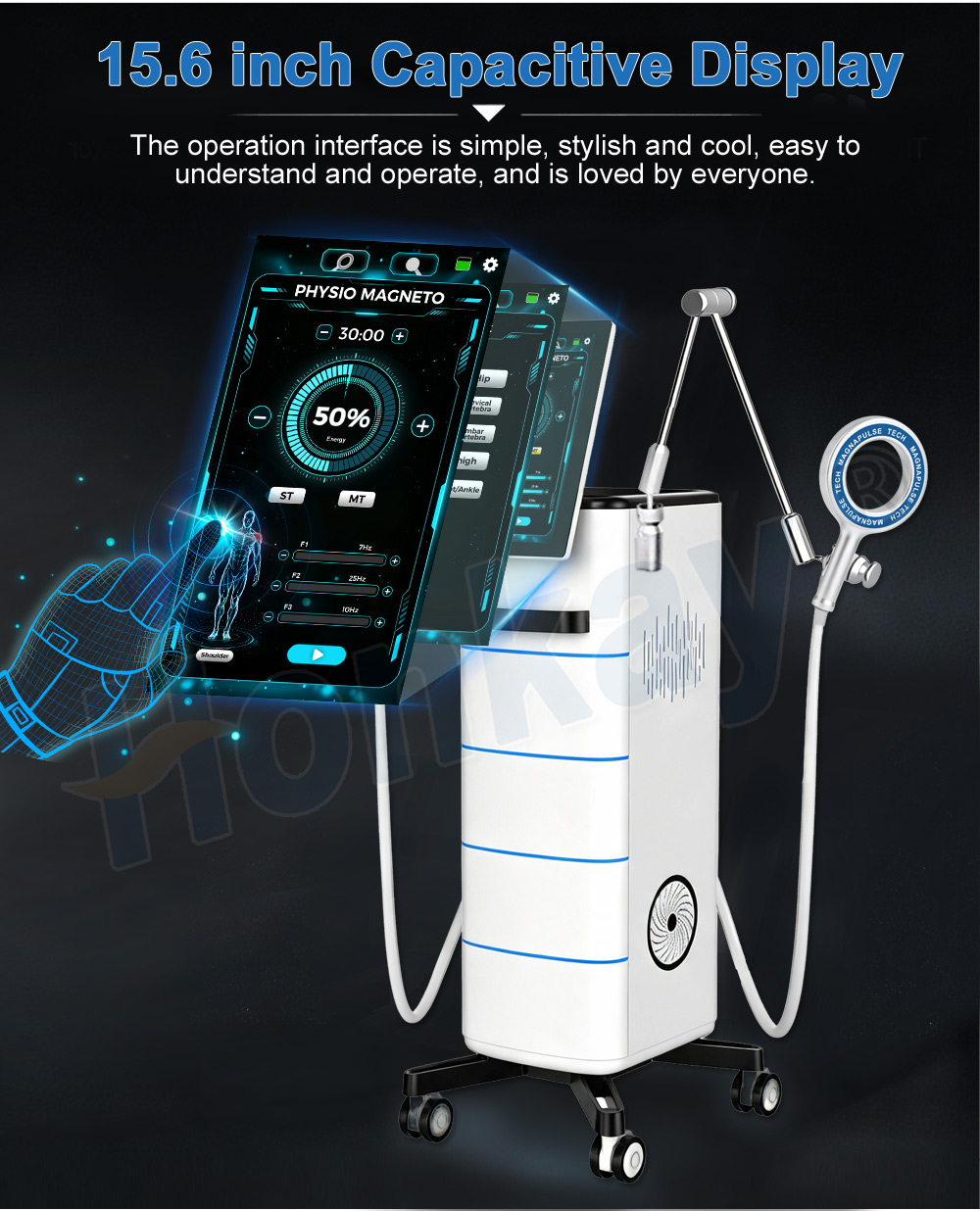
A standing ring is the shape that most changes what a room can do, because the client does not occupy a couch. That frees the couch for other work and lets a single operator keep an eye on more than one client at a time, which is why high-flow rooms so often build their service around it. The price of that throughput is flexibility: a client who needs a coil in a spot the ring does not naturally reach will still need a loop or a hard-shell coil alongside it, so most busy rooms end up running two shapes rather than one.
Once the shape is settled, buyers tend to move straight to price. The items that decide whether the equipment is still easy to live with two years later are the ones that rarely make it into the first comparison, because they only show up in daily use. The table below lists the ones that most often cause a second purchase or an awkward conversation, and gives the question to put to the supplier so the answer is on record before you commit.
| Often-overlooked item | Why it matters | What to ask the supplier |
|---|---|---|
| Coil interchangeability | Whether one console can run mat, loop, ring and shell, or only the applicator it shipped with | Which applicator families the console accepts, and what changes about operation with each one |
| Two-channel operation | Whether two applicators can run at once for higher throughput | Whether two clients, or two sites on one client, can be treated at the same time, and how the controls handle it |
| Footprint and storage | Where the mat, the stand and the case live between sessions | The footprint of each configuration and how the applicator is stored or folded between uses |
| Cleaning and hygiene | What touches the client and how it is renewed between sessions | Which surfaces are wiped, which are covered, and which parts are consumable |
| Noise and cooling | Whether continuous operation suits a quiet treatment room | How the unit is cooled and whether it is built for a full working day |
| Spare parts and service | How an applicator is replaced and how long a unit can be off the floor | Which spares you may stock, their lead time, and how the warranty position is handled |

Interchangeability is the item worth settling first, because it decides what you can sell later. A console that accepts a mat today and a loop next quarter lets you add a service without buying a second platform; a console locked to the applicator it shipped with turns every new service into a new purchase. Ask the question as an operational one — "if I want to offer a second service in six months, what changes?" — and you will get a more useful answer than from a specification sheet.
A form-factor decision only becomes an order once the operational details are written down. Because the correct figures here depend on the model and the configuration, the useful move is not to accept a number from a brochure but to send your supplier a request list and ask for each answer in writing. The list below is the one that has quietly prevented the most expensive mistakes; treat it as the checklist you attach to the enquiry, and keep the written replies with the order file. If your plan also involves putting your own brand on the equipment, our guide to private label, MOQ and distributor margin takes that side of the project from there.
| Area to pin down | The written answer you want before payment |
|---|---|
| Applicator set | Exactly which applicators are included, which are optional, and which of them the console can also accept later |
| Coverage and placement | The area each applicator is intended to cover, and how the client is positioned to use it |
| Controls and modes | The operating modes the console offers, what each is used for, and whether presets can be locked for a team |
| Throughput | Whether the configration supports one client or two at a time, and any duty limit across a working day |
| Power and site | The supply the unit expects in your market and the plug standard it is built to |
| Storage and case | The footprint in use and in storage, and whether a travel case is included |
| Documentation | The operation manual in your market's language, and the spare-parts and consumables list |
| Service and warranty | The warranty term, what it is counted from, what the serial number is used for, and how an applicator is replaced |

Send the list before you ask for a quotation, not after. A supplier who answers it in writing has told you how it builds and supports the equipment; a supplier who waves it away with "no need, it is all standard" has told you something just as useful. Keep the replies with the order file so that a question in year two can be answered by reading the file rather than by searching an inbox.
A mat is a flat pad the client lies on, so it covers a large, body-length zone while the client stays in one position and the operator does little after set-up. A loop is a coil the operator lays over, or wraps around, a limb or region, so it targets a smaller area but can be moved from session to session. In practice the choice comes down to who does the work: a mat suits a room that wants to look after several people at once, while a loop suits hands-on, operator-led sessions where placement matters more than coverage.
Because a ring lets the client sit or stand inside it instead of occupying a couch. That frees the couch for other equipment and lets one operator keep several clients moving through the room, which is why high-flow settings often build their service around the standing shape. The cost is reach: a spot the ring does not naturally cover still needs a loop or a hard-shell coil, so busy rooms often run two shapes rather than one.
When one operator has to serve two clients at once, or when one client needs two sites covered in a single appointment. If your room runs one client at a time with a single operator beside them, a single channel is usually the honest answer and the second channel spends its life switched off. Ask the supplier to describe exactly what two-channel operation changes about the controls, because a second channel is only useful if the console makes it easy to run both at the same time.
They share a shape, not a duty. A home mat is built for one person's regular use in a quiet room, and a clinic machine is built for a working day of back-to-back sessions, an operator team and a service plan. When you compare them, compare them on the operational things: how long the unit is expected to run each day, how the applicator is cleaned between clients, who services it and how a replacement is supplied. Reading the two on those terms is more useful than comparing them as if they were the same product at two prices.
Often yes, and it is one of the most valuable questions to settle before ordering, because it decides what you can add later without buying a second platform. Ask which applicator families the console accepts, whether a shape can be added on a later order, and what each addition changes about operation. A console that accepts a mat today and a loop next quarter lets you launch a new service cheaply; a console locked to its shipped applicator turns every new service into a new purchase.
That depends on how the applicator connects to the console and what the service arrangement allows, so it is worth confirming in writing rather than assuming. Ask whether the coil is a field-replaceable part, whether you may stock a spare, and what the lead time is if you do not. This is also the moment to fix the warranty position: our own equipment carries a 24-month warranty counted from the date of shipment from the factory, referenced to the serial number, and the same answer should cover how a replacement applicator is supplied during that period.
The applicator set and what is optional, the area each one covers and how the client is positioned, the modes the console offers, whether two clients can be handled at once, the power and plug standard for your market, the footprint and any travel case, the operation manual in your language, and the service and warranty terms. Send that list as part of the enquiry and keep the written replies with the order file, so that a question in year two can be answered from the file rather than from memory.
Choosing between a mat, a loop, a ring and a hard-shell coil is a decision about the room, the flow and the operator, not about which shape is superior in isolation. Settle the shape against the setting first, confirm the interchangeability and service details second, and leave the output numbers for last, once you know they apply to the configuration you have actually chosen.
If you are shortlisting magnetic-field equipment and want the form factor matched to your room, send us your setting, your expected client flow and the services you plan to offer, and we will come back with the applicator configuration we propose, the coverage each shape provides, the interchangeability and spare-parts position, and a 24-month warranty statement counted from the date of shipment from the factory.



 English
 中文