Every shockwave session is decided by four numbers typed into a console before the handpiece touches anyone: a pressure amplitude in bar, a repetition rate in hertz, a shot count, and an interval between sessions. On a quotation sheet those four numbers look like a specification. In a treatment room they are a working language, and the difference between a room that gets repeatable sessions and a room that gets whatever happens that afternoon is almost never the machine. It is whether those four numbers are chosen deliberately, written down, and handed to the next operator in a form that can be reproduced.
This page is written from the operator's side of the couch. It is about how the numbers relate to each other, how the geometry of the handpiece changes what a given number actually delivers, how body region and body type push the starting point up or down, and how to build a written protocol that a second operator can follow on a second machine without guessing. It treats the parameters as engineering variables — energy per pulse, pulses per second, pulses per area, total pulses per course — because that is what they are. Which client should be on the couch at all, and what clinical objective a course is pursuing, stays with the qualified clinician working under the clinic's own protocol. Nothing here is a recommendation for a condition, and no setting on this page is a promise about an outcome.
The reason to take the engineering view seriously is that a setting sheet copied from a course handout usually travels without its context. "Two bar, ten hertz, two thousand shots" is not a protocol; it is three numbers that were correct on one device, with one handpiece, on one body region, in the hands of one operator who moved at a particular speed. Put the same three numbers on a different platform with a different face diameter and the delivered energy per unit area changes, the hand has to travel at a different speed to keep the same overlap, and the sensation reported by the client changes even though nothing on the screen moved. A protocol that survives being copied is one that records the geometry and the handling alongside the numbers.
Start with the distinction that causes most of the confusion in training: bar and hertz are not two measures of the same thing. Bar is amplitude — how hard a single pulse pushes. Hertz is rate — how many of those pulses arrive per second. Shots are the total, and the interval is the recovery window between courses. Amplitude and rate multiply into a delivery rate, and that product, not either number alone, is what the tissue and the handpiece feel over a minute of work.
The console presents these as independent dials because the hardware can drive them independently, and that independence is a trap for a new operator. Raising hertz at fixed bar does not make each pulse stronger; it makes the same pulse arrive more often, which raises the energy delivered per minute, raises the heat accumulating in the handpiece, and shortens the time the hand has to travel between pulses. Raising bar at fixed hertz makes each pulse stronger while the number of pulses per minute stays the same, which changes the sensation sharply but leaves the total energy per minute to be recalculated. Two sessions described as "the same" on a sheet can differ by a wide margin in delivered energy if only one of the two numbers moved.
Shot count is the least understood of the four because it is usually treated as a target to reach rather than a budget to spend. It is the total dose of pulses for the session, and it is only meaningful next to the area over which those pulses are spread. Two thousand pulses over a palm-sized zone and two thousand pulses over a whole thigh are not the same application; the density differs, and density is what the operator is really controlling when they decide how long to stay in one place. This is why a written protocol needs an area, not just a total.
The interval between sessions belongs on the same sheet as the other three, for a practical reason: it sets how the previous session's response is read before the next one is dialled in. A course that runs on a fixed weekly rhythm regardless of what the operator observed at the last visit is a schedule, not a protocol. The interval is the point at which someone looks at the record, compares it with the plan, and decides whether the numbers stay where they are.
| Parameter | What it sets on the device | How it is expressed | What changes when it is raised | What must be written beside it |
|---|---|---|---|---|
| Amplitude | The peak pressure of one pulse as it leaves the handpiece | Bar, usually in small steps across a range the platform supports | Sensation per pulse rises sharply, depth of the effective field grows, tolerance for a dry contact patch falls | The exact step, and whether the client's reported sensation was checked at that step before the next one |
| Frequency | How many pulses are generated per second | Hertz, in whole-number steps on most platforms | Energy per minute rises, handpiece temperature climbs faster, the time available to move the hand between pulses shrinks | The hertz figure and the hand speed it was matched to, in words the next operator can picture |
| Shot count | Total pulses the session will deliver before the console stops | A whole number per zone or per session, with a counter on screen | Time on the couch and total energy delivered, but the density only rises if the area stays the same | The area the count was spread over, and whether it was one zone or several |
| Interval | How long the room waits before the next session in the course | Days between sessions, plus the planned number of sessions in the course | Nothing electrical — it changes how much recovery time sits between two applications of the same load | The date of the next session and the observation that justified keeping or changing the other three |
Bar is a pressure unit, and on a shockwave platform it describes the peak of the pressure transient leaving the handpiece. What matters at the couch is that the number is a device setting, not a measurement of what arrived in tissue. Between the number on screen and the field inside the body sit the face diameter of the handpiece, the coupling film, the angle the hand is held at, the thickness of the soft tissue over the target, and the amount of pressure the operator is applying with their own arm. Five variables, all of them outside the console, all of them able to change the delivered field without moving the bar figure by one step.
The practical consequence is that bar is best treated as a stepped search rather than a value to be looked up. Begin at the low end of the band the clinic has decided is the starting point for that region, deliver a short run at a fixed frequency, and ask for a description of the sensation rather than a number. If the description suggests the client is tolerating it comfortably and the handpiece is coupling cleanly, step up by the smallest increment the platform allows and repeat the check. Two or three steps are usually enough to find the working band for that client on that day. A jump straight to a mid-range figure denies the operator the information the low steps would have given them, and it denies the client a chance to describe what is happening before the amplitude is already high.
Amplitude also interacts with coupling in a way that is easy to miss. A dry patch, a bubble under the face, or a face that is only half in contact does not simply reduce transmission; it concentrates the energy that could not enter tissue at the surface, where it turns into heat. The higher the bar, the more heat that failed transfer produces. This is why a session that suddenly becomes uncomfortable at a setting that was fine last week is often a coupling problem rather than a tolerance problem, and why the first response to a complaint at a stable setting should be to stop, reapply the film, and check the face against the skin — not to reach for the bar dial.

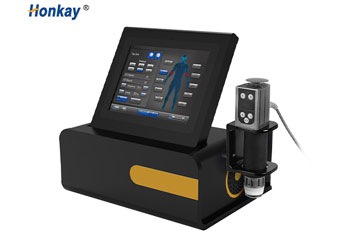
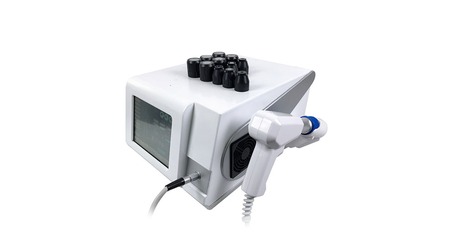
The photograph above is a useful reminder of where the numbers live. Amplitude and frequency are adjusted on the handpiece itself on this style of platform, with a separate key for start and stop, a readout for the shots used and a readout for the temperature of the hand. That layout is deliberately reachable by the thumb of the hand holding the device, which means a change can be made mid-session without walking to the console. It also means a change can be made by accident. Rooms that run this layout usually adopt a rule that any adjustment is announced out loud and written on the sheet at the end of the session, because a thumb resting on an increase key is the most common way a documented protocol quietly stops matching what was delivered.
| Starting band | Sensation the operator should expect | Tolerance for an imperfect contact | Where it is a sensible place to start | Reason to step down again |
|---|---|---|---|---|
| Low band | A light tap with a clear gap between pulses; conversation continues normally | Forgiving — a small dry patch rarely produces a sharp sensation | First session with a new client, thin soft tissue over bone, sensitive or bony regions, any area with recent bruising | Not usually needed; this is the band to return to when anything is unclear |
| Low-mid band | A firm, distinct tap; the client notices each pulse but does not brace | Moderate — a gap in the film becomes noticeable quickly | Muscular regions with reasonable soft tissue cover, second and later sessions once the first was tolerated | The client tenses the limb, or the handpiece starts to feel warm on the outside |
| Mid band | A strong tap that the client can feel deep to the surface, and may describe as a thump | Low — the face must be flat and fully filmed at every pulse | Large, thick musculature such as a thigh or a gluteal region, on a client who has already run lower steps without issue | Any report of sharpness rather than pressure, or the face lifting at the edge of a curve |
| Upper band | A heavy pulse; the operator can feel the recoil in the wrist and the client's breathing changes | Very low — half a face of contact is enough to make this unpleasant | Only where the clinic's own written protocol calls for it, on thick tissue, with a handpiece whose geometry suits the depth | Fatigue in the operator's hand, which shortens the stroke and concentrates pulses in one spot |
One warning belongs here rather than in a footnote. The bands above describe what a step feels like, not what it achieves; they are a way of talking about amplitude consistently between operators, and the actual numbers behind each band should come from the platform's own manual and the clinic's clinical lead. A room that writes its bands as words first and numbers second can move a protocol between two different platforms without losing its meaning, because the words carry the intent and the numbers are re-derived for the hardware. A room that writes only numbers has to start again every time the hardware changes.
Frequency is where inexperienced operators get into trouble, and the reason is mechanical rather than clinical. At a low rate there is a generous pause between pulses, and the hand can travel a few centimetres, reposition, and let the face settle before the next pulse arrives. At a high rate the pauses collapse, and unless the hand speeds up to match, the pulses land on the same patch of skin in a tight cluster. The console reports the same hertz either way. What differs is the density actually delivered, and that is decided by the operator's arm, not by the device.
The rule that makes frequency teachable is a simple one: the hand speed must be chosen so that consecutive pulses land on overlapping but not identical spots. Slow hand at high frequency produces a stack of pulses in one place; fast hand at low frequency produces a scatter of pulses with gaps between them. Neither is a device fault, and neither is visible in the shot counter. The way to check it in training is to have the operator count pulses out loud against the movement of the hand for ten seconds, then compare the count with what the console says — if the hand has moved through the zone in fewer pulses than the zone needs, the frequency is too high for that stroke, or the stroke is too fast for that frequency.
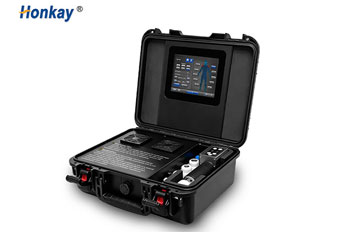
Frequency also has a thermal dimension inside the hardware. A handpiece that generates more pulses per second accumulates heat faster, and the console that shows a hand temperature reading is showing the operator the consequence of the hertz figure they chose. On the platform in the photograph further up this page, that readout sits next to the shot counter for exactly this reason: the two together describe how hard the session is working the device. A room that ignores the temperature readout and only watches the shot counter will eventually meet a handpiece that feels uncomfortably warm in the hand long before the planned shot count is reached, and the correct response is to lower the frequency or pause, not to keep going and accept a warmer hand.
For a new protocol, the starting frequency should be the one the operator can sustain a clean, even stroke at for the full duration of the zone. That is a lower figure than most people expect when they first pick up a handpiece, because a smooth stroke at a moderate rate covers a zone more evenly than a fast stroke at a high rate. Once the stroke is consistent, the frequency can be raised in steps and the stroke re-timed to match. Doing it the other way round — choosing a high figure first and then trying to move the hand fast enough — produces a session that looks efficient on the counter and is patchy on the skin.
| Rate band | Gap between pulses | Hand travel it supports | What the operator can do at the same time | Watch for |
|---|---|---|---|---|
| Slow | Long enough to hear each pulse separately | Short, deliberate steps of a centimetre or two, with a pause to reseat the face | Talk to the client, watch the face for lift, reapply film between passes | Over-dwelling: the hand stops but the pulses do not |
| Moderate | Short but distinct; a steady rhythm rather than a buzz | A continuous sweep of three to five centimetres per second across a zone | Maintain a rhythm and still glance at the counter and temperature readout | Drift towards a faster stroke as the arm tires, leaving the far end of the zone under-covered |
| Fast | Merges into a continuous buzz in the hand | A quick sweep, only sustainable on large flat zones with a broad face | Little else — the operator's attention is on keeping the stroke even | Heat build-up in the handpiece and a cluster of pulses wherever the stroke slowed |
| Pulsed with pauses | Deliberate rests worked into the run | Any speed, because the rests reset the thermal load | Check the skin between blocks and note any change before continuing | Treating the pause as lost time and shortening it over a long list |
A shot count is a total, and a total without an area is not a dose. This is the single most useful sentence to put in front of a new operator, because the counter on the console counts up towards a target and creates a strong pull to reach it whatever the geography of the session. Two thousand pulses spread across an area the size of a palm and two thousand pulses spread across a thigh differ by roughly an order of magnitude in pulses per square centimetre, and the pulses-per-area figure is the one that describes what the client actually received.
There is a second reason the count needs an area beside it: the count is per session, but the session usually covers more than one zone. A room that plans three zones and one total will find the last zone short-changed, because the arm gets tired and the counter is already close to its target. The fix is arithmetic rather than clinical — decide the zones first, split the total across them, and write the split on the sheet. A zone that is running behind is then obvious while there is still time to correct it, instead of being discovered when the console stops.
Density is also the variable that makes two operators on the same machine produce different sessions from an identical sheet. One operator sweeps a zone in even passes and finishes with a fairly uniform field; another works the tender spot in the middle for most of the count and treats the surrounding area briefly. Both reach the target total. The records look identical. The sessions were not. Writing the pass pattern on the sheet — how many passes, in which direction, starting where — removes most of that variation and costs nothing to record.
| Line on the sheet | What it fixes | How to choose a starting value | What goes wrong if it is left out |
|---|---|---|---|
| Zones in the session | How the total is divided before the session starts | One zone per session at first, then two or three once timing is predictable | The last zone is always the shortest, and nobody notices until the review |
| Shots per zone | The dose actually delivered to each area | From the clinic's protocol, adjusted for the size of the area, not for the clock | An even total hides an uneven application |
| Pass pattern | How the pulses are distributed inside the zone | Parallel sweeps in one direction, then a second set at a slight angle | Two operators reach the same total with visibly different coverage |
| Points per pass | The overlap, and therefore the evenness, of the field | Face diameter minus a small overlap, stepped across the zone from one edge | Bands of treated and untreated tissue, usually blamed on the machine |
| Counter at end of zone | A cross-check that the plan was followed | Read the counter at each zone boundary, not only at the end of the session | A short zone and a long one are indistinguishable in the notes |
Once bar, hertz and shots are understood separately, the next step is to see them as one system with a fixed budget. Delivered energy per minute is roughly amplitude times rate: a session at a lower amplitude and a lower rate delivers a small amount of energy slowly, while a session at a higher amplitude and a higher rate delivers a great deal of energy quickly. Both can be reasonable choices for different situations, but they are not interchangeable, and the same shot total means very different things at the two ends of that scale.
The practical rule is to move one number at a time and leave the other two where they are. Raise amplitude, keep the rate and the count, and the session becomes more intense per pulse but shorter in effective coverage because a high amplitude demands slower, more careful strokes. Raise the rate, keep amplitude and count, and the session finishes sooner with the same total energy spread over a shorter window, which raises the heat load on the handpiece and reduces the operator's margin for error. Raise the count at fixed amplitude and rate, and nothing changes except the duration, which is the safest of the three changes and the one to reach for when a zone is larger than expected.
Body type enters here as a modifier on all three at once. Thick soft tissue absorbs and attenuates more of the wave before it reaches depth, so a client with substantial sub-cutaneous fat over the target needs either a higher starting amplitude or a handpiece with different geometry — and pushing amplitude up without changing geometry mostly increases what happens near the surface. A lean client with little cover over bone needs the opposite correction: lower starting amplitude, a face that fits the contour, and more attention to keeping the film intact over a prominent edge. There is no setting that suits both, which is why a protocol written for a population and applied to an individual has to leave room for the first ten minutes of the first session to change the numbers.

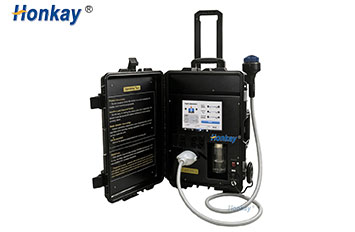
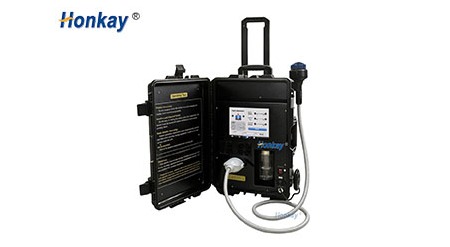
The cart above shows the arrangement that most rooms settle on: the console positioned so the screen is readable from the working side of the couch, with both handpieces stored where the operator can pick one up without turning. That layout matters for parameters more than it looks. An operator who has to walk around the couch to read the counter will stop reading it, and an operator who can see bar, hertz and shots without moving will notice a slip — a bumped key, a count running ahead of the plan — within a few pulses rather than at the end of the session.
| Change made | Energy per minute | Heat in the handpiece | Demand on the operator's hand | Sensible companion change |
|---|---|---|---|---|
| Amplitude up | Rises in proportion to the step | Rises modestly, because the same number of pulses is being generated | Higher — strokes must slow down to keep the face flat | Drop the rate one step while the new amplitude is being tested |
| Frequency up | Rises in proportion to the rate step | Rises noticeably and sooner | Higher — the stroke must speed up to spread the pulses | Plan a mid-session pause, and watch the temperature readout |
| Shots up | Unchanged per minute; total over the session rises | Accumulates for longer, so the end of the session is warmer | Fatigue over a longer run, which shows up as a shrinking stroke | Extend the area rather than the dwell, if the area is what grew |
| Interval shortened | No change to any single session | No single-session change; cumulative load per week rises | Fewer recovery days between the same demands | Leave amplitude and count where they were and review before the next step up |
A protocol is built in a fixed order, and the order matters because each decision constrains the next. Geometry first, because the face diameter sets the footprint and therefore the number of points needed to cover a zone. Then amplitude, because it sets the depth and the tolerance for an imperfect contact. Then rate, because it must match the stroke that the chosen amplitude allows. Then the shot budget, which follows from the zone count and the points per pass. Then the interval, which is the only one of the five that is decided after the first session rather than before it.
Write the result as two columns on one page: the numbers on the left, and the reasoning on the right in the operator's own words. The reasoning column is what makes the sheet transferable. "Mid band, because the target sits under more than a hand's thickness of tissue and the client tolerated the low band for a full zone" tells the next operator when to depart from the number. "Mid band" on its own tells them nothing about the boundary.

| Step | Question to answer | Starting answer | What forces a change | Where it is written |
|---|---|---|---|---|
| 1. Geometry | Which face sits flat on this contour without rocking? | The middle of the three profiles the room keeps in daily use | A bony edge, a hollow, or a zone wider than three face widths | Face description and diameter, never a part code |
| 2. Amplitude | What is the lowest step that produces a clear, tolerated response? | Low band, stepped up two increments with a check at each | Thick cover, a lean frame over bone, a report of sharpness rather than pressure | Band word plus the step, and the sensation check beside it |
| 3. Rate | What rate can the stroke keep up with across the whole zone? | Moderate, timed against a measured sweep | A zone too small to sweep, or a handpiece warming faster than the plan allows | Hertz figure and the stroke it was matched to, in centimetres per second |
| 4. Shots | How many pulses does this area need, and how are they split? | Total from the clinic's protocol, halved across two zones, read at each boundary | A zone larger than the face can cover in the planned passes | Per-zone count, pass pattern and the counter at each boundary |
| 5. Interval | How long before the same load is repeated? | The gap in the clinic's written course, confirmed against the first session's record | Anything the operator observed that suggests the same load should not simply be repeated | Date of the next session and the note that set it |
Regional differences are mostly differences in cover: how much soft tissue sits between the skin and whatever lies beneath, and how well a flat face can seat on the surface. A region with thick muscle tolerates a higher starting amplitude and a broader face. A region where a bony edge runs close under the skin tolerates less of both, and needs the operator to spend more of their attention on contact rather than on the dial.
Body type cuts across region. Two clients with the same target area can differ by a factor in the thickness of cover, and the thinner client will usually need the lower starting band even though the region is identical. Age, tissue quality, recent bruising and how much the client tenses at the first pulse all shift the starting point too. Treat every figure below as the first step of a search, not the answer, and expect the first session to end on a different number from the one it started on.

| Region | Cover over the target | Starting band | Starting rate | Geometry note |
|---|---|---|---|---|
| Thigh and gluteal region | Thick, with a large gently curved surface | Low-mid, allowed to climb further than elsewhere | Moderate — the zone is large enough to sweep | Broad flat face; the zone may need more than one pass to cover evenly |
| Shoulder and upper arm | Moderate, with a curve that changes quickly | Low to low-mid | Moderate to slow, so the face can be reseated on the curve | Medium curved face; a broad face bridges the curve and loses the edges |
| Calf and lower leg | Moderate on the belly, thin over the shin | Low, with the higher steps reserved for the muscular part | Slow — narrow zones and a thin edge close by | Narrow face near the edge; keep the whole face on tissue, not half on bone |
| Heel and sole | Thick pad, but sitting directly on bone | Low, stepped up cautiously | Slow, with frequent checks | Small domed face; a flat face on a rim leaves half the pulses in the air |
| Upper back and shoulder blade | Moderate over muscle, thin over the blade | Low-mid on muscle, low over the blade | Moderate on muscle, slow over the edge | Two profiles in one session; change the face at the boundary, not the amplitude |
| Forearm and hand | Thin, with many small structures close to the surface | Low, and often the lowest step the platform offers | Slow, with short runs | The smallest face in the set; a large face cannot make contact without pressing |
The same amplitude delivered through a smaller face produces a higher pressure at the contact point and a narrower field; through a larger face it spreads the same energy over more surface. That is the physical reason a protocol cannot be transferred between handpieces without adjustment, and why the face diameter belongs on the sheet beside the bar figure. Moving from a broad face to a narrow one at unchanged amplitude concentrates the delivery, and the client will usually report it immediately even though nothing on the console changed.
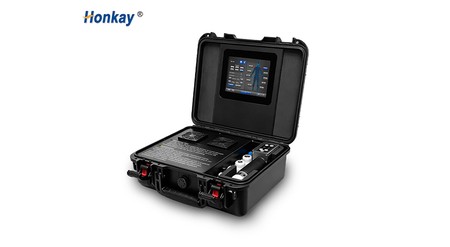
Two handpieces on one platform add a further wrinkle: if both can run at once, the room can treat two zones in parallel, which halves the elapsed time but doubles the demand on attention. Operators who work two handpieces usually drop the rate on both, because the stroke on each is necessarily slower and the thermal load is shared across two devices rather than one. The console in the last photograph on this page makes exactly that point in its own printed notes — two handles working together, and the second one still available if the first develops a fault.

A record that cannot be reproduced by a different operator is a diary, not a protocol. The minimum useful entry has six parts: the region and side, the face used and its diameter, the starting and finishing amplitude, the rate and the stroke it was matched to, the shots per zone with the counter at each boundary, and one line on what the operator observed. That last line is the one that gets skipped and the one that carries the most information six weeks later.
Reproducing a session means starting from the record rather than from memory, and accepting that the second session will not match the first exactly. The purpose of the record is to make the difference explainable: if the amplitude is the same, the rate is the same and the zone is the same, then a different report from the client points at something outside the parameters — the contact, the day, the tissue. If the record shows the operator drifted two steps up and finished early, the explanation is already on the page. Rooms that keep this discipline find that their protocols converge over a few weeks, because the sheet stops being a plan and becomes evidence.
Amplitude first, at a rate low enough that the hand can keep up. Amplitude decides depth and the tolerance for an imperfect contact, so it is the number that has to be settled before the session has any shape. Once it is settled, the rate is raised until it matches the stroke the operator can actually hold for the length of the zone.
Because the setting describes the pulse leaving the handpiece, not the field arriving in tissue. Thickness of cover, the contour under the face, how much the client tenses and how evenly the film is applied all change what reaches the target. Two clients at the same bar figure can be receiving quite different amounts of energy where it matters.
It can, and it is the safest of the three parameters to extend, because it changes duration rather than intensity. What it must not do is substitute for coverage: adding pulses to a zone that is already saturated does not reach the parts of the area the face never touched. If time remains, the better use of it is another pass over the same zone at the same settings.
By timing it. Sweep the zone at the speed the operator intends to use and count how long the sweep takes, then set the rate so the pulses land in an overlapping but not identical pattern along that path. If the pulses cluster at one point, the rate is too high for the stroke; if there are visible gaps, it is too low.
No — it means a wider one. A large face spreads the same pulse over more surface, which lowers the pressure at any single point and raises the total area covered per pass. A small face concentrates it. Neither is stronger in any useful sense; they suit different contours and different depths.
Lower the rate or take the planned pause, and check the temperature readout against the manual's guidance before continuing. Warmth in the hand is a normal consequence of generating pulses at a high rate; it becomes a problem when it is ignored, because the operator's grip changes and the stroke shortens without anyone deciding that it should.
The structure can be copied; the numbers have to be re-derived. A protocol from another room was built around a different platform, a different face diameter and a different operator's stroke, so its figures describe a delivery this room cannot reproduce exactly. Take the order of decisions and the recording format, then rebuild the figures on your own hardware.
The equipment described on this page is made and supplied by Honkay, the brand of Guangzhou Huang-Kai Technology Co., Ltd., an OEM and ODM manufacturer of physiotherapy equipment working from Guangzhou, China. Our factory and offices cover more than 1,000 square metres, and we run an in-house research and development team alongside the production floor.
Because the console and the handpieces are built together rather than sourced separately, the parameter set a room will work with can be settled at the order stage: how many handpieces are supplied, which face profiles they carry, whether the controls sit on the handpiece or on the console, whether two channels can run at once, and whether the manual is supplied in the language of the people who will stand at the couch. Distributors ordering under their own badge get the same configuration decisions taken once, at the factory, rather than renegotiated with every shipment, and the equipment carries a 24-month warranty from the factory shipment date.
Honkay exports to South America, South Asia, South-East Asia, Western Europe, Northern Europe, Southern Europe, Eastern Europe, Oceania and North America, so most of the questions behind this page have already been asked by buyers working in those markets. More background is on our about page, and the parameter questions above can go straight to the team.
Honkay supplies professional wellness and physiotherapy equipment to clinics and distributors. The information on this page is product and purchasing guidance, not medical advice. This device is intended for adjunctive use alongside professional care, not as a replacement for diagnosis or treatment. For any specific condition, consult a qualified clinician; individual experience varies.


 English
 中文