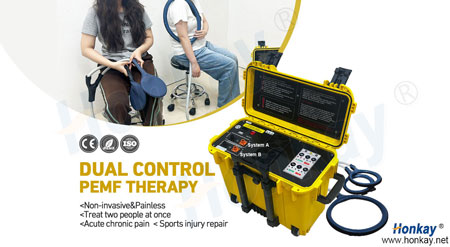
Short answer: importing physiotherapy equipment is a sequence of verifications, not a single purchase decision. You fix your own requirements first, check what the factory has actually done, verify the plant, test a sample, agree an Incoterm and a payment schedule, inspect the goods before they leave China, and only then arrange shipping and clearance. Every table below is written to be printed, ticked and filed as your own audit trail.
This page covers the execution stage only, meaning what happens after you have shortlisted a supplier. It takes you through requirement setting, supplier screening, factory verification, sample testing, quotation and payment structure, pre-shipment inspection, shipping and the first-repeat rhythm. Work through it in order, because each section produces a document you will want to keep when the second order arrives.
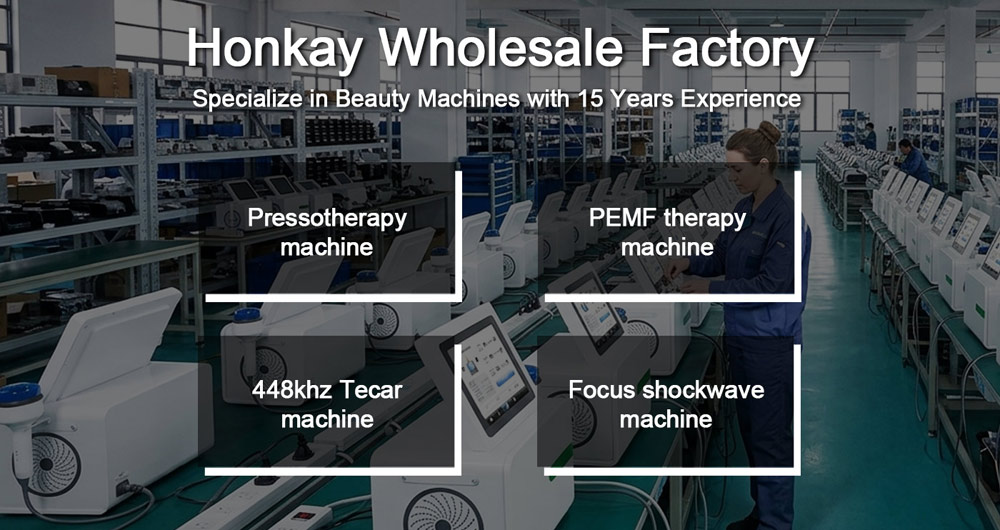
Two things have to be fixed before you send a logo file, a voltage instruction or a deposit: the market you are selling into, and the way the machine will actually be used. Both of those belong to you rather than to the supplier, and leaving either one vague is the most common reason a first order arrives technically correct but commercially unusable.
On the market side, remember that market access and the documents a device needs are set by the destination country. The buyer has to confirm the market-access and documentation requirements for their own market, with their own adviser or importer of record, before a single unit is produced. What you ask the manufacturer for is narrower than that: the factory test report for the unit you are buying, the quality-system documents, and a clear statement of which compliance documents they can supply on request. Anything beyond that should be confirmed in writing rather than assumed.
On the use side, write down the environment the units are going into: a fixed treatment room, a mobile therapist who travels between clinics, a rental fleet, or demonstration stock for a distributor. Then the details that follow from it, which are supply voltage and plug standard, the language of the panel and the manual, how many treatment rooms the first order has to equip, and who will look after the units in year two. A supplier can only configure to those answers if you give them.
Close this step with a one-page requirement sheet containing quantity, configuration, language, plug standard, packaging artwork and the documents you expect with the shipment. From here on, every quotation and every inspection in this guide is measured against that single page.
"What can you make?" is a catalogue question, and almost every supplier answers it well. "What have you already done?" is the question that separates them, because it is much harder to answer without evidence behind it.
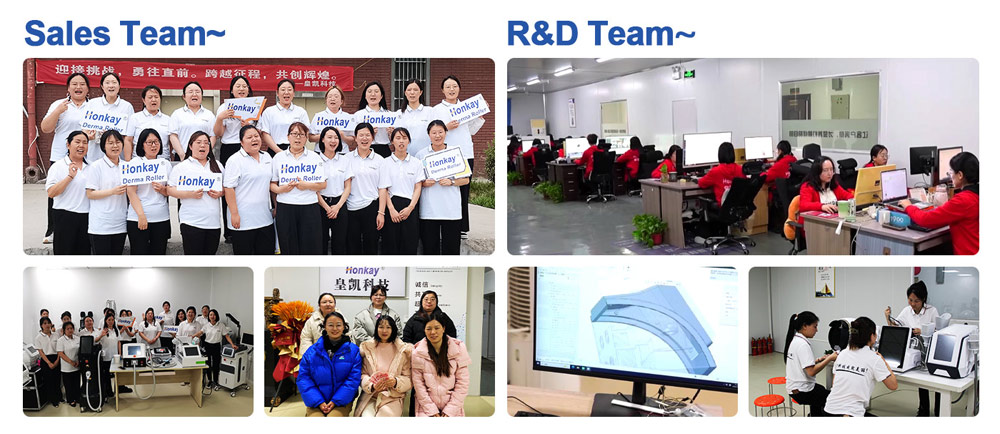
Ask for the years the plant has been in operation, the markets its units have already been shipped to, and whether the machine is built on a platform the factory designed itself or assembled from bought-in boards, housings and applicator sets. A manufacturer will describe its own platform, its own tooling and its own test bench. A trading company tends to describe a range, and switches to "we" and "they" in the same sentence.
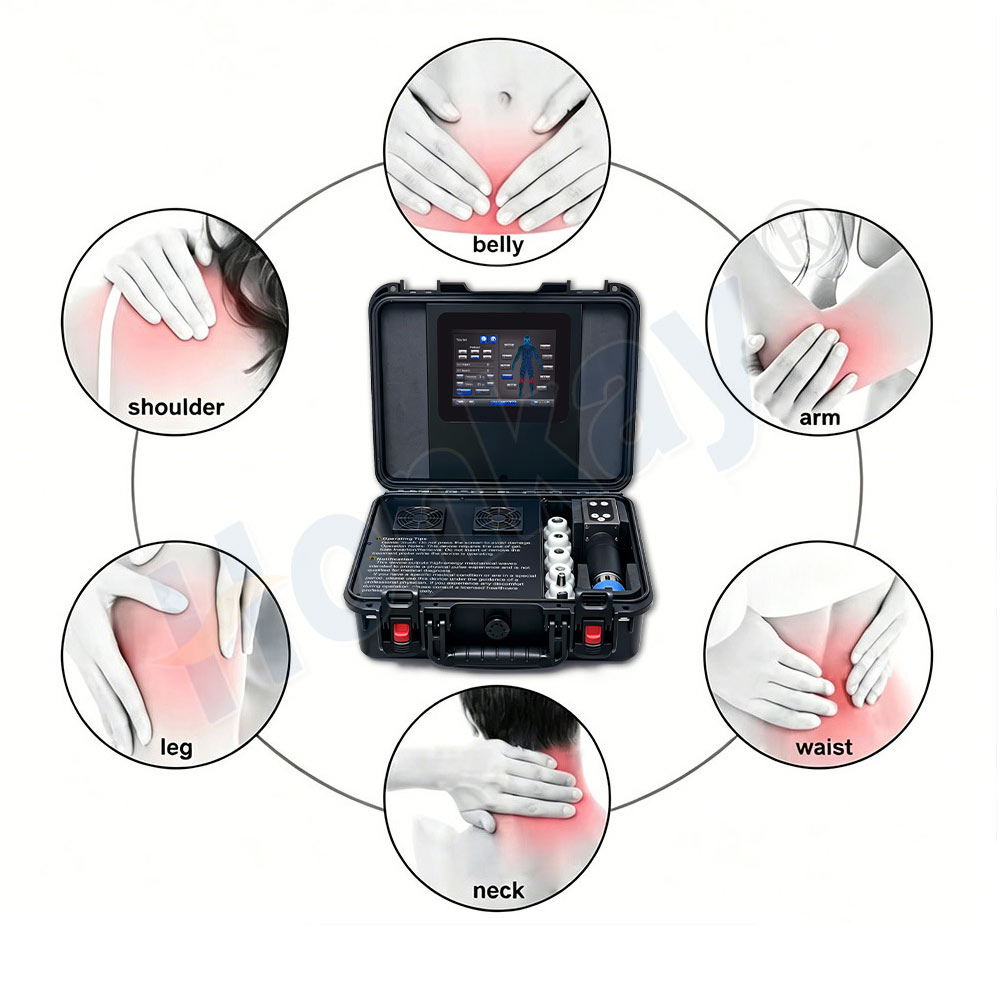
Then ask for visual evidence before you book the video call: photographs or a short clip of the assembly line, the test bench, the packing area and the warehouse. An established exporter can send these the same day, because the pictures already exist in the sales folder. If what arrives is a stock rendering, or three shots of the same bench from the same angle, note it and push the question straight into the live walk described in the next section.
Finally, ask the supplier to describe one shipment to your region or to a comparable market in plain detail: the platform family, the configuration, what was inspected before departure, and how long the order took from deposit to loading. You are not asking for a customer name or a confidential price. You are asking whether this process has been run before, by this team, and whether they can talk about it without reaching for a brochure.

A video walk is now normal practice and, run properly, it is a genuine audit rather than a guided tour. Book it inside the factory's working hours, ask for a live walk rather than a pre-recorded clip, and ask the person holding the camera to stay on each machine until you say stop. Anything the camera moves away from too quickly is worth returning to.
The five items buyers most often forget to put on camera are the registration details, the serial plate on a finished unit, the ageing or burn-in bench, the packing line, and the running display of a unit that is switched on. The checklist below puts all of them, and the rest, in the order they should be checked.
| ☐ | What to verify | What a good answer looks like | Evidence to keep on file |
|---|---|---|---|
| ☐ | Registered name and address | The registration details match the name on the quotation, the name on the invoice and the account the deposit is paid into | A copy of the registration record and the invoice showing the bank details |
| ☐ | Time in operation and plant size | Years of trading, the floor area of the workshop and the number of assembly benches you can count on camera | Dated photographs of the workshop and the line |
| ☐ | Key workstations seen live | Board assembly, firmware loading and calibration, mechanical assembly and final test all appear in one continuous walk | The recorded video call, saved with the date |
| ☐ | Ageing or burn-in step | A finished unit runs on the bench before packing, the run time is stated, and a failure is logged with the unit and the action taken | The bench log or the test record for one unit |
| ☐ | Incoming inspection of bought-in parts | There is a receiving bench, and parts are checked per batch rather than opened from the shelf as production needs them | The receiving record for one batch |
| ☐ | Packing line | The carton, the internal protection, the insert that holds the applicator set and the outer marks are specified, not improvised on the day | Photographs of a packed unit and of a sealed carton |
| ☐ | Storage and dispatch area | Finished stock is stored under cover, and orders for different destinations are kept separate | Photographs of the storage and dispatch bays |
| ☐ | Document control | Someone can name the person who produces the factory test report and the quality-system documents, and say how long it takes | One sample of each document you will need at destination |

A sample is not a favour from the supplier. It is your only chance to test the machine as a product rather than as a photograph, so budget for it and treat it as a cost of the order rather than a freebie. Run the tests below in sequence and write the result for each one, so that the sample becomes the approved baseline for everything the factory produces afterwards.
Test it where it will be used, on your own mains supply, with the person who will actually operate it. Photograph the serial plate and the packing list before you open anything, and keep the packaging intact until the tests are finished in case the unit has to travel back.
| ☐ | What to test | How to run it | What a pass looks like |
|---|---|---|---|
| ☐ | Exterior and finish | Inspect the housing, the seams, the case and the printed panel before switching anything on, and check the finish on the parts that will be handled every day | No transport damage or sharp edges; printing straight; the panel in the language you ordered |
| ☐ | Controls and display | Press or touch every control in turn, including the ones you do not expect to use, and change one setting with each | Every control responds on the first attempt and the display matches the action taken |
| ☐ | Start-up self-check | Switch on and watch the whole start-up sequence without touching anything, then switch off and repeat twice | It reaches the ready state every time without an error message, and the default programme loads |
| ☐ | Consistency across the applicator set | Run each applicator or coil in turn at the same setting and compare the reading, the feel and the sound between them | The parts behave the same as each other, not merely that each one works |
| ☐ | Full output range | Step the setting from the minimum to the maximum and back down, pausing at each step to read the display | The adjustment is smooth and repeatable, and the displayed values match the printed specification |
| ☐ | Continuous running | Run the unit in blocks for the length of a normal working day, keeping to the cool-down rule in the manual, and note the temperature of the housing and the applicator | It completes the day without shutting down, drifting or overheating, and the readings stay stable to the end |
| ☐ | Noise and vibration | Listen at low, middle and high settings with the room quiet, and rest a hand on the housing at each level | A steady tone with no rattle, and no change of character between settings |
| ☐ | Completeness of the supplied parts | Lay out everything that came in the case and tick it against the packing list, item by item | Nothing on the list is missing and nothing extra has been substituted |
| ☐ | Manual, labels and nameplate | Read the printed parameters against the unit in front of you, and compare the nameplate with the description on the invoice | They agree with each other, and the manual is in the language you ordered |
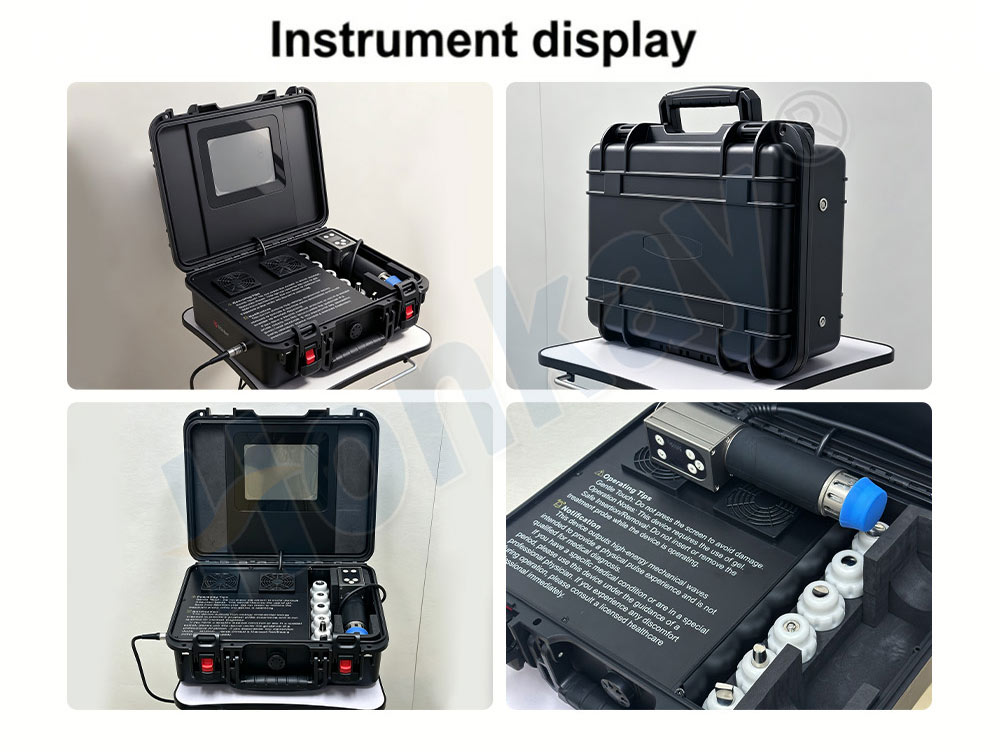
If the sample fails two or more rows, do not start negotiating a discount. Ask for a second sample and repeat the list, because a fault that is visible on a single unit becomes a service case once it is spread across a container.
The Incoterm settles three things: where the cost stops being the supplier's, where the risk passes to you, and who is the importer of record. Buyers lose money at this step by comparing quotations that were never comparable in the first place, because an EXW price and a CIF price are not the same number with a different label.
For a first order from a supplier you have not used before, FOB is the usual middle ground. The factory handles export clearance and loading at the port, while your own forwarder controls the main carriage and the insurance, and the freight cost stays visible as a separate line you can question. CIF is convenient when you do not yet have a forwarder, but you inherit whatever cover the supplier arranged, so read it before you rely on it. EXW moves everything onto you from the factory gate, including the inland truck and the export paperwork, and is rarely worth it unless you already have a forwarder inside China.
| Cost or responsibility | EXW | FOB | CIF |
|---|---|---|---|
| Inland transport from factory to port | Buyer arranges and pays | Supplier | Supplier |
| Export clearance and loading at origin | Buyer, unless the supplier agrees otherwise in writing | Supplier | Supplier |
| Main carriage, the international leg | Buyer | Buyer | Supplier |
| Cargo insurance during the main carriage | Buyer | Buyer | Supplier, to a cover of their choosing, so read the policy |
| Unloading and onward transport at destination | Buyer | Buyer | Buyer |
| Import clearance, duty and tax | Buyer | Buyer | Buyer |
| The point at which risk passes to the buyer | When the goods are placed at the factory | When the goods are loaded on board at the named port | When the goods are loaded on board at the named port |
| Visibility of the freight cost | Full, because you booked it | Full, because you booked it | Limited, because the supplier bundles it into the price |
| Suited to | Buyers who already have a forwarder inside China | Most first orders | First orders where you have no forwarder yet |
Payment structure is a separate decision from the Incoterm, and it has to match your confidence in the supplier rather than their confidence in you. A first order normally runs as a deposit against production and the balance against the shipping documents or before dispatch, and a 24-month warranty from the date of shipment from the factory is written into the same document while you are at it. Whatever you agree, attach each payment to an event rather than a date: against the pre-shipment inspection report, against the bill of lading copy, against the departure of the flight. Those are triggers you can enforce, and they are far more useful than a deadline nobody can control.
Never send the whole amount before anything has been produced, and never accept a payment trigger that depends only on the supplier telling you the goods are ready. If the order value is large, ask whether a documentary credit can be used instead of a straight transfer; the extra bank cost buys you a defined set of documents to release against.
Pre-shipment inspection is the last point at which a problem is still cheap to fix. Do it while the goods are in the factory or in the forwarder's warehouse, on the packed units, and before the container is closed and sealed. Once a container is on the water, your only remaining lever is a conversation.
You can appoint an independent inspection company, run it yourself on a video call, or do both on a larger order. Whoever performs it, fix the list and the evidence rules before packing starts, so that nobody is negotiating scope on the day the truck is waiting.
| # | What is inspected | What gets recorded | Evidence to capture |
|---|---|---|---|
| 1 | Quantity | The physical count against the order and the packing list, configuration by configuration | Photograph of the whole set laid out with the packing list in frame |
| 2 | Configuration | Each unit matches the ordered platform, the panel language, the plug standard and the applicator set | Photographs of the panel and the nameplate on at least three units |
| 3 | Serial numbers | Every serial number recorded, one line per unit, in a single list you keep | Photograph of the serial plate on each unit, plus the list as a file |
| 4 | Function | Every unit powered through a start-up and one full operating cycle at two different settings | Short video per unit, with the display in shot and the settings changed on camera |
| 5 | Applied parts | The applicator set checked against the packing list for every single unit, not once for the batch | Photograph of the case contents laid out beside the packing list |
| 6 | Cosmetic condition | Housing, case, printed panel and display inspected before packing, with any mark noted | Photographs of each unit from four sides |
| 7 | Labels and printed marks | Nameplate, operating labels and carton marks confirmed in the ordered language and spelling | Close photograph of each label type |
| 8 | Packaging | Carton, internal protection, case foam and outer shipping marks checked against the approved sample | Photograph of a packed unit inside the open carton and of one sealed carton |
| 9 | Documents | Commercial invoice, packing list and shipping documents checked against the goods actually packed | Photograph or scan of each document page |
Three rules make the photographs usable six months later. First, every image carries a date, and where possible a location, so nobody has to argue about when it was taken. Second, the serial number has to be legible in at least one image per unit, because that is the reference any later claim will be checked against. Third, use video for anything that is about behaviour over time, such as start-up, a full cycle or a noise check. Ask for the original files rather than images pasted into a chat message, because a compressed chat picture cannot be enlarged when you need to read a label.
While the documents are in front of you, ask for the warranty statement at the same time: a 24-month warranty counted from the date of shipment from the factory, with the serial number as the reference. File it with the inspection report, because those two documents together are what a claim is built on later.

The shipping decision follows from three things: the size of the order, the deadline you have already promised your own customer, and how much you are prepared to pay for time. Getting the order of those three the wrong way round is how buyers end up paying air freight on goods that were always going to sit in a warehouse.
| Mode | Suited to | Timing to expect | Relative cost | What to watch |
|---|---|---|---|---|
| Courier or express | One or two units, or a sample you need to test quickly | Days to a couple of weeks, door to door, depending on the destination | Highest per unit | Weight and size caps, and whether the courier or you will act as the importer of record |
| Air freight | A small batch on a hard deadline, from a handful of units upwards | A few days in the air, then one to three weeks door to door including clearance | High, charged on volume as well as weight | Chargeable weight is volumetric, so pack tightly and confirm the dims with the forwarder |
| Sea freight, shared container | Mid-sized orders that are not urgent and do not fill a container | Several weeks port to port, and allow six to ten weeks door to door | Moderate | Consolidation adds handling, and your goods travel alongside other cargo, so pack for mixed loading |
| Sea freight, full container | Volume orders, or a repeat order you can plan well ahead | Several weeks port to port, and allow five to nine weeks door to door | Lowest per unit | You pay for the whole box, so fill it, and book early around peak season |
Duty and tax are set by the destination country, and no manufacturer can quote them for you. Bring your freight forwarder into the conversation before you accept an Incoterm, confirm how the goods will be classified and which documents your customs broker needs, and decide in advance who will be the importer of record. A supplier can prepare the commercial invoice, the packing list and the shipping documents and make sure they agree with what was actually packed. It cannot decide your import treatment, and any figure it offers for duty should be treated as an estimate only and confirmed with your forwarder.
Six mistakes account for most of the expensive first orders. None of them is exotic, and every one of them is prevented by a document that costs nothing but an hour to write.
| The mistake | What it usually costs you | How to prevent it |
|---|---|---|
| Ordering from a price list instead of a specification | Units that arrive technically correct and commercially unusable, in the wrong configuration, voltage or language | Freeze the one-page requirement sheet first, and make every quotation answer it line by line |
| Comparing EXW, FOB and CIF quotations as if they were the same number | A margin that disappears once freight, insurance and clearance land on your side of the ledger | Convert every quotation to one Incoterm before comparing, and price the import charges with your forwarder |
| Paying the balance before anything has been inspected | You give up your only real lever on a batch that has already been packed and sealed | Attach the balance to the pre-shipment inspection report and to a set of the photographs |
| Accepting a video tour instead of a live walk | A reseller passes as a factory, and the after-sales support you expected does not exist | Book a live walk in working hours and insist on the five camera stops listed in the verification checklist |
| Skipping the sample to save a few weeks | A fault that would have cost one unit now costs a container, plus the service trip that follows it | Buy the sample, run the tests, and keep the results as the approved baseline for the batch |
| Leaving packing and marks to chance | Cartons that fail during handling, and goods your broker cannot match to the order at the port | Approve the carton, the internal protection and the shipping marks before packing begins |
A first order is a test of the supplier, not a volume bet. Start with a small batch covering one configuration and one destination: large enough to be a genuine production run, and small enough that a poor outcome does not threaten the business. Use it to confirm the timing, the packing, the documentation, and how the supplier responds the first time you raise a question.
Then verify in your own market. Run the units in the setting you bought them for, collect what your operators and your customers actually say, and write down the two or three changes you want on the next order. Those changes are the reason to place the second order with the same supplier: a repeat order is where configuration, packing and documentation get corrected, and where the factory learns your standard rather than its own.
Only after a repeat order has run cleanly does it make sense to talk about putting your own brand on the platform, which means the housing print, the panel language, the start-up screen, the carton artwork and the manual. That conversation belongs to the next stage of the relationship, and it is far cheaper and far faster once the supplier already has your approved baseline on file.
If you are still one stage earlier than this, comparing manufacturers rather than executing an order, work through the decision layer first: our 8-point checklist for choosing a physiotherapy equipment manufacturer in China covers the evaluation, documentation and negotiation that should happen before this page begins. Everything on this page then applies to whichever supplier comes out of it.

Move from claims to records. Ask for the registration details, the years in operation, the markets the units have already been shipped to, and a live video walk of the line, the test bench and the packing area. Then test a sample and inspect before shipment. Reliability in this trade is built from documents you can check and a sample you can run, not from a catalogue or a price.
Yes, and for a first order it is now the normal starting point. Ask for a live walk in the factory's working hours, with the camera staying on each station long enough for you to ask questions; ask them to open a finished unit, show the serial plate, run the ageing bench and show the packing line and the warehouse. Record it and keep the file. Combined with a pre-shipment inspection, a live walk covers most of what an in-person visit would give you.
It is negotiable, and the answer belongs on the quotation rather than in a chat message. Two arrangements are common: the sample is charged and the amount is credited against the first bulk order, or the sample is charged at cost plus the courier. What is usually not negotiable is the freight, because the factory has already paid it. Ask for the arrangement in writing before you pay.
For most first orders, FOB. The factory handles export clearance and loading, your forwarder controls the main carriage and the insurance, and the freight appears as a separate line you can compare. Choose EXW only if you already have a forwarder inside China and want to control the inland leg as well. Choose CIF if you have no forwarder yet, but read the cover the supplier arranged before you rely on it.
Quantity and configuration against the order; every serial number recorded; every unit powered through a start-up and a full cycle on camera; the applicator set checked against the packing list for each unit; cosmetic and label checks; the packaging photographed before the carton is closed; and the invoice, packing list and shipping documents checked for consistency. Nine points in total, listed in the table above.
Air for a small batch or a hard deadline, sea for volume. Air moves the goods in days, but you pay for volume as well as weight, so pack tightly and confirm the dimensions with your forwarder first. Sea freight in a shared container suits mid-sized orders, and a full container gives the lowest cost per unit, but both are measured in weeks rather than days and both need booking early in peak season.
Enough to be a genuine production run, and few enough that a bad outcome is survivable. For most buyers that means a small batch in one configuration for one destination, sized to the customers you can already name. Confirm the minimum order quantity in writing before you design the order around it, and treat the approved sample as the reference for that batch.
Send us your requirement sheet and your destination market, and we will come back with the configuration for your first order, the packing plan, the inspection list we propose to run before dispatch, a 24-month warranty statement counted from the date of shipment from the factory, and a payment schedule that matches a first order rather than a long-standing account.



 English
 中文
中文